
Dividing Ashes After Cremation: How Families Share Them
Quick answer: Yes, dividing ashes after cremation is possible, and many families do it so that more than one person can keep a portion, or so that some can be scattered and some kept. A funeral director or crematorium can usually separate the ashes for you if you ask, or you can do it carefully at home. Agree the shares as a family first, and check with your faith leader if your religion has rules about ashes.
When someone dies, more than one person often wants to keep them close. A daughter in another country, a brother who would like to scatter at the coast, a partner who wants an urn at home. Dividing the ashes is how families make room for all of those wishes. This guide answers the questions people ask in the order they tend to ask them: whether it is all right, who does it, how to do it yourself, how much goes in each share, and what to keep each share in.
Is it OK to divide ashes?
For most families, yes. Nothing about ashes makes them unsafe or improper to separate, and sharing them is a common choice. Whether it feels right is a personal matter. Some people find comfort in each relative having a small part. Others feel strongly that a person should stay together in one place. Neither view is wrong, and it helps to hear everyone out before anything is opened.
Two things are worth settling first. One is whether the person left any wishes, written or spoken. The other is who has the say. Disagreements are far easier to resolve before the ashes are divided than after, and our guide to who has the rights to ashes after cremation explains where families stand.
If your family is Catholic
The Catholic Church permits cremation but asks that ashes are kept together in a sacred place such as a cemetery. Its instruction Ad resurgendum cum Christo, dated August 15, 2016 by the Congregation for the Doctrine of the Faith and published by the Holy See Press Office on October 25, 2016, says that "the ashes may not be divided among various family members", and that ashes may not be scattered or "preserved in mementos, pieces of jewellery or other objects".
A later reply from the Dicastery for the Doctrine of the Faith, approved on December 9, 2023 and published by Vatican News on December 12, 2023, says that the church authority "may consider and evaluate a request by a family to preserve in an appropriate way a minimal part of the ashes" in a place of significance for the person, provided the rest of the ashes are kept in a sacred place. If this matters to your family, speak to your parish priest before you decide. Other faiths and traditions have their own teaching, so it is worth asking your own minister or faith leader.
Who separates the ashes?
You have two choices. The first is to ask the funeral director or the crematorium. Tell them how many portions you would like and ask whether they can fill each urn and keepsake for you. It is easiest to ask before the ashes are collected, but you can ask afterwards too. Ask at the same time whether there is a charge.
The second is to do it yourself at home. There is nothing difficult about it, and some families find it a meaningful thing to do together. Others would rather not, and that is just as reasonable. If the thought of it troubles you, let a professional do it.
How to divide ashes at home
Ashes are not like the soft ash from a fire. The Cremation Association of North America describes them on its Cremation Process page (read October 9, 2026) as bone fragments that are "mostly calcium phosphates", "generally white to gray in color". Expect something closer to coarse sand than to powder. They are normally returned in a bag inside a container.
- Choose a quiet time and a table indoors, away from open windows, fans and pets.
- Lay down a large sheet of paper or a clean tray, so that anything spilled can be folded up and poured back.
- Have every urn, keepsake and tube open and ready before you open the bag.
- Use a clean, dry spoon or small scoop, and a funnel for narrow openings. A sheet of paper rolled into a cone works well.
- Fill the smallest items first. They need very little, and it is easier while the bag is full.
- Close and seal each one as you go, and note whose it is.
- Reseal the bag with whatever is left and return it to its container or the main urn.
Take your time. If it becomes too much, stop, close the bag and come back to it another day. Our guide on how to fill a cremation urn goes through the filling step in more detail.
How much goes in each share?
There is no rule. Shares do not have to be equal, and a keepsake holds far less than most people expect. For a sense of scale, the Cremation Association of North America says on the same page that "the average weight of adult cremated remains is between four and six pounds" (roughly 1.8 to 2.7 kg).
The container sets the size of the share. A pendant takes a pinch. A keepsake urn takes anything from a few spoonfuls to a small cupful. A scattering tube can take more. If two or three people each want a large share, look at capacity in liters or cubic inches rather than at the outside size, and use our urn size guide to work out what each urn needs to hold.
What to keep each share in
Keepsake urns, for a share kept at home
A keepsake urn is a small urn made for a portion of the ashes. You will find the full range in our small urns for ashes. Families often choose the same design for each person, or the same shape in different colors.
The Odyssee Metal Teardrop Keepsake Urn in Ivory and White is a metal teardrop that stands 9 cm (3.54 in) tall and holds 0.15 liters (about 9.15 cubic inches). It fills through a screw opening in the base, which can be undone again later, and an urn bag is included.

Pictured: Odyssee Metal Teardrop Keepsake Urn for Ashes in Ivory and White
The Family Keepsake Urn in White is made in Italy from gres porcelain, shaped as two figures in an embrace. It is 14.5 cm (5.7 in) tall, holds 0.1 liters (about 6.1 cubic inches) and is filled through an opening in the base that closes with a push stopper. It is designed for indoor display. The same urn comes in grey.

Pictured: Family Keepsake Urn for Ashes in White
For a very small share, the ceramic Teardrop Heart Keepsake Urn in Antic Gold is 7 cm (2.76 in) tall and holds 0.05 liters (about 3.05 cubic inches). It fills through the base and comes with a clear adhesive if you want to seal it for good.
A scattering tube, for a share that will be scattered
When one person wants to scatter their share somewhere of their own, a small tube keeps it apart from the rest. The Mountain View Eco Friendly Scattering Tube in the Mini size is made from recycled paper with no metal parts or plastic lining. It is 13.3 cm (5.2 in) tall and holds 0.33 liters (about 20 cubic inches). The lid lifts off for filling, and a perforated tab opens it for scattering. The same design comes in other sizes in our scatter tubes. Before you scatter, check that you have permission for the place you have in mind. Our guide on how to scatter ashes covers this.

Pictured: Mountain View Eco Friendly Scattering Tube for Ashes - Mini
Ashes jewellery, for a share that is worn
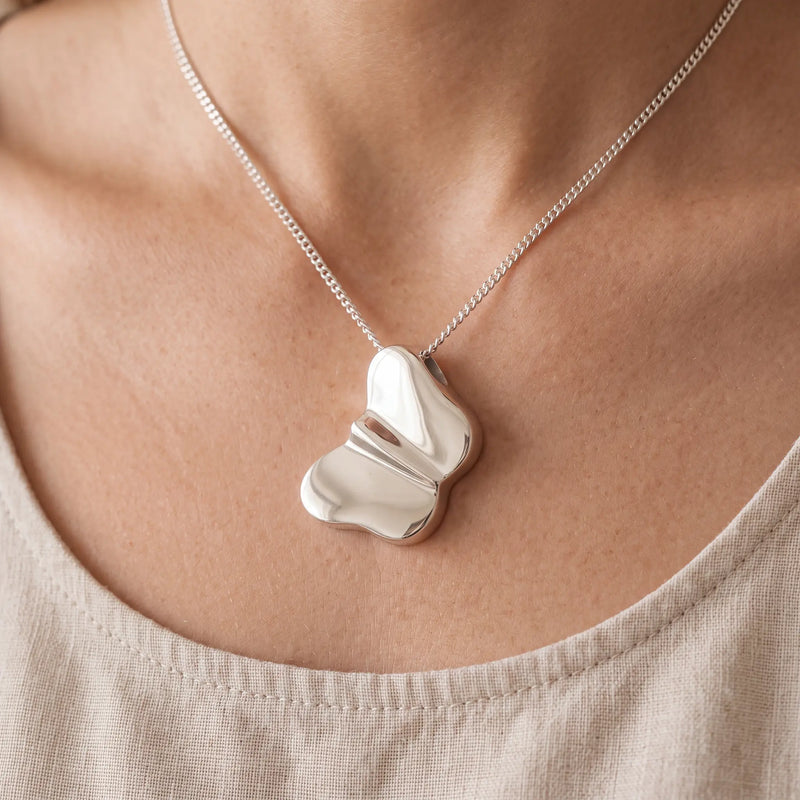
A self-fill pendant holds a symbolic amount, no more than a pinch, in a small sealed chamber. The Self-fill Classic Star Memorial Ashes Pendant is 925 sterling silver, 1.7 cm (0.67 in) high, and opens at the back with a screw closure. It comes with a 46 cm (18 in) chain. The Ash Jewellery Filling and Sealing Kit includes a small screwdriver and an optional adhesive for the closure. There are more designs in our ashes jewellery.

Pictured: Self-fill Classic Star Memorial Ashes Pendant
Side by side
The five options above, with the figures from their product pages:
- Odyssee Metal Teardrop Keepsake Urn: 0.15 liters (about 9.15 cubic inches), screw opening in the base, for display at home.
- Family Keepsake Urn: 0.1 liters (about 6.1 cubic inches), base opening with a push stopper, for indoor display.
- Teardrop Heart Keepsake Urn: 0.05 liters (about 3.05 cubic inches), opening in the base with optional adhesive, for display at home.
- Mountain View Scattering Tube, Mini: 0.33 liters (about 20 cubic inches), lift-off lid and perforated tab, for scattering outdoors.
- Self-fill Classic Star Pendant: a symbolic amount, screw closure at the back, for wearing.
When dividing ashes is not the right choice
Dividing ashes does not suit everyone. It may be better to keep them together if the person asked for that, if your faith asks for it, or if anyone in the family is uneasy and needs more time. It is also hard to undo. Ashes that have been scattered or sealed into jewellery cannot be brought back together.
The products above are also not right for every purpose. A keepsake urn or a pendant will not hold all of the ashes, so the larger part still needs a place of its own. The keepsake urns here are described on their pages as urns for display in the home, so they are not the ones to choose for burial or for the garden. If you have not yet decided about the larger part, our guide to what to do with ashes after cremation sets out the options.
There is no need to decide everything at once. Many families keep the ashes together for a while and divide them later, when everyone is ready.
Sizes and product details in this guide were checked against our product pages on October 9, 2026.
Frequently asked questions
Can you divide ashes after cremation?
Yes. Ashes can be divided into as many portions as the family wishes, either by the funeral director or crematorium or by the family at home. Agree the shares first, and check with your faith leader if your religion has rules about ashes.
Is it wrong to separate cremated ashes?
That depends on your beliefs and the wishes of the person who died. Many families share ashes and find comfort in it. The Catholic Church asks that ashes are kept together in a sacred place, so Catholic families should speak to their priest first.
How do they separate ashes after cremation?
The ashes come back in a sealed bag inside a container. A funeral director, or the family, opens the bag and spoons or funnels a portion into each urn, keepsake or tube, then seals each one and reseals the bag.
How are ashes divided between family members?
However the family agrees. Shares do not have to be equal. Often one person keeps the larger part in a full-size urn, and others each keep a small portion in a keepsake urn or a piece of ashes jewellery, or scatter their share.
How much ash goes in a keepsake urn?
Very little. The keepsake urns in this guide hold between 0.05 and 0.15 liters (about 3.05 to 9.15 cubic inches). A pendant holds only a pinch.
Can I keep some ashes and scatter the rest?
Yes. You can keep a portion in a keepsake urn or a pendant and scatter or bury the remainder. Decide how much to keep before the scattering, because scattered ashes cannot be recovered.
Small Urns for Ashes
See all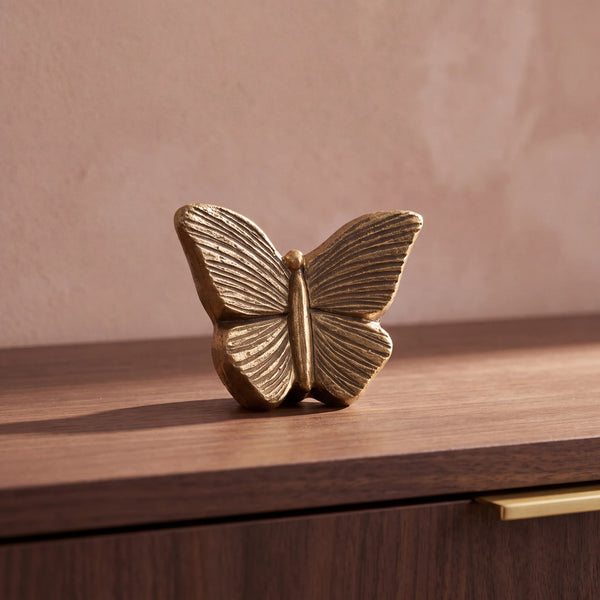 Butterfly Keepsake Urn for Ashes in Gold
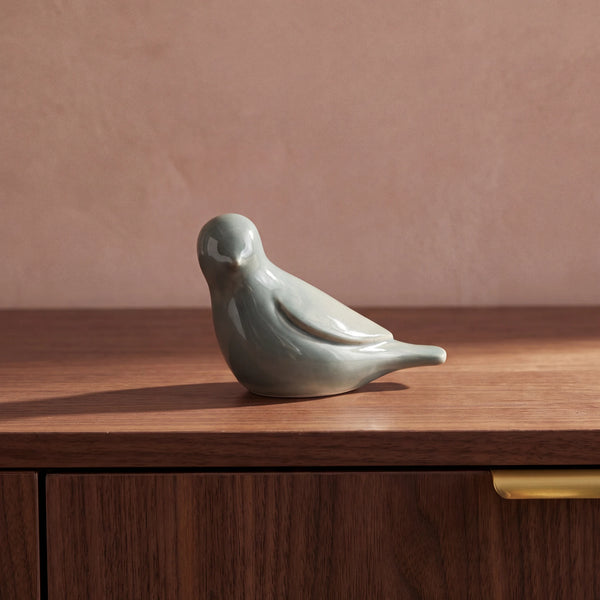 Whistling Bird Keepsake Urn for Ashes in Sage Green
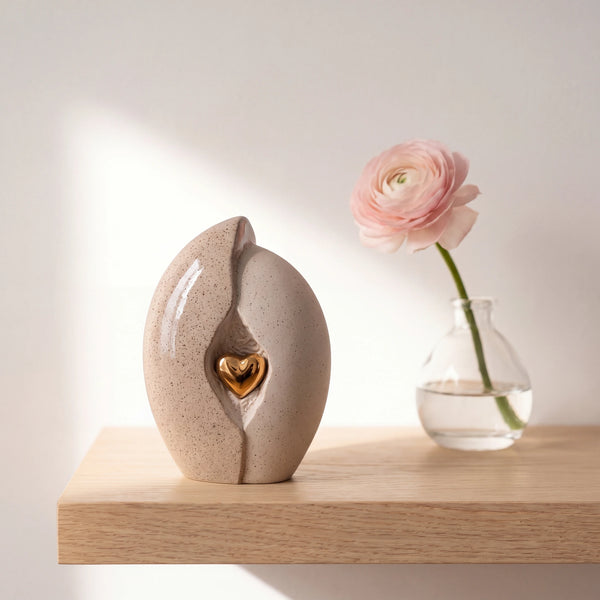 Embrace Heart Small Urn for Ashes in Brown and Gold
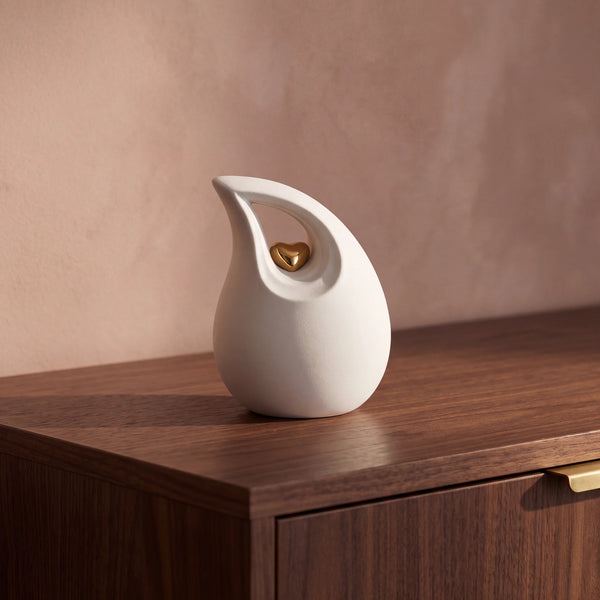 Teardrop Heart Small Urn for Ashes in White and Gold
Written by Urns For Angels
Looking for an urn?
Browse the full range, or ask us and we will help you find the right one.
Keep reading
-
12 min read
How Are Cremation Urns Buried?
-
12 min read
How to Create a Memorial Garden at Home
-
3 min read
How to Grow a Tree from Your Loved One's Ashes
See every guide on What to Do With Ashes: Scattering, Burial and Keeping


Leave a comment
This site is protected by hCaptcha and the hCaptcha Privacy Policy and Terms of Service apply.