




UK Cremation Certificate and the Forms That Come Before It

Quick answer: This guide covers the UK only. A cremation certificate, also called a certificate of cremation, is a paper from the crematorium that follows the cremation. In England, Southend-on-Sea City Council says "There will also be a certificate of cremation with the ashes" (Crematorium regulations, read October 12, 2026). It is not one of the forms needed beforehand. For a death in England or Wales the main ones are the registrar's green form and the application form, Cremation 1 (Ministry of Justice, Cremation: guidance for applicants, updated September 9, 2024). Exceptions exist, such as a death reported to a coroner, and they are set out below. For a copy, ask the crematorium that carried out the cremation. In England and Wales its registrar must keep "a permanent register of all cremations carried out by the cremation authority" (Cremation (England and Wales) Regulations 2008, regulation 32, read October 12, 2026). In Scotland a cremation register "must be kept indefinitely" (Burial and Cremation (Scotland) Act 2016, section 57, read October 12, 2026).
Three different papers get called a "cremation certificate" in the United Kingdom, which is why the term confuses people. One is the certificate of cremation that comes after the cremation. Another is the registrar's "Certificate for Burial or Cremation", known in England and Wales as the green form. The third is a medical certificate signed by a doctor. England and Wales no longer ask for one when the death happened there, but the form is still used in other cases (Ministry of Justice, Cremation medical certificate, updated September 9, 2024). This guide sets out which is which, who signs each one, and where a copy comes from.
It covers the United Kingdom only, country by country, because the rules differ. Everything here is general information, not legal advice. For a death or a cremation in any other country, ask the crematorium or funeral director there.
Key facts
- England: Southend-on-Sea City Council's crematorium regulations say of ashes released to the applicant, "There will also be a certificate of cremation with the ashes" (Southend-on-Sea City Council, Crematorium regulations, read October 12, 2026). The phrase "certificate of cremation" does not appear in the Cremation (England and Wales) Regulations 2008 (read October 12, 2026).
- England and Wales: the application for cremation is form Cremation 1, described as "the key form which you will be required to fill out" (Ministry of Justice, Cremation: guidance for applicants, updated September 9, 2024).
- England and Wales: the doctor's medical certificate, form Cremation 4, "has been permanently removed for cases in England and Wales" (Ministry of Justice, guidance for funeral directors, updated September 9, 2024). Exceptions exist: the form is still used for some deaths outside England and Wales (Ministry of Justice, Cremation medical certificate, updated September 9, 2024).
- England and Wales: a cremation authority's registrar must keep "a permanent register of all cremations carried out by the cremation authority" (Cremation (England and Wales) Regulations 2008, regulation 32, read October 12, 2026).
- England and Wales: the application and other cremation documents must be kept "for a period of 15 years from the date of the cremation" (regulation 34, read October 12, 2026).
- Scotland: a cremation register "must be kept indefinitely", and copies of entries must be supplied to the public on request (Burial and Cremation (Scotland) Act 2016, section 57, read October 12, 2026).
- Northern Ireland: a duplicate or additional cremation certificate from the City of Belfast Crematorium costs £22, a fee valid from April 1, 2026 until March 31, 2027 (Belfast City Council, Cremations, read October 12, 2026).
- United Kingdom government advice on bringing ashes home after a death abroad: when leaving a country with human ashes "you will normally need to show" the death certificate and the certificate of cremation (GOV.UK, What to do after someone dies, read October 12, 2026).
England and Wales: the forms before a cremation
The paperwork changed on September 9, 2024. Since that date every death in England and Wales is independently scrutinized, either by a coroner or by a medical examiner, who is a senior doctor (Ministry of Justice, Cremation: guidance for applicants, updated September 9, 2024). Older guides that list two doctors' forms and a fee for each describe the system before that change.
The green form from the registrar
Once the death is registered, the registrar produces two things. One is the death certificate, which you buy. The other is the Certificate for Burial or Cremation, the green form. The Ministry of Justice says the green form "is one of the documents that provides the crematorium with the authority to cremate" and that it "must therefore be sent to the crematorium along with the application for cremation" (Ministry of Justice, Cremation: guidance for applicants, updated September 9, 2024).
Extra copies of a death certificate for England and Wales cost £12.50 each from the General Register Office (GOV.UK, Order a copy of a birth, death or marriage certificate, read October 12, 2026).
Form Cremation 1, the application
Cremation 1 is the form the family fills in. The law says the application must be made by an executor or by "a near relative who has attained the age of 16", unless the crematorium's medical referee accepts someone else (Cremation (England and Wales) Regulations 2008, regulation 15, read October 12, 2026). You sign it yourself. The Ministry of Justice guidance (updated September 9, 2024) says a crematorium or funeral service provider, "such as a funeral director or a direct cremation service", will be able to "assist you in completing relevant forms, and arrange for any other relevant documentation to be completed". It also says they "must not complete and/or sign the form on your behalf" (Ministry of Justice, Cremation: guidance for applicants, updated September 9, 2024).
Two parts of the form ask for more than names and dates. Part 3 asks about implants such as a pacemaker, which the guidance says can become a serious hazard during cremation. Part 4 asks what should happen to the ashes and to any metal left after the cremation. The guidance gives three choices for the ashes: the crematorium scatters or inters them, you or someone you name collects them, or they are held while you decide (Ministry of Justice, Cremation: guidance for applicants, updated September 9, 2024).
A blank Cremation 1 can be downloaded from the government page Apply to cremate the body of a person who has died.
Cremation 4 and Cremation 5: removed for deaths in England and Wales
People still search for "cremation form 4". It is the medical certificate signed by a doctor, and Cremation 5 was the second doctor's confirmation. Neither is needed now for a death in England or Wales. The Ministry of Justice guidance for funeral directors (updated September 9, 2024) says the requirement for form Cremation 4 "has been permanently removed for cases in England and Wales", and that form Cremation 5 "has been permanently removed". The medical examiner's scrutiny took their place.
Cremation 4 has not gone altogether. The form's own page says it "is now only to be used for deaths that occurred in Scotland, Northern Ireland, the Channel Islands, or the Isle of Man, and where the cremation is to take place in England or Wales" (Ministry of Justice, Cremation medical certificate, updated September 9, 2024). A crematorium in England or Wales can therefore still ask for a doctor's certificate when the person died in one of those places.
When a coroner is involved
If a coroner has investigated the death, the coroner's certificate, form Cremation 6, stands in for the green form. The Ministry of Justice says "the green form is not necessary in cases involving the relevant coroner" (Ministry of Justice, guidance for funeral directors, updated September 9, 2024). This is how a cremation can go ahead before a final death certificate exists. GOV.UK puts it this way: "The funeral can usually only take place after the death is registered, unless the death has been reported to a coroner" (GOV.UK, Arrange the funeral, read October 12, 2026). While an inquest is going on, you can ask the coroner for an interim death certificate as proof of the death (GOV.UK, When a death is reported to a coroner, read October 12, 2026).
Who signs what
The last signature belongs to the crematorium's medical referee. No cremation may take place unless "written authority is given by a medical referee" (Cremation (England and Wales) Regulations 2008, regulation 16, read October 12, 2026). The list below gives each paper for a death in England or Wales and who signs it. It follows the Ministry of Justice Cremation: guidance for applicants and its guidance for funeral directors, both updated September 9, 2024, and regulation 16 of the Cremation (England and Wales) Regulations 2008.
- Medical Certificate of Cause of Death: the doctor who attended proposes the cause of death, and a medical examiner reviews it.
- Certificate for Burial or Cremation (green form): produced by the registrar after the death is registered.
- Cremation 1: signed by the applicant, normally an executor or near relative.
- Cremation 6: given by the coroner, only when a coroner is involved.
- Written authority to cremate: given by the crematorium's medical referee.
- Certificate of cremation: not one of the forms in the regulations. It is the crematorium's own paper, covered in the next section.
England and Wales: the cremation certificate and how to get a copy
The law for England and Wales does not name this document. The phrase "certificate of cremation" appears nowhere in the Cremation (England and Wales) Regulations 2008 (read October 12, 2026), and neither of the two Ministry of Justice guidance documents mentions a certificate issued after the cremation. What the regulations require is a register, described below.
The certificate itself is a paper the crematorium gives out. One English example: Southend-on-Sea City Council's crematorium regulations say cremated remains are released on the applicant's written instruction, in a container, and "There will also be a certificate of cremation with the ashes" (Southend-on-Sea City Council, Crematorium regulations, read October 12, 2026). That is one council's rule. Other crematoria set their own practice, so ask yours what it issues. The death certificate is a different document and comes from the registrar.
If yours is lost, go back to the crematorium. The regulations say "A cremation authority must appoint a registrar" (Cremation (England and Wales) Regulations 2008, regulation 31, read October 12, 2026), and that registrar must keep "a permanent register of all cremations carried out by the cremation authority" (regulation 32, read October 12, 2026). Under regulation 33 the register records, among other things, the date of the cremation, the name of the person cremated, the name and address of the applicant and how the ashes were disposed of. Because the register is permanent, the entry is not removed after a set number of years.
The regulations also say the cremation authority "may issue to any person a copy of, or an extract from, the register or a document" (regulation 35, read October 12, 2026). The word is "may". Each crematorium decides how it handles requests and whether it charges, so ask the one that carried out the cremation. The funeral director who made the arrangements will know which crematorium that was.
Application papers are kept for a fixed time, not permanently. In England and Wales a cremation authority must keep "the application for cremation and any certificates or other documents relating to a cremation, or an electronic copy of such documents, for a period of 15 years from the date of the cremation to which they relate" (regulation 34, read October 12, 2026).
Scotland: Form A1 and Form 14
Scotland has its own law and its own forms. The application to cremate an adult or a child is Form A1. With it, for a death in Scotland, the cremation authority needs Form 14, the Certificate of Registration of Death given by the registrar in Scotland, and Form E1 if the procurator fiscal was involved and has released the body for cremation (Scottish Government, Cremation: statutory forms, Form A1 guidance, last updated June 19, 2026). The Scottish Government's update note for March 2, 2026 reads "Updated all forms and introductory guidance to reflect latest Regulations", and the current versions are on its page Cremation: statutory forms (read October 12, 2026).
Copies are a right in Scotland. A cremation authority must arrange for "copies of entries in its cremation registers to be supplied, on request, to members of the public", and it may make a reasonable charge (Burial and Cremation (Scotland) Act 2016, section 57, read October 12, 2026). The register is kept indefinitely. Application forms and the papers sent with them are kept for 50 years (Cremation (Scotland) Regulations 2019, regulation 3, read October 12, 2026).
Northern Ireland: Forms A, B and C at the City of Belfast Crematorium
The City of Belfast Crematorium asks for two doctors' forms as well as the application, which is Form A. Form B, the Certificate of Medical Attendant, is completed by a doctor who attended the person "during their last illness, within 28 days before death". Form C, the Confirmatory Medical Certificate, is completed by a second doctor "of not less than five years standing" who is independent of the first. All forms must reach the crematorium two working days before the cremation (Belfast City Council, Cremations, read October 12, 2026).
The official guide for Northern Ireland uses "cremation certificate" for the doctor's form, not for the paper issued afterwards: "If the body is to be cremated, the GP or hospital will arrange for a second doctor to sign the cremation certificate." It also says the registrar issues a Certificate for Burial or Cremation to the funeral director once the death is registered, and that death certificates cost £8.00 per copy at the time of registration (nidirect, Registering a death with the district registrar, read October 12, 2026).
Belfast City Council says its "Fees include a cremation certificate for cremated remains that are to be collected". At that crematorium a duplicate or additional certificate costs £22, a fee valid from April 1, 2026 until March 31, 2027. The page does not say how long the crematorium keeps its records (Belfast City Council, Cremations, read October 12, 2026).
United Kingdom: the certificates to show when bringing ashes home from abroad
The certificate of cremation matters again if the person died and was cremated abroad. The UK government's advice on bringing ashes home after a death abroad is that when leaving a country with human ashes "you will normally need to show" two papers, the death certificate and the certificate of cremation. It adds that each country has its own rules and "there may be additional requirements" (GOV.UK, What to do after someone dies, read October 12, 2026). That advice is about leaving the country where the person died. It does not cover taking ashes out of the United Kingdom. Our guide to flying with ashes covers airlines and security.
After the paperwork: an urn for the ashes
In England and Wales, form Cremation 1 asks what should happen to the ashes, and collecting them is one of the choices. If that is yours, the urn is the next decision, and it can wait until you are ready. Our urns for ashes range from full adult sizes to small keepsakes, and the urn size guide shows how to work out capacity.
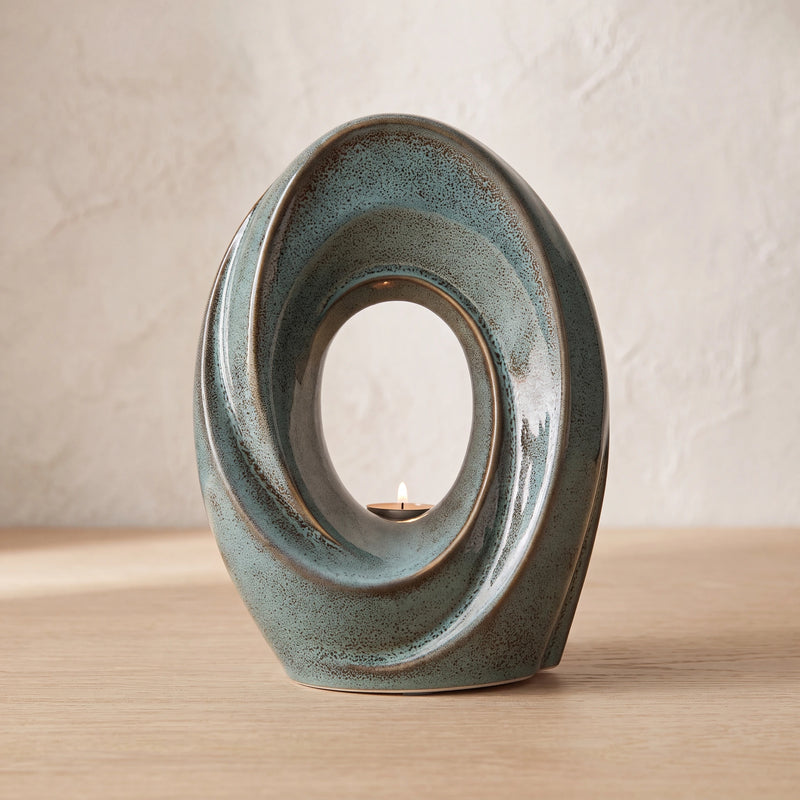
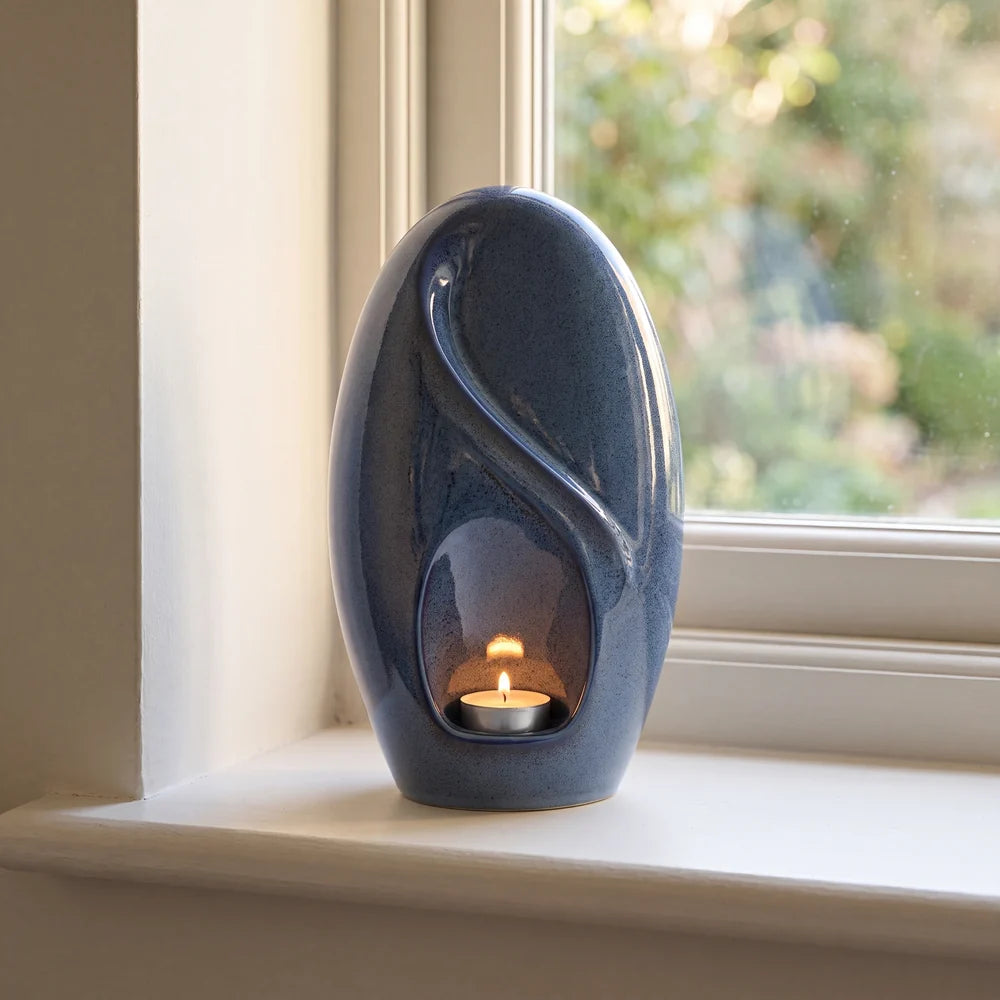
One full-size example is the Infinity Adult Cremation Urn for Ashes in Amber, a kiln-fired ceramic urn with an amber glaze and an infinity symbol indented in its oval-like body. It holds 4.1 liters (about 250 cubic inches), which its page gives as a guide for an adult of up to approximately 113 kg (250 lb). The Infinity stands 36.5 cm (14.4 in) high and 22 cm (8.7 in) wide. Ashes go in through the base, which is then sealed with the ceramic adhesive supplied. A small porch inside the symbol holds a tea-light.

Pictured: Infinity Adult Cremation Urn for Ashes in Amber
A keepsake is the wrong choice if you want all the ashes kept together. The Calla Lily Keepsake Urn for Ashes in Matte White holds 0.32 liters (about 20 cubic inches), so it takes a portion only. Its page describes it as handmade ceramic sculpted in the form of a calla lily. The keepsake is 18 cm (7 in) high, filled from the base and made for indoor display. Glue for the lid is not supplied. When ashes are shared between households, a keepsake like this can sit alongside a full-size urn, and our guide on what to do with ashes after cremation sets out the other options.
Sources
- Ministry of Justice, Cremation: guidance for applicants for deaths that occurred in England and Wales, updated September 9, 2024. Read October 12, 2026.
- Ministry of Justice, The Cremation (England and Wales) Regulations 2008: guidance for funeral directors, updated September 9, 2024. Read October 12, 2026.
- Ministry of Justice, Cremation forms and guidance, the full set of current forms. Read October 12, 2026.
- Ministry of Justice, Cremation medical certificate for deaths that occurred in Scotland, Northern Ireland or the British Islands (form Cremation 4), updated September 9, 2024. Read October 12, 2026.
- legislation.gov.uk, The Cremation (England and Wales) Regulations 2008, regulations 15, 16, 31, 32, 33, 34 and 35, as amended to September 9, 2024, and the whole instrument. Read October 12, 2026.
- Southend-on-Sea City Council, Crematorium regulations: Cremated remains (ashes), no date shown on the page. Read October 12, 2026.
- GOV.UK, What to do after someone dies: Arrange the funeral, When a death is reported to a coroner and the page on a death abroad. Read October 12, 2026.
- GOV.UK, Order a copy of a birth, death or marriage certificate. Read October 12, 2026.
- Scottish Government, Cremation: statutory forms, Form A1 guidance, last updated June 19, 2026, and the publication page Cremation: statutory forms with its update history. Read October 12, 2026.
- legislation.gov.uk, Burial and Cremation (Scotland) Act 2016, section 57, and The Cremation (Scotland) Regulations 2019, regulation 3. Read October 12, 2026.
- Belfast City Council, Cremations, fees valid April 1, 2026 to March 31, 2027. Read October 12, 2026.
- nidirect, Registering a death with the district registrar. Read October 12, 2026.
Sizes and product details in this guide were checked against our product pages on October 13, 2026.
Frequently asked questions
What is a cremation certificate?
In the UK, a cremation certificate, or certificate of cremation, is a paper from the crematorium that follows the cremation. Southend-on-Sea City Council in England says "There will also be a certificate of cremation with the ashes" (Crematorium regulations, read October 12, 2026), and Belfast City Council in Northern Ireland says its "Fees include a cremation certificate for cremated remains that are to be collected" (Cremations, read October 12, 2026). It is separate from the death certificate and, in England and Wales, from the registrar's green form, which "must therefore be sent to the crematorium along with the application for cremation" (Ministry of Justice, Cremation: guidance for applicants, updated September 9, 2024).
How do I get a copy of a cremation certificate in the UK?
Ask the crematorium that carried out the cremation. The rule differs by country. In England and Wales its registrar must keep "a permanent register of all cremations" (Cremation (England and Wales) Regulations 2008, regulation 32, read October 12, 2026), and the cremation authority "may issue to any person a copy of, or an extract from, the register or a document" (regulation 35, read October 12, 2026). Scotland goes further: copies of register entries must be supplied on request (Burial and Cremation (Scotland) Act 2016, section 57, read October 12, 2026). The City of Belfast Crematorium in Northern Ireland charges £22 for a duplicate or additional cremation certificate, a fee valid from April 1, 2026 until March 31, 2027 (Belfast City Council, Cremations, read October 12, 2026).
What happened to cremation form 4?
Form Cremation 4, the doctor's medical certificate, is no longer used for deaths in England and Wales. The Ministry of Justice guidance for funeral directors (updated September 9, 2024) says it "has been permanently removed for cases in England and Wales", and the confirmatory form Cremation 5 has gone too. There are exceptions: the form is still used when the death happened in Scotland, Northern Ireland, the Channel Islands or the Isle of Man and the cremation is in England or Wales (Ministry of Justice, Cremation medical certificate, updated September 9, 2024).
Can you cremate someone without a death certificate?
In England and Wales, yes, when a coroner is involved. The coroner's form Cremation 6 then takes the place of the registrar's green form: "the green form is not necessary in cases involving the relevant coroner" (Ministry of Justice, guidance for funeral directors, updated September 9, 2024). GOV.UK says a funeral "can usually only take place after the death is registered, unless the death has been reported to a coroner" (GOV.UK, Arrange the funeral, read October 12, 2026).
Who fills in the paperwork for a direct cremation?
In England and Wales, the applicant does. The Ministry of Justice names "a direct cremation service" among the providers that can "assist you in completing relevant forms", and says they "must not complete and/or sign the form on your behalf" (Cremation: guidance for applicants, updated September 9, 2024). The form in question is Cremation 1.
Who handles the cremation paperwork?
For a death in England or Wales, the applicant signs form Cremation 1 and a funeral director can help with the other papers. The Ministry of Justice says a crematorium or funeral service provider, if you use one, will be able to "assist you in completing relevant forms, and arrange for any other relevant documentation to be completed" (Cremation: guidance for applicants, updated September 9, 2024).
Do I need the cremation certificate to bring ashes home from abroad?
Normally, yes. In its advice on bringing ashes home after a death abroad, GOV.UK says that when leaving a country with human ashes "you will normally need to show" the death certificate and the certificate of cremation, and that each country may have further requirements (GOV.UK, What to do after someone dies, read October 12, 2026). That advice does not cover taking ashes out of the United Kingdom.
Urns for Ashes
See all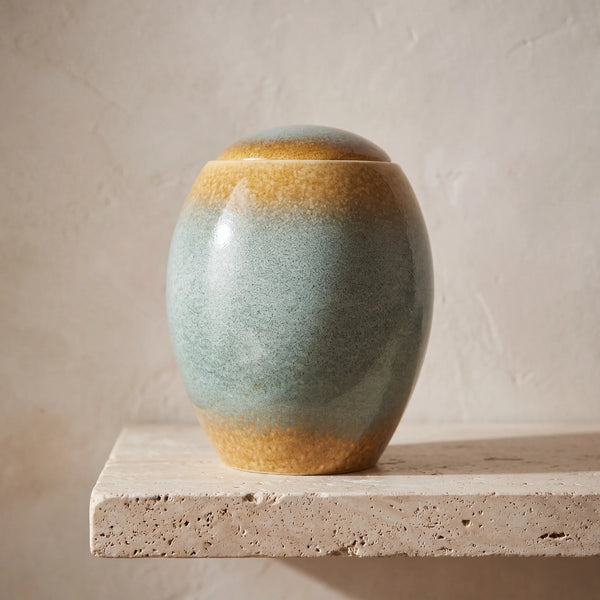 Ocean Blue Modern Adult Cremation Urn for Ashes
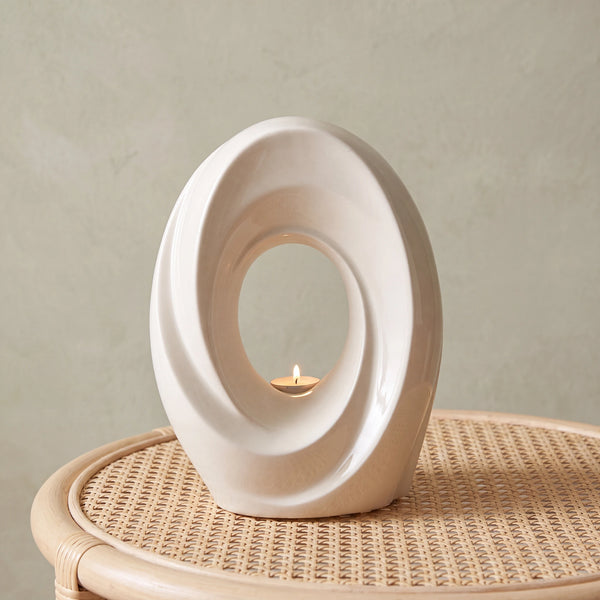 The Passage Adult Cremation Urn for Ashes in Cream
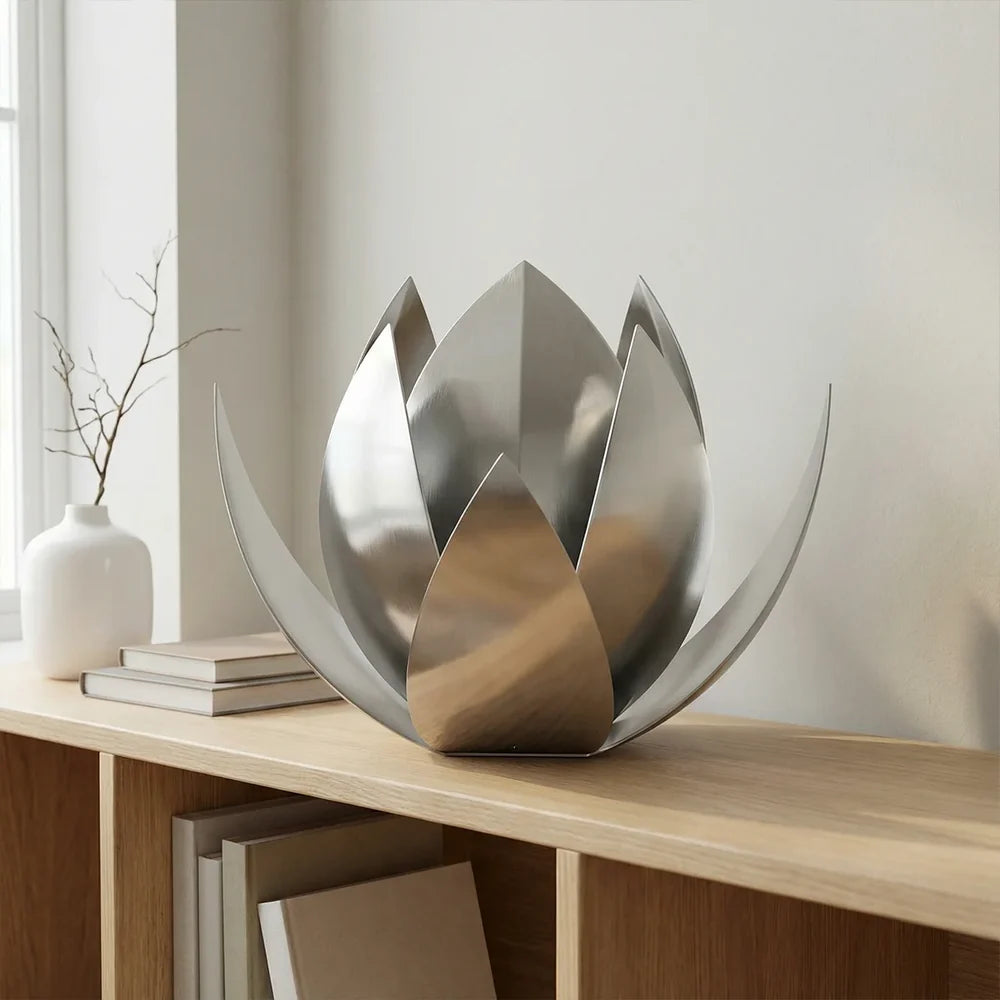
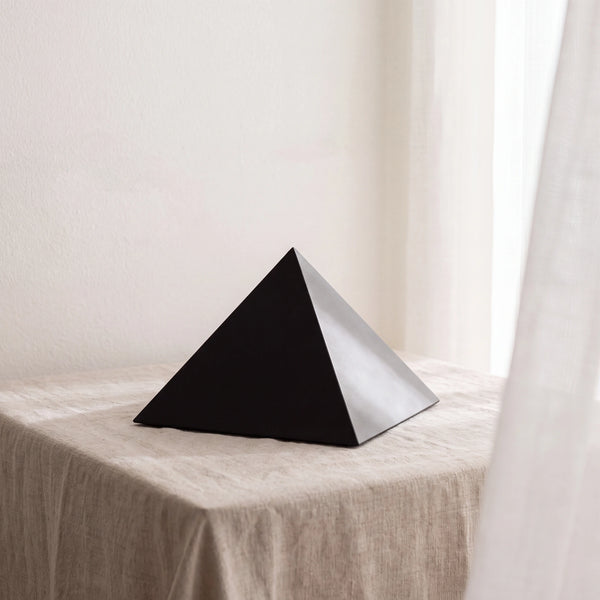 Pyramid Adult Cremation Urn for Ashes in Matte Black Stainless Steel
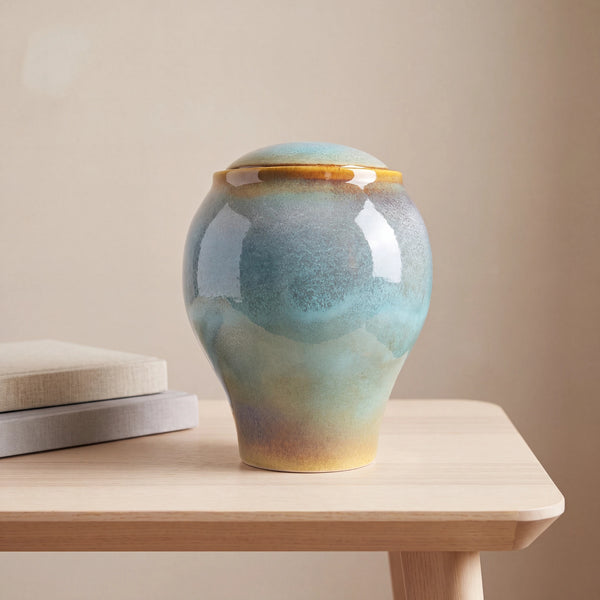 Ocean Classic Adult Cremation Urn for Ashes
Written by Urns For Angels
Looking for an urn?
Browse the full range, or ask us and we will help you find the right one.
Keep reading
-
15 min read
Average Cost of Cremation and Burial: UK and US Figures
-
18 min read
Cremation Facts: UK and US Figures, Rules and Sources
-

9 min read
How much do Cremation Ashes weigh?
See every guide on Cremation Explained: Process, Costs and Rules


Leave a comment
This site is protected by hCaptcha and the hCaptcha Privacy Policy and Terms of Service apply.