




Cremation Facts: UK and US Figures, Rules and Sources

Quick answer: The main cremation facts, each from a primary source: in the British Islands, 527,511 of 655,588 deaths in 2025 were followed by cremation, a provisional 80.46% (Cremation Society, read October 6, 2026). In the United States the cremation rate in 2025 was 62.8% (Cremation Association of North America, read October 6, 2026). What a family receives is bone fragments reduced to small particles, not ash from a fire (Cremation Association of North America, Cremation Process, read October 6, 2026). How much there is depends on which body you ask: in the United Kingdom, the cremated remains of an adult will normally weigh "between 2 and 4 kg", about 4.4 to 8.8 lb (Federation of Burial and Cremation Authorities, FAQs, read October 6, 2026), while in the United States the average is "between four and six pounds", about 1.8 to 2.7 kg (Cremation Association of North America, read October 6, 2026).
Here to choose an urn rather than to read the figures? See our adult urns for ashes.
This guide collects the cremation facts that can be checked: how many people are cremated, what the ashes are, how much there is, and what the rules say in the United Kingdom and the United States. Every figure has a link to the body that published it, and every source was opened and read on October 6, 2026.
It does not cover the cost of cremation, the cremation of pets, or the rules of individual US states. Where the sources read for this guide are silent on a point, the guide says so.
Key facts
- In the British Islands, 527,511 cremations followed 655,588 deaths in 2025, a rate of 80.46%, all three figures marked provisional (Cremation Society, Progress of Cremation table, read October 6, 2026).
- The first cremation at Woking, in England, took place on March 26, 1885, and there were 3 cremations that year (Cremation Society, read October 6, 2026).
- In 2025 the US cremation rate was 62.8% and the Canadian rate was 77.4% (Cremation Association of North America, read October 6, 2026).
- In the United States, cremation "usually occurs between 1400 and 1600 degrees F", which is about 760 to 871 degrees C (Cremation Association of North America, Cremation Process, read October 6, 2026).
- The bone fragments left after cremation "are mostly calcium phosphates, with some other minor minerals" (Cremation Association of North America, read October 6, 2026).
- In the United Kingdom, the cremation of an adult "will normally result in the presentation of cremated remains/ashes weighing between 2 and 4 kg" (Federation of Burial and Cremation Authorities, read October 6, 2026).
- In Scotland, a cremation authority must ensure that "the remains of only one adult, child, still-born child or fetus are placed in the cremator", except in a joint or shared cremation (Cremation (Scotland) Regulations 2019, regulation 5, read October 6, 2026).
- In England and Wales, the main rule is that a cremation authority "must dispose of the ashes in accordance with the applicant's instructions for ashes", and it may not inter or scatter ashes "left temporarily in the care of a cremation authority" unless it "has made reasonable attempts to give the applicant 14 days' notice"; the regulation also sets out exceptions (Cremation (England and Wales) Regulations 2008, regulation 30, read October 6, 2026).
United Kingdom: how many people are cremated
The Cremation Society publishes a year-by-year table going back to the first cremation in 1885. Its heading is "Progress of Cremation in the British Islands", and a footnote says that the number of deaths "includes Isle of Man, Guernsey and Jersey from 2018 onwards". The latest row, for 2025, is marked provisional (Cremation Society, read October 6, 2026).
- 2025, all areas in the table: 655,588 deaths, 527,511 cremations, 80.46%.
- 2025, England, Wales, Isle of Man and Channel Islands: 573,372 deaths, 477,191 cremations, 83.23%.
- 2025, Scotland: 64,461 deaths, 45,865 cremations, 71.15%.
- 2025, Northern Ireland: 17,755 deaths, 4,455 cremations, 25.09%.
- 2024, all areas in the table: 651,380 deaths, 522,429 cremations, 80.20%.
- 2023, all areas in the table: 664,397 deaths, 535,756 cremations, 80.64%.
The same table counts 335 crematoria for 2025 and 336 for 2024. For 1885 it counts 1 crematorium and 3 cremations. The share for the table as a whole passed one half between 1967, when it was 48.89%, and 1968, when it was 51.23% (Cremation Society, read October 6, 2026).
The history behind those first rows is set out by the Society itself. It records that "on 26th March, 1885 the first official cremation at Woking took place", a year after a judge ruled, in February 1884, "that cremation is legal provided no nuisance is caused in the process to others" (Cremation Society, History of Modern Cremation in the United Kingdom, read October 6, 2026). Parliament passed the Cremation Act in 1902. One of its rules still stands: section 5 says "No crematorium shall be constructed nearer to any dwelling-house than two hundred yards", about 183 meters, without the written consent of the owner, lessee and occupier, "nor within fifty yards of any public highway", about 46 meters (Cremation Act 1902, section 5, legislation.gov.uk, read October 6, 2026). The legislation.gov.uk page gives the extent of that section as England, Wales and Scotland.
United States and Canada: how many people are cremated
Two trade bodies publish a US cremation rate, and their figures for 2025 are not the same.
- Cremation Association of North America (CANA): "In 2025, the US cremation rate was 62.8% and the Canadian rate reached 77.4%, up from 57.2% and 74.0% in 2021, respectively." CANA projects 69.1% for the United States and 81.1% for Canada by 2030 (CANA, Industry Statistical Information, read October 6, 2026).
- National Funeral Directors Association (NFDA): a projected US cremation rate of 63.4% for 2025 and a projected burial rate of 31.6%, taken from its 2025 Cremation and Burial Report, with cremation expected to reach 82.3% by 2045 (NFDA, Statistics, page last updated September 29, 2025, read October 6, 2026).
The two bodies differ by 0.6 of a percentage point for 2025. CANA describes its figure as built from death and cremation data collected from state and provincial vital statistics departments or other regulatory agencies. The NFDA figure is described on its page as a projection. Both are given here as published.
What cremation ashes are, and how long they last
The word "ashes" is a habit of speech. What remains after a cremation is bone.
United States: the trade body's description
CANA describes the process in North American crematories in these terms. Cremation "usually occurs between 1400 and 1600 degrees F" (about 760 to 871 degrees C), and the process can take from 30 minutes, the figure CANA gives for a stillborn baby, "to over two hours depending on the body size and stored heat in the chamber". Afterwards, "The bone fragments that remain in the primary chamber are mostly calcium phosphates, with some other minor minerals". A machine then reduces the fragments "until the remains are less than 1/8" in size", which is about 3 mm (CANA, Cremation Process, read October 6, 2026).
England and Wales: the government's description
The Ministry of Justice describes the same step in its guidance for people applying for a cremation: "After a cremation, the ashes that remain will be removed from the cremator. Any metal that was in the body of the deceased person will also be removed and the ashes will be reduced to fine particles" (Ministry of Justice, Guidance for applicants, September 2024, paragraph 22).
How much there is: two figures that differ
In the United Kingdom, the Federation of Burial and Cremation Authorities (FBCA) says the cremation of an adult "will normally result in the presentation of cremated remains/ashes weighing between 2 and 4 kg", which is about 4.4 to 8.8 lb (FBCA, FAQs, read October 6, 2026). In the United States, CANA says "The average weight of adult cremated remains is between four and six pounds", which is about 1.8 to 2.7 kg (CANA, read October 6, 2026). The two ranges overlap but are not the same, and neither source explains the difference. Our guide on how much cremation ashes weigh looks at this in more detail.
How long cremated ashes last
None of the sources read for this guide puts a time limit on cremated ashes. What they do say is what the remains are made of: bone fragments that "are mostly calcium phosphates, with some other minor minerals" (CANA, read October 6, 2026). That is mineral material. A claim that ashes last a set number of years, or that they expire, has no support in any of the official pages listed at the end of this guide.
England and Wales: what the rules say
Cremation in England and Wales is governed by the Cremation (England and Wales) Regulations 2008. The Ministry of Justice guidance for applicants, dated September 2024, explains how they work in practice (Ministry of Justice, Guidance for applicants, September 2024, read October 6, 2026). The points below are all from that document.
- Who applies. "The applicant for the cremation is normally an executor or next of kin over the age of 16" (paragraph 11).
- Every death is now independently checked. "A new statutory death certification process came into effect in England and Wales on 9 September 2024. Under this system, all deaths in England and Wales are independently scrutinised", by a coroner or by a Medical Examiner (paragraph 5).
- Implants must be declared. "Certain implantable medical devices in the body can explode when cremated. This can cause damage to the machinery as well as present a risk to those operating the cremator" (paragraph 18). The examples given are a pacemaker, a radioactive device and a Fixion intramedullary nailing system (paragraph 19), and Annex A lists more, including implantable cardioverter defibrillators, implantable drug pumps, neurostimulators and radioactive implants used to treat tumors.
- Three choices for the ashes. The application form offers ashes to be scattered, interred or otherwise dealt with by the crematorium, ashes to be collected, or "ashes to be held awaiting your decision" (paragraph 24). On the third, the guidance warns that "the crematorium will not hold on to them indefinitely" (paragraph 26).
- Metal is separate. Metal from joint replacements and from the coffin remains after cremation, and the applicant is asked to decide what happens to it. Otherwise, "metals may be recycled by the crematorium" (paragraphs 30 and 31).
- False statements. "it is an offence to wilfully make a false statement to procure the cremation of human remains" (paragraph 17).
The regulations themselves say what a crematorium may do with ashes. The main rule in regulation 30 is that after a cremation the cremation authority "must dispose of the ashes in accordance with the applicant's instructions for ashes". Where the applicant gives no instructions, or the ashes are not collected in accordance with them, the authority "may dispose of the ashes in accordance with paragraph (3)", and paragraph (3) says how: such ashes "must be decently interred in a burial ground or in part of a crematorium reserved for the burial of ashes, or scattered there". For "ashes left temporarily in the care of a cremation authority", the authority may not inter or scatter them unless it "has made reasonable attempts to give the applicant 14 days' notice of their intention to do so". There are exceptions: for example, paragraph (2) allows the authority, "in exceptional circumstances", to release the ashes to someone other than the applicant or the applicant's nominee. The full wording is on the linked page (Cremation (England and Wales) Regulations 2008, regulation 30, legislation.gov.uk, read October 6, 2026).
This is general information, not legal advice. For a particular case, the crematorium, the funeral director or a solicitor is the person to ask. Our guide on who has the rights to ashes after cremation covers disagreements between relatives.
Scotland: one cremation at a time is written into the regulations
Scotland has its own rules. The Scottish Government's guidance says: "From 4 April 2019 all cremations and applications for cremations must be carried out in accordance with the requirements of these regulations" (Scottish Government, Cremation (Scotland) Regulations 2019: guidance, published January 11, 2021).
Regulation 5 deals with the cremator itself. A cremation authority must ensure that "the remains of only one adult, child, still-born child or fetus are placed in the cremator", and that at the end of the burning process the remains are raked into the cooling tray before the remains of another are placed in the cremator. The first of those duties does not apply to "a joint cremation" or "a shared cremation" (Cremation (Scotland) Regulations 2019, SSI 2019 No. 36, regulation 5, read October 6, 2026). The guidance explains that a joint cremation needs the express consent of the applicant (Scottish Government, January 11, 2021).
United Kingdom: the crematoria's own code on separate cremation
It is often said that the law across the UK requires each person to be cremated alone. The Scottish regulation above says so in terms. For England and Wales, the documents read for this guide (regulation 30 of the 2008 Regulations and the Ministry of Justice guidance for applicants) do not address the point, and the written rule we found is in a trade body's code. Northern Ireland's cremation rules were not read for this guide.
The current edition of the Code of Cremation Practice of the Federation of Burial and Cremation Authorities is marked "Issued July 2026". Its clause 6, headed "Separately cremated", says: "Each deceased person given to the care of the Cremation Authority shall be cremated separately. Exceptions may be made, for example in the case of parent and child, or siblings, where the applicant has made a specific request and where permitted by law and local policy." Clause 4 adds that "Once placed in the cremator, the coffin or container and its contents shall not be interfered with until the cremation process is complete", and clause 9 says that cremated remains removed from the cremator are to be "kept separate, correctly identified and handled with respect at all times" (FBCA, Code of Cremation Practice, issued July 2026, read October 6, 2026).
The Federation's FAQ page describes how identity is tracked: "An identity card will then accompany the coffin and the resultant remains until their final disposal or removal from the crematorium". The same page says of jewellery that "it will not be possible to recover any items of jewellery after the coffin has been received" (FBCA, FAQs, read October 6, 2026). The Code is a document issued by a trade federation. It is not an Act of Parliament or a regulation.
United States, federal: three rules that apply in every state
Most cremation law in the United States is state law, and states differ. This guide does not list state rules. Three federal rules apply nationally.
- No casket is required for cremation. The Federal Trade Commission says: "No state or local law requires the use of a casket for cremation. A funeral home that offers cremations must tell you that alternative containers are available, and must make them available" (FTC, The FTC Funeral Rule, July 2012, read October 6, 2026).
- Flying with ashes. The Transportation Security Administration lists cremated remains as allowed in carry-on bags, with special instructions, and in checked bags, and notes that some airlines do not allow them in checked bags. It suggests "a temporary or permanent crematory container made of a lighter weight material, such as wood or plastic", because a container that produces an opaque image on the X-ray will not be allowed through. It also says: "Out of respect for the deceased, TSA officers will not open a container, even if requested by the passenger" (TSA, Cremated Remains, read October 6, 2026).
- Burial at sea. Under the general permit described by the Environmental Protection Agency, cremated remains may be placed in ocean waters of any depth "provided that such burial takes place at least three nautical miles from land", about 5.6 km, and "You must notify the EPA of the burial at sea within 30 days following the event". The permit covers human remains only, so pet ashes are not included, and scattering in lakes, rivers or other inland waters "is not subject to federal regulation under the MPRSA", the Marine Protection, Research and Sanctuaries Act, although the EPA adds that states may have their own requirements (EPA, Burial at Sea, last updated August 26, 2026, read October 6, 2026).
This is general information, and the pages linked above are the place to check before acting on any of it.
What these facts mean when choosing an urn
Two of the facts above bear on an urn: how much there will be, and where the ashes are going. Capacity is the figure to check first, and our urn size guide explains how to work it out. Two examples from our range, with the figures from their own pages:
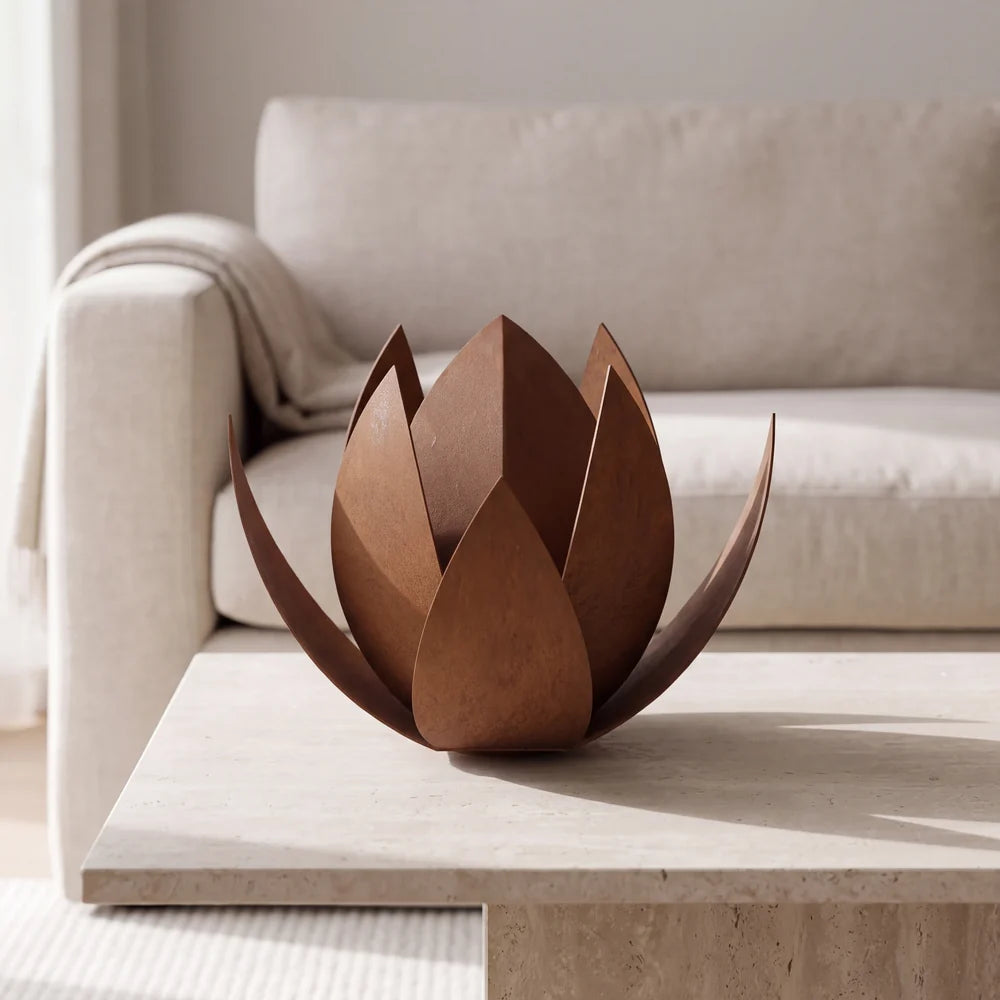
The Lotus Adult Cremation Urn for Ashes in Stainless Steel is shaped like a lotus flower, with curved petals around a central bulb. Its page describes it as suitable for indoor or outdoor display.

Pictured: Lotus Adult Cremation Urn for Ashes in Stainless Steel
- The Lotus Adult Urn: 3.5 liters (about 214 cubic inches); 33 cm (13.0 in) high; 4.1 kg (9.0 lb) empty; opens from the base; for indoor or outdoor display.
- The Oak Wood Effect MDF Cremation Urn for Adult Ashes: 3.5 liters (about 214 cubic inches); 14 cm (5.51 in) high; 1.3 kg (2.87 lb) empty; a base panel with a screw-release sliding mechanism, with an ashes bag included; for display in the home. It is MDF with an oak effect finish, not solid wood.
Neither is right for every plan. Both are made to be kept, so if the ashes are to be scattered or buried in something that breaks down, look instead at our scatter tubes or biodegradable burial urns. If the ashes are to travel by air from or within the United States, we cannot tell you how any particular urn will appear on an X-ray, so the TSA page above and the airline are the places to check. For the wider choices, see our guides on what to do with ashes after cremation and the cremation process.
Sources
- The Cremation Society, "Progress of Cremation in the British Islands", cremation.org.uk, table to 2025 (2025 figures provisional), read October 6, 2026.
- The Cremation Society, "History of Modern Cremation in the United Kingdom", cremation.org.uk, read October 6, 2026.
- Cremation Act 1902, section 5, "Site of crematorium", legislation.gov.uk, read October 6, 2026.
- The Cremation (England and Wales) Regulations 2008, regulation 30, "Disposal of ashes", legislation.gov.uk, read October 6, 2026.
- Ministry of Justice, "The Cremation (England and Wales) Regulations 2008: Guidance for applicants", gov.uk (PDF), September 2024, read October 6, 2026.
- The Cremation (Scotland) Regulations 2019, SSI 2019 No. 36, regulation 5, legislation.gov.uk, read October 6, 2026.
- Scottish Government, "Cremation (Scotland) Regulations 2019: guidance", gov.scot, published January 11, 2021, read October 6, 2026.
- Federation of Burial and Cremation Authorities, "Code of Cremation Practice", fbca.org.uk, edition issued July 2026, read October 6, 2026.
- Federation of Burial and Cremation Authorities, "FAQs", fbca.org.uk, read October 6, 2026.
- Cremation Association of North America, "Industry Statistical Information", cremationassociation.org, 2025 figures, read October 6, 2026.
- Cremation Association of North America, "Cremation Process", cremationassociation.org, read October 6, 2026.
- National Funeral Directors Association, "Statistics", nfda.org, page last updated September 29, 2025, read October 6, 2026.
- Federal Trade Commission, "The FTC Funeral Rule", consumer.ftc.gov, July 2012, read October 6, 2026.
- Transportation Security Administration, "Cremated Remains", tsa.gov, read October 6, 2026.
- Environmental Protection Agency, "Burial at Sea", epa.gov, last updated August 26, 2026, read October 6, 2026.
Sizes and product details in this guide were checked against our product pages on October 6, 2026.
Frequently asked questions
How long does cremation take?
In the United States, the Cremation Association of North America says the process can take from 30 minutes, the figure it gives for a stillborn baby, "to over two hours depending on the body size and stored heat in the chamber" (CANA, Cremation Process, read October 6, 2026). That is the time in the cremation chamber. The UK sources read for this guide do not give a time.
How long do cremated ashes last?
None of the official sources read for this guide gives a time limit. The Cremation Association of North America describes what remains after cremation as bone fragments that "are mostly calcium phosphates, with some other minor minerals" (CANA, read October 6, 2026), which is mineral material, and no source we read says that ashes expire.
Are cremation ashes really ashes?
No. They are bone fragments that have been reduced to fine particles. In England and Wales, the Ministry of Justice says that after a cremation any metal is removed "and the ashes will be reduced to fine particles" (Guidance for applicants, September 2024, paragraph 22, read October 6, 2026), and the Cremation Association of North America says that in North American crematories a machine reduces the fragments to less than 1/8 inch, about 3 mm, in size (CANA, read October 6, 2026).
What percentage of people are cremated?
In the British Islands the provisional figure for 2025 is 80.46% (Cremation Society, read October 6, 2026). In the United States the 2025 rate was 62.8% and in Canada 77.4% (Cremation Association of North America, read October 6, 2026), while the National Funeral Directors Association projected 63.4% for the United States in 2025 (NFDA, page last updated September 29, 2025).
Can more than one person be cremated at once?
In Scotland, the regulations require that the remains of only one person are placed in the cremator, except in a joint or shared cremation (Cremation (Scotland) Regulations 2019, regulation 5, read October 6, 2026). For England and Wales, the official documents read for this guide do not address the point; the written rule we found is clause 6 of the Federation of Burial and Cremation Authorities' Code of Cremation Practice, which says each person "shall be cremated separately", with exceptions such as parent and child or siblings where the applicant has made a specific request and where law and local policy permit (FBCA, Code of Cremation Practice, issued July 2026, read October 6, 2026). Northern Ireland's rules were not read for this guide. In the United States this is a matter for state law, which this guide does not cover.
How much do the ashes of an adult weigh?
It depends on the source. The Federation of Burial and Cremation Authorities in the UK says an adult's cremated remains will normally weigh "between 2 and 4 kg", about 4.4 to 8.8 lb (FBCA, read October 6, 2026). The Cremation Association of North America in the United States says the average is "between four and six pounds", about 1.8 to 2.7 kg (CANA, read October 6, 2026).
Why does a pacemaker have to be declared before cremation?
In England and Wales, the Ministry of Justice says "Certain implantable medical devices in the body can explode when cremated", which can damage the machinery and put the people operating the cremator at risk, so the application form asks about them (Guidance for applicants, September 2024, paragraphs 18 to 20, read October 6, 2026).
Can you take cremated ashes on a plane in the United States?
Yes, subject to screening and the airline's own rules. The Transportation Security Administration allows cremated remains in carry-on bags with special instructions and in checked bags, notes that some airlines do not allow them in checked bags, and says its officers "will not open a container, even if requested by the passenger" (TSA, read October 6, 2026).
Adult Urns for Ashes
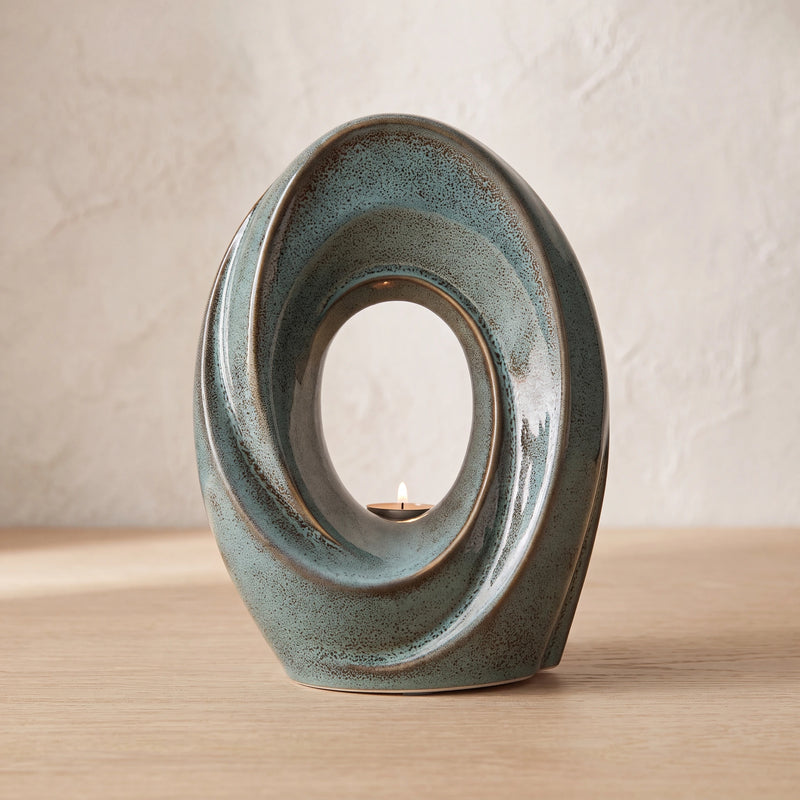
See all The Passage Adult Cremation Urn for Ashes in Oily Green
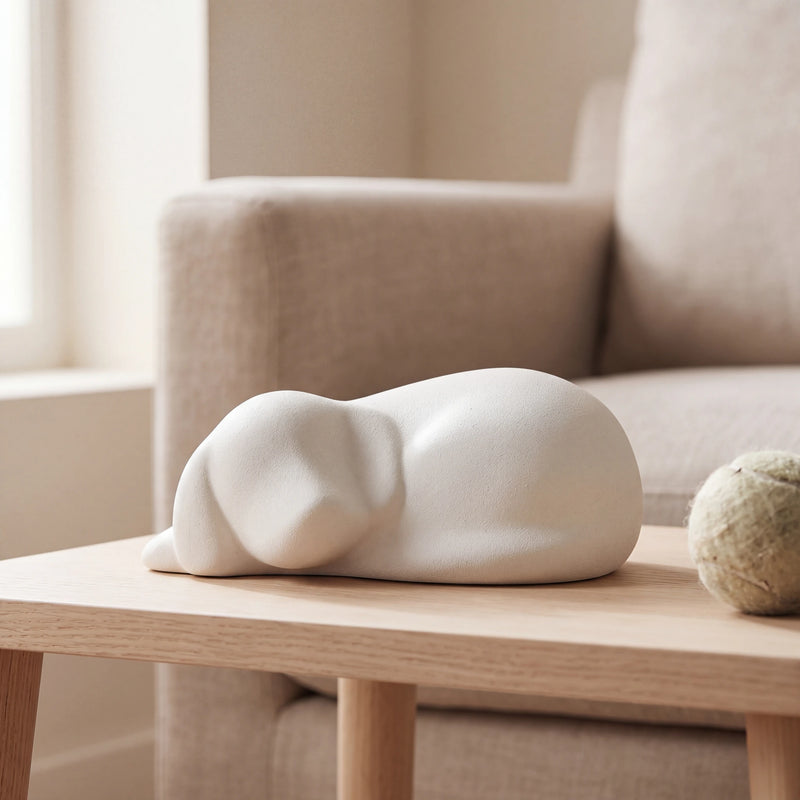
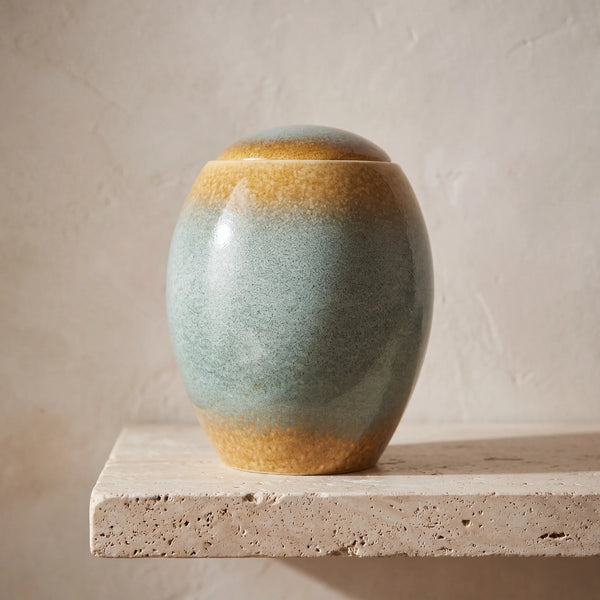 Ocean Blue Modern Adult Cremation Urn for Ashes
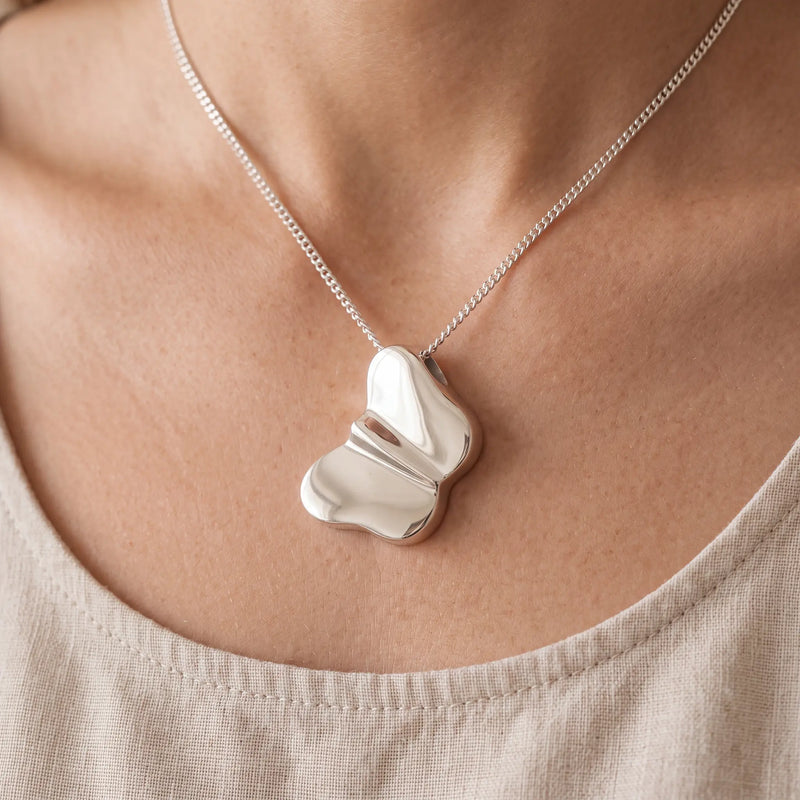
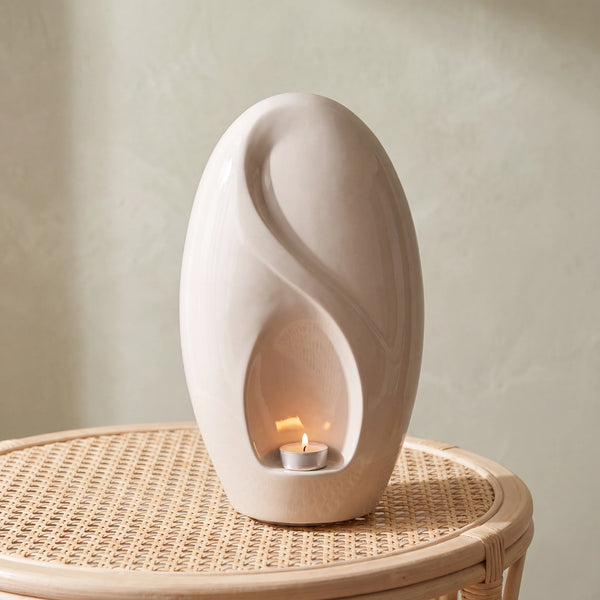 Infinity Adult Cremation Urn for Ashes in Cream
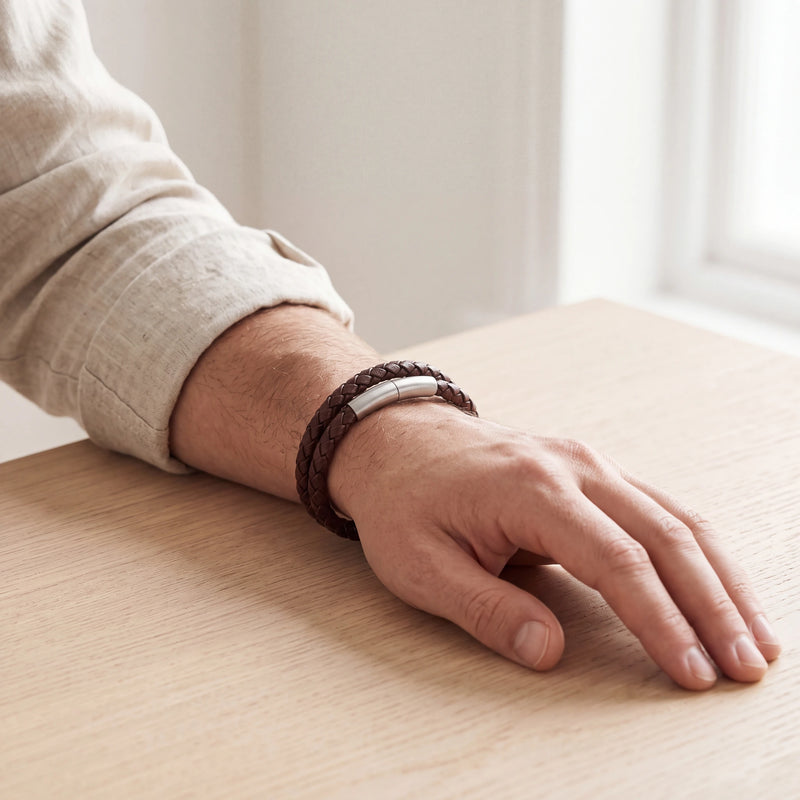
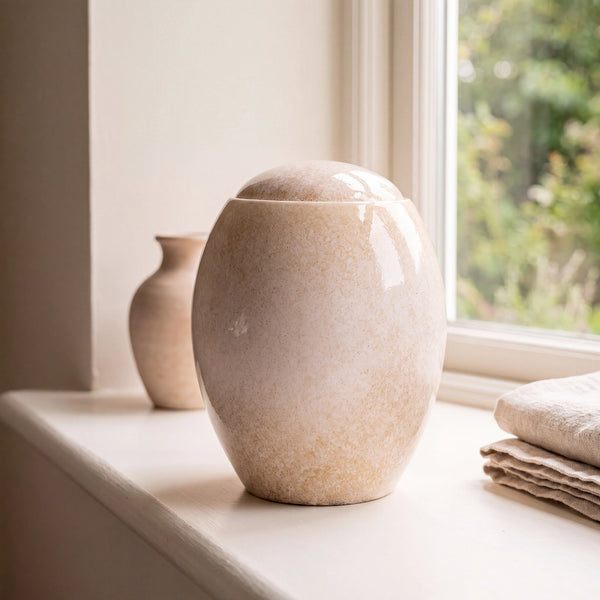 Sandy White Modern Adult Cremation Urn for Ashes
Written by Urns For Angels
Looking for an urn?
Browse the full range, or ask us and we will help you find the right one.
Keep reading
-

9 min read
How much do Cremation Ashes weigh?
-
14 min read
How Much Are Urns for Ashes? Costs and What Affects Them
-
12 min read
Human Composting and Other Alternatives to Cremation
See every guide on Cremation Explained: Process, Costs and Rules


Leave a comment
This site is protected by hCaptcha and the hCaptcha Privacy Policy and Terms of Service apply.