



Water Burial Ceremonies Explained
A water burial is a gentle, meaningful way to return a loved one to the sea, a river or a lake. The tradition stretches back thousands of years, and today it usually means releasing cremated ashes in a biodegradable water urn. This guide explains how a modern water burial ceremony works.
Quick answer: A modern water burial ceremony involves placing a loved one's ashes in a biodegradable water urn and releasing it gently onto the water, where it floats briefly before dissolving and releasing the ashes. Families often gather to share words and memories, sometimes adding biodegradable flower petals. Use only biodegradable materials, and follow the local guidelines for scattering on water.

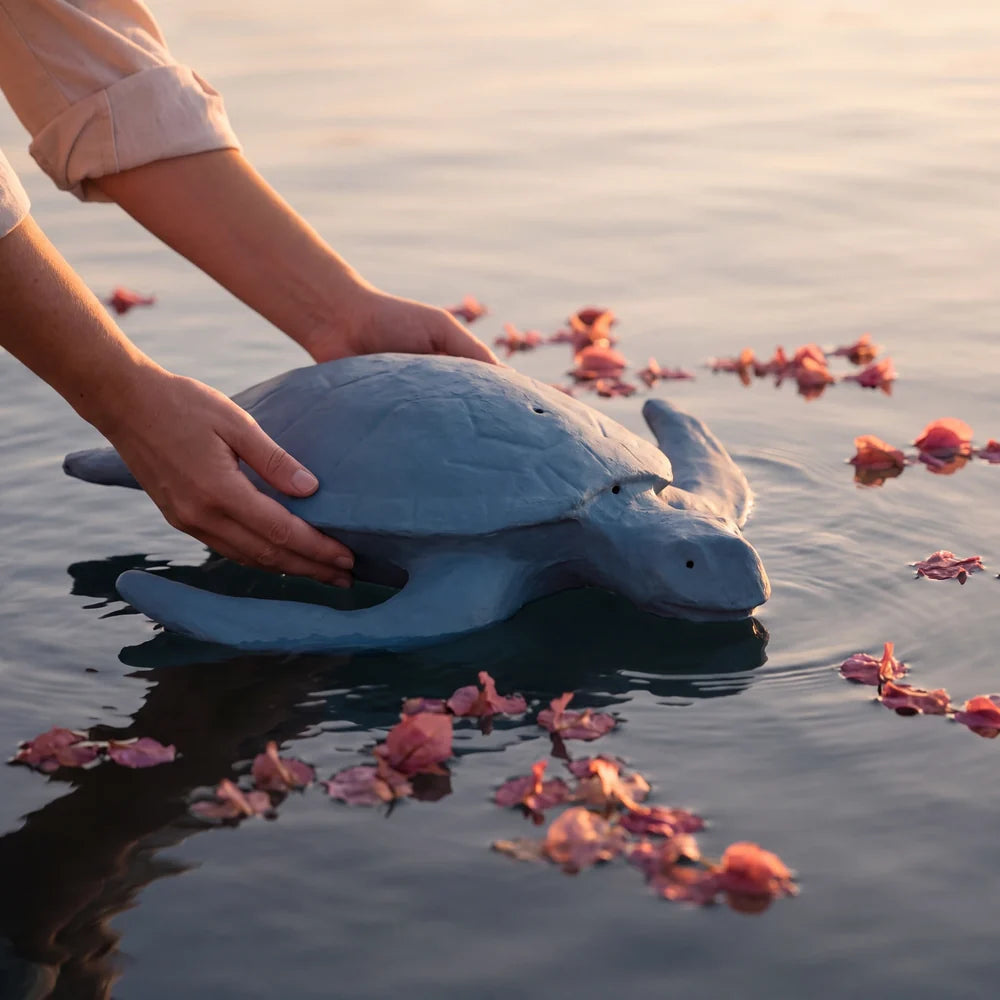
Pictured: Journey Biodegradable Water Urn for Ashes in Embossed Black - Adult
A tradition through history
Water burials appear across many cultures and centuries, from Viking sea farewells to the ceremonies of ancient Rome, Greece and Egypt. In Hindu and Buddhist tradition, cremation followed by scattering ashes at a sacred body of water has long been central. Today that ancient idea continues in a simple, eco-friendly form: the burial of cremated ashes in a water-soluble urn.
Why a biodegradable urn matters
For an eco-friendly ceremony, the urn must be biodegradable so nothing harmful is left in the water. A Journey Water Urn is made from mulberry bark that softens as it absorbs water, gently submerging and releasing the ashes. It includes a water-soluble bag to transfer the ashes cleanly. You can see the full range in our biodegradable urns collection.
A water burial ceremony today
A modern ceremony is whatever feels right for your family. Often relatives gather at the water's edge or aboard a boat, share speeches and memories, then softly release the urn onto the surface. Some add biodegradable flower petals to enhance the moment as the urn drifts and settles. It can be a quiet, private goodbye or a larger gathering, religious or secular.
Choosing a location
The right spot is often somewhere a loved one felt connected to, the coast, a favorite lake, or a meaningful river. For inspiration and the rules to follow, see our guides on the best places for a water burial and scattering ashes laws and regulations.
Frequently asked questions
What happens at a water burial ceremony?
Family and friends gather at the water's edge or on a boat, often sharing speeches and memories, then gently release a biodegradable water urn onto the surface. It floats briefly before dissolving and releasing the ashes into the water.
What kind of urn do you use for a water burial?
A biodegradable water urn made from natural materials such as mulberry bark, sand or salt. It floats briefly then dissolves completely, so nothing harmful is left behind. Avoid any urn containing plastic or metal.
Can the whole family attend a water burial?
Yes. A water burial can be a private goodbye or a larger gathering. Scattering from a boat gives more room and privacy, while a shoreline ceremony is simple and costs nothing.
Are water burials legal?
Scattering cremated ashes on water is legal in the UK with no permit needed, provided you follow the Environment Agency guidance: use only biodegradable materials, scatter close to the surface, and keep away from water intakes and buildings.
Biodegradable Urns
See all Journey Biodegradable Water Urn for Ashes in Aqua Blossom - Adult
 Embrace Biodegradable Urn for Ashes in White Hemp - Adult
 Pillow Biodegradable Natural Fibre Paper Water Urn for Ashes - Adult
 Simplicity Earthurn Biodegradable Urn for Ashes in Floral - Adult
Written by Jan Marynowski
Looking for an urn?
Browse the full range, or ask us and we will help you find the right one.
Keep reading
-

11 min read
What Can I Do With My Dad's Ashes? A Gentle Guide
-
10 min read
What to Do With Your Mother's Ashes: 6 Gentle Options
-
8 min read
What to Do With an Urn After Scattering Ashes
See every guide on What to Do With Ashes: Scattering, Burial and Keeping


Leave a comment
This site is protected by hCaptcha and the hCaptcha Privacy Policy and Terms of Service apply.