


Reasons for Cremation: What the Evidence Shows
Quick answer: The reasons for cremation that published sources support differ by country. In the UK, the wishes of the person who died, where these were known, were the most important factor for all the people interviewed in research for the Competition and Markets Authority, published in October 2018. Also in the UK, a cremation cost less on average than a burial in 2024, in SunLife research reported by the Competition and Markets Authority on August 7, 2025. In England and Wales, the Law Commission described "a growing shortage of burial space" on March 18, 2026. Custom and faith are reasons too, and they are set out by country and by church below. Cremation is not right for everyone, and it cannot be undone.
People look up the reasons for cremation when they are deciding for someone who has died, or setting down what they want for themselves. This guide gathers what regulators, legislation, churches and the cremation bodies themselves have published about why people choose it, in the United Kingdom and the United States. Each figure and rule has its source and date beside it, and the full list of sources is at the end.
It is general information, not legal advice, and it does not tell you which to choose. Where a rule is described, only the main rule is given, and the linked page is the place to read its conditions. Our guide to the benefits of cremation sets out the cost figures and the rules on ashes in more detail. This one is about the reasons themselves.
Key facts
- United Kingdom: "The most important factor for all respondents was the wishes of the deceased, where these were known," according to the qualitative research report prepared for the Competition and Markets Authority by Research Works Limited, October 2018.
- United Kingdom, 2024: the average cost of a cremation including disbursements was £3,980 and the average cost of a burial including disbursements was £5,198, in SunLife research reported in the Competition and Markets Authority's annual review of the funerals sector, August 7, 2025.
- British Islands, 2025: cremation followed 527,511 of 655,588 deaths, which is 80.46%, according to the Cremation Society's table "Progress of Cremation in the British Islands", read on October 7, 2026. The table marks all three figures as provisional.
- United States, 2024: cremation followed 1,917,413 of 3,101,200 deaths, which is 61.83%, according to the International Statistics 2024 published by the Cremation Society, a UK body, read on October 7, 2026. This is not a US body's own publication: the page states that its figures "are reproduced as supplied by the Cremation Society's contacts in each country".
- United Kingdom, 1874: Sir Henry Thompson's main reason for supporting cremation was that "it was becoming a necessary sanitary precaution against the propagation of disease", according to the Cremation Society's history of cremation in the United Kingdom, read on October 7, 2026.
- Catholic Church, worldwide: "The Church continues to prefer the practice of burying the bodies of the deceased", and cremation is not prohibited unless chosen for reasons contrary to Christian doctrine, according to the Congregation for the Doctrine of the Faith's instruction Ad resurgendum cum Christo, August 15, 2016.
- Church of England: "Cremation of a dead body is lawful in connection with Christian burial," under Canon B 38 of the Canons of the Church of England, read on October 7, 2026.
- England and Wales: there is "a growing shortage of burial space", according to the Law Commission's announcement of its final report on burial and cremation law, March 18, 2026.
United Kingdom: the wishes of the person who died
The first reason is the simplest. Families choose cremation because the person who died asked for it.
In 2018 the Competition and Markets Authority commissioned interviews with people across England, Wales, Scotland and Northern Ireland who had recently arranged a funeral. The report found: "The most important factor for all respondents was the wishes of the deceased, where these were known," according to the Funerals Market Study qualitative research report by Research Works Limited, October 2018. The finding covers funeral arrangements as a whole, with burial or cremation among them. It is qualitative research: the report states that 80 individual interviews and 20 paired interviews were completed, with fieldwork in July and August 2018, so it describes how those families decided and is not a national percentage.
The same held when the wish was for burial. Those arranging burials "did not feel they could divert from the wishes of the deceased, even though respecting the choice to be buried often had significant cost implications," according to the same report of October 2018. Custom mattered too. The report records that when choosing a crematorium, many respondents were guided by the deceased's wishes or by a family connection with a particular crematorium.
We did not find an official survey for the United States that ranks the reasons families give, so this guide does not state one.
Cost
Cost is one of the reasons, and the published averages for the United Kingdom show a cremation costing less than a burial. This guide has no matching average for the United States. An average is not a price. Only a written price list or quote says what a funeral will cost where you live.
United Kingdom
In the UK the average cost of a cremation including disbursements was £3,980 in 2024, against £5,198 for a burial including disbursements, according to SunLife research set out in the Competition and Markets Authority's annual review of the funerals sector, published August 7, 2025. The review states that the pricing data comes from interviews with 100 funeral directors across the UK, carried out from May to July 2024.
The gap is not the same for every kind of funeral. The cost of a direct cremation was £1,597 and the cost of a direct burial was £1,527 in 2024, according to the same review of August 7, 2025. On those two figures, burial was slightly cheaper. Our guide to the average cost of cremation and burial goes through the figures.
United States federal law
States differ, and prices differ from state to state. One federal page bears on what has to be bought for a cremation. "No state or local law requires the use of a casket for cremation," according to the Federal Trade Commission's consumer page on the Funeral Rule, dated July 2012 and read on October 7, 2026. The same page states that a funeral home that offers cremations must tell you that alternative containers are available, and must make them available. The page sets out further conditions, and a state's own law is the place to check what applies there.
United Kingdom: the reasons given when modern cremation began
The reasons for cremation have changed over 150 years. The first ones were about public health.
Sir Henry Thompson set out the case in a paper called "The Treatment of the Body after Death" in January 1874. His main reason was that "it was becoming a necessary sanitary precaution against the propagation of disease among a population daily growing larger in relation to the area it occupied", according to the Cremation Society's history of cremation in the United Kingdom, read on October 7, 2026. The same page records that he believed cremation "would prevent premature burial, would reduce the expense of funerals, would spare mourners the necessity of standing exposed to the weather during interment", and that ashes kept in urns would be safe from vandalism.
So cost was on the list from the start. Thompson called a meeting at his house on January 13, 1874, at which a declaration was signed, and the Cremation Society of England came into being, according to the same Cremation Society page. The first official cremation at Woking took place on March 26, 1885, and in 1902 Parliament passed an Act "for the Regulation of burning of human remains, and to enable burial authorities to establish crematoria", in the words of the same page. That Act is the Cremation Act 1902, which is still listed on legislation.gov.uk, read on October 7, 2026.
Custom: it is what families now do
Once most people in a place choose cremation, it becomes the expected choice. The figures are set out by country below.
British Islands
In 1967 cremation followed 48.89% of deaths in the British Islands, and in 1968 it followed 51.23%, according to the Cremation Society's table "Progress of Cremation in the British Islands", read on October 7, 2026. For 2025 the same table gives 527,511 cremations out of 655,588 deaths, a rate of 80.46%, at 335 crematoria. It marks the 2025 deaths, cremations and percentage as provisional.
For 2024 the Society's two pages do not agree exactly. The Progress of Cremation table gives 522,429 cremations and 80.20%, and the International Statistics 2024 page, read on October 7, 2026, gives 522,733 cremations and 80.25%. Both give 651,380 deaths.
United States and Canada
There were 1,917,413 cremations out of 3,101,200 deaths in the United States in 2024, a rate of 61.83%, according to the International Statistics 2024 published by the Cremation Society, a UK body, read on October 7, 2026. That table is not a US body's own publication. The page states that its figures "are reproduced as supplied by the Cremation Society's contacts in each country". For 2025 the North American trade bodies give slightly different figures. The US cremation rate was 62.8% in 2025 and the Canadian rate was 77.4%, according to the Cremation Association of North America's industry statistics page, read on October 7, 2026. The National Funeral Directors Association's statistics page, last updated September 29, 2025, gives a projected US cremation rate of 63.4% for 2025. The association gives its figure as the rate for the year, and the National Funeral Directors Association calls its figure a projection.
On why, the Cremation Association of North America points to how settled people are. "More of the U.S. population has chosen to roam across the country and around the world," according to its industry statistics page, read on October 7, 2026. The page adds that many have loosened their connections to their geographic origins, while significant portions of the population remain rooted to their hometowns and the traditions they grew up with. It also describes a clustering effect among states, "suggesting that what started as individual preference became the norm in the community".
England and Wales: burial space
A burial needs a grave, and in England and Wales graves are becoming harder to provide. The Law Commission published the final report of its review of burial and cremation law on March 18, 2026, and described its recommendations as addressing "a growing shortage of burial space", according to the Law Commission's announcement of March 18, 2026. The report recommends allowing more burial grounds to reuse old graves, with the safeguard, in the announcement's words, that "No grave can be reused until 100 years after the last burial."
These are recommendations, not law. The same announcement states that the Government will now consider them and decide whether to change the law.
Faith: where cremation is allowed, and where burial is preferred
Faith can be a reason for cremation or a reason against it. The two churches below publish their own rules, and both allow cremation, one of them with conditions. Other faiths have their own teaching, and a leader of that faith is the person to ask. Our guide to cremation in different cultures gives some background.
The Catholic Church (worldwide)
In July 1963 the Pope proclaimed it legal within the Church to seek cremation, according to the Cremation Society's history page, read on October 7, 2026. That account is the Cremation Society's and not a Church document. The Church's own current instruction states: "The Church continues to prefer the practice of burying the bodies of the deceased, because this shows a greater esteem towards the deceased." It adds that cremation is not prohibited "unless it was chosen for reasons contrary to Christian doctrine", according to the Congregation for the Doctrine of the Faith's instruction Ad resurgendum cum Christo, August 15, 2016.
The instruction names the reasons it has in mind. Where cremation is chosen "because of sanitary, economic or social considerations, this choice must never violate the explicitly-stated or the reasonably inferable wishes of the deceased faithful." It also sets rules for the ashes: they "must be laid to rest in a sacred place", keeping them in a domestic residence "is not permitted", and they may not be scattered, divided among family members or preserved in jewellery, according to the same instruction of August 15, 2016.
A later reply adjusted one point. We read it as reported by Vatican News, the Holy See's own news service, and not in the Dicastery's own document. As reported by Vatican News on December 12, 2023, the Dicastery for the Doctrine of the Faith's reply to Cardinal Zuppi, approved on December 9, 2023, says that the church authority "may consider and evaluate a request by a family to preserve in an appropriate way a minimal part of the ashes of their relative in a place of significance for the history of the deceased person", under conditions that include the ashes being kept in a sacred place. A parish priest can say how this is applied locally.
The Church of England
"Cremation of a dead body is lawful in connection with Christian burial," under Canon B 38 of the Canons of the Church of England, read on October 7, 2026. The same canon states that the burial service may precede, accompany or follow the cremation, and may be held either in the church or at the crematorium. It states that the ashes should be reverently disposed of by a minister in a churchyard or other burial ground, on land designated by the bishop, or at sea.
The environment
Some people give the environment as a reason for cremation. We looked for a regulator or government body in the UK or the US that publishes a like-for-like comparison of the environmental effect of cremation and burial, and did not find one, so this guide makes no claim either way.
What can be shown is that the interest is there. In the United States, 61.4% of consumers would be interested in exploring green funeral options, up from 55.7% in 2021, according to the National Funeral Directors Association's statistics page, last updated September 29, 2025 and read on October 7, 2026. That figure is about green funerals in general. It is not a figure for cremation.
United Kingdom: a funeral service with a cremation
Choosing cremation does not mean going without a funeral. In the UK, "attended funeral services remain the norm for most consumers", although the same passage records "the increasing popularity of unattended funeral services", according to the Competition and Markets Authority's annual review of the funerals sector, published August 7, 2025.
One published rule shows the room there is over when and where the service is held. In the Church of England, "the burial service may precede, accompany, or follow the cremation; and may be held either in the church or at the crematorium," under Canon B 38 of the Canons of the Church of England, read on October 7, 2026. That is one church's rule. A funeral director or the person leading the service can say what is possible for a particular funeral.
Reasons people decide against cremation
The reasons above do not settle the matter for every family.
- The person who died asked to be buried. In the UK research above, families followed that wish even where it cost more.
- Faith. The Catholic Church prefers burial, as set out above, and other faiths have their own teaching.
- Cremation cannot be reversed. A family that is divided or unsure may need more time before deciding.
- Some people want a grave to visit, and a full burial gives one place for that.
- The cost gap is an average. In the UK a direct burial cost £1,527 and a direct cremation £1,597 in 2024, in SunLife research reported by the Competition and Markets Authority on August 7, 2025.
A funeral director can explain what is available locally and give written prices for both.
Recording your wishes, and the question of an urn
In the UK research above, families followed the wishes of the person who died where they knew them. Wishes that are written down are easier for a family to know, and that includes what should happen to the ashes. In England and Wales, "funeral directors hold hundreds of thousands of sets of uncollected ashes", according to the Law Commission's announcement of March 18, 2026. Our guide on what to know before writing a will covers where wishes are usually recorded, and what to do with ashes after cremation describes the choices.
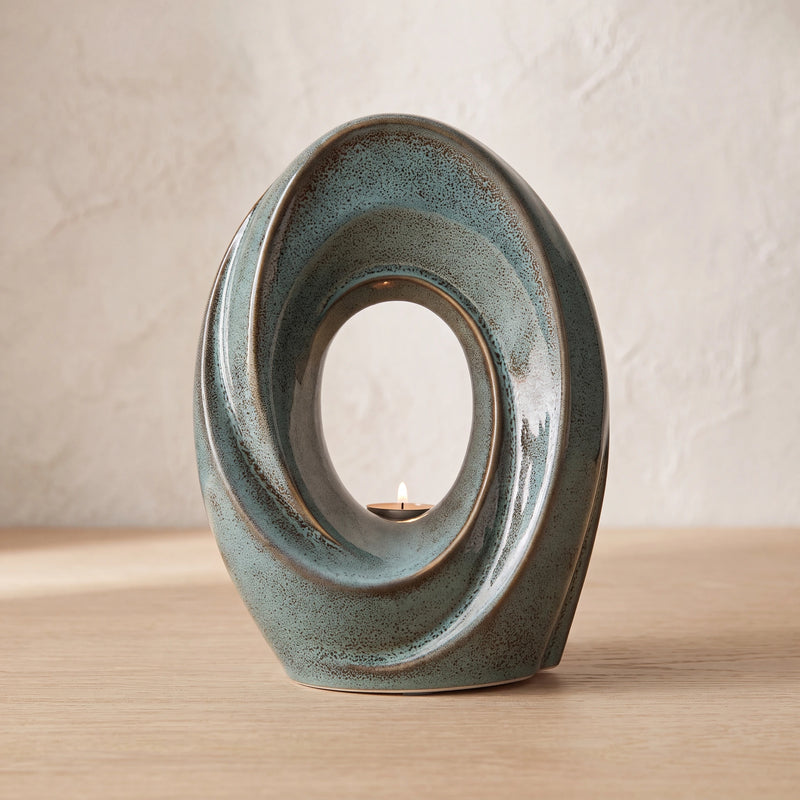
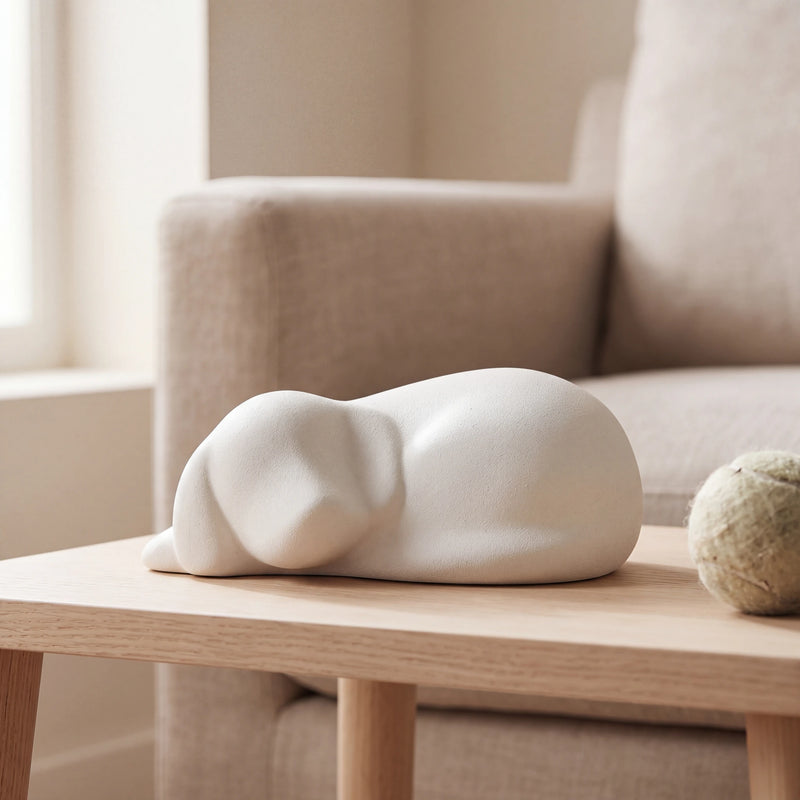
After a cremation, many families choose an urn. One that holds all of the ashes is an adult urn, and there are many designs in our adult cremation urns for ashes. Where the ashes are scattered or buried and a relative would like to keep a little, a keepsake holds a small share.
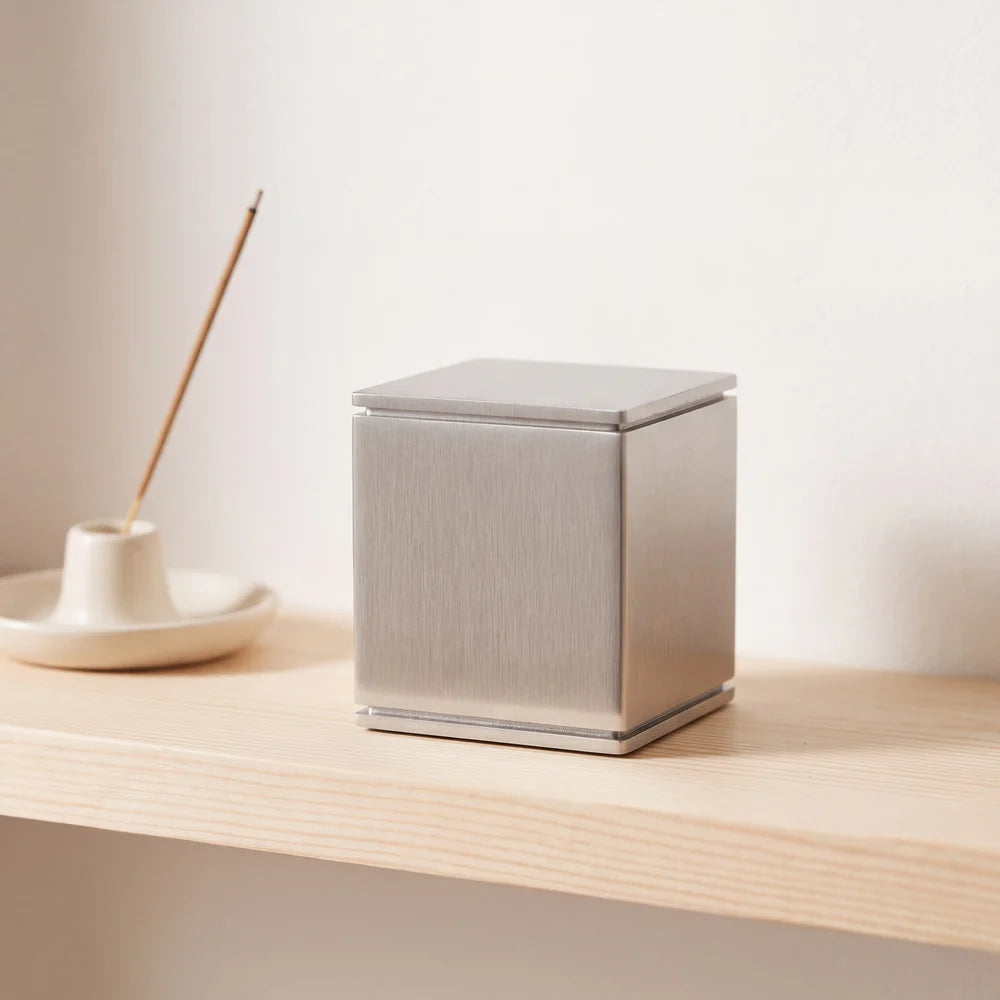
The Box Small Urn for Ashes in Stainless Steel is one example: a plain cube in brushed stainless steel with a fine seam where the lid meets the body. It holds 0.8 liters (about 49 cubic inches), which is a portion and not the full ashes of an adult. Each side measures 10 cm (3.94 in) and it weighs 1 kg (2.2 lb) empty. The lid closes to hold the ashes in place, and its page says a little clear adhesive can be used to seal it for good. The page lists it as suitable for display indoors or outdoors.

Pictured: Box Small Urn for Ashes in Stainless Steel
It is the wrong choice in three cases. It is too small to hold all of the ashes. It is metal, so it is not for a natural burial, where our biodegradable burial urns are the ones to look at. And for a Catholic family, the Church's rules above on keeping and dividing ashes are worth raising with a priest first. The urn size guide shows how to check the capacity you need.
Sources
- Research Works Limited for the Competition and Markets Authority, "Funerals Market Study: Qualitative Research Report", October 2018: report. Read October 7, 2026.
- Competition and Markets Authority, "Funerals sector: Annual review of market outcomes", published August 7, 2025: report. Read October 7, 2026.
- The Cremation Society, "Progress of Cremation in the British Islands": statistics table. Read October 7, 2026.
- The Cremation Society, "International Statistics 2024": statistics page. Read October 7, 2026.
- The Cremation Society, "History of Cremation in the United Kingdom": history page. Read October 7, 2026.
- Cremation Act 1902 (1902 chapter 8): legislation.gov.uk. Read October 7, 2026.
- Cremation Association of North America, "Industry Statistical Information": statistics page. Read October 7, 2026.
- National Funeral Directors Association, "Statistics", last updated September 29, 2025: statistics page. Read October 7, 2026.
- Federal Trade Commission, "The FTC Funeral Rule", dated July 2012: consumer page. Read October 7, 2026.
- Law Commission, "Law Commission recommends new safeguards to enable wider reuse of old graves", March 18, 2026: announcement. Read October 7, 2026.
- Congregation for the Doctrine of the Faith, "Instruction Ad resurgendum cum Christo regarding the burial of the deceased and the conservation of the ashes in the case of cremation", August 15, 2016, as published by the Holy See Press Office on October 25, 2016: instruction. Read October 7, 2026.
- Dicastery for the Doctrine of the Faith, reply to Cardinal Matteo Maria Zuppi on the preservation of the ashes of the deceased following cremation, approved December 9, 2023, as quoted in Vatican News, "Dicastery for the Doctrine of the Faith responds to questions about cremation", December 12, 2023: Holy See news service. Read October 7, 2026.
- Church of England, "Canons of the Church of England, Section B", Canon B 38: canons. Read October 7, 2026.
Sizes and product details in this guide were checked against our product pages on October 7, 2026.
Frequently asked questions
What are the main reasons for cremation?
The published evidence differs by country. In the UK, the wishes of the person who died, where these were known, were the most important factor for all the people interviewed, according to the qualitative research report for the Competition and Markets Authority, October 2018. The other reasons set out in this guide, each with its source, are a lower average cost than burial in the UK in 2024, a shortage of burial space in England and Wales, custom in the UK and the United States, and the teaching of a person's church.
Why do people cremate instead of bury?
In the UK research for the Competition and Markets Authority, families followed the wishes of the person who died where they knew them, and some felt a family connection with a particular crematorium. On the published UK averages cremation also costs less: £3,980 against £5,198 for a burial in 2024, both including disbursements, in SunLife research reported by the Competition and Markets Authority on August 7, 2025.
Why did cremation start in the United Kingdom?
The first reason given was public health. Sir Henry Thompson's main reason in 1874 was that cremation "was becoming a necessary sanitary precaution against the propagation of disease", according to the Cremation Society's history of cremation in the United Kingdom, read on October 7, 2026.
How many people choose cremation?
Cremation followed 80.46% of deaths in the British Islands in 2025, a provisional figure, according to the Cremation Society's Progress of Cremation table, read on October 7, 2026. It followed 61.83% of deaths in the United States in 2024, according to the International Statistics 2024 published by the Cremation Society, a UK body, read on October 7, 2026.
Can you still have a funeral with cremation?
Yes. In the UK, "attended funeral services remain the norm for most consumers", according to the Competition and Markets Authority's annual review of the funerals sector, August 7, 2025. In the Church of England the service "may precede, accompany, or follow the cremation", under Canon B 38, read on October 7, 2026.
Does the Catholic Church allow cremation?
Yes, with conditions. The Church prefers burial, and cremation is not prohibited unless chosen for reasons contrary to Christian doctrine, according to the Congregation for the Doctrine of the Faith's instruction of August 15, 2016. The same instruction sets rules on where the ashes are kept, so a priest is the person to ask.
Is cremation chosen for environmental reasons?
Some people give that reason. We did not find a regulator or government body in the UK or the US that publishes a like-for-like comparison of cremation and burial, so this guide makes no claim either way.
What are the reasons not to choose cremation?
The person who died may have asked to be buried, a faith may prefer burial, as the Catholic Church does, and some families want a grave to visit. Cremation also cannot be reversed.
Should I write down that I want to be cremated?
Writing it down helps, because families in the UK research put the wishes of the person who died first where they were known. This is general information, not legal advice, and a solicitor or attorney can say how wishes are best recorded where you live.
Adult Urns for Ashes
See all The Passage Adult Cremation Urn for Ashes in Oily Green
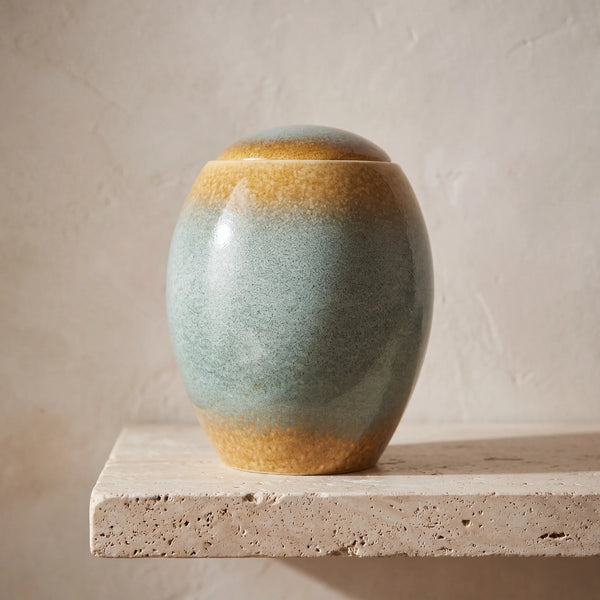 Ocean Blue Modern Adult Cremation Urn for Ashes
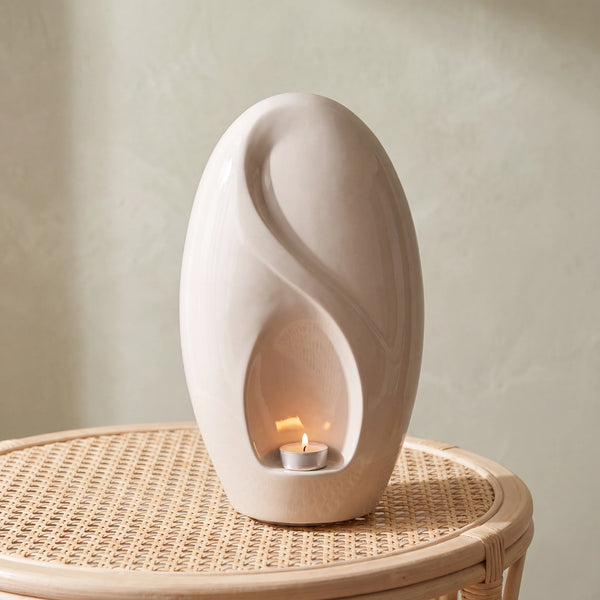 Infinity Adult Cremation Urn for Ashes in Cream
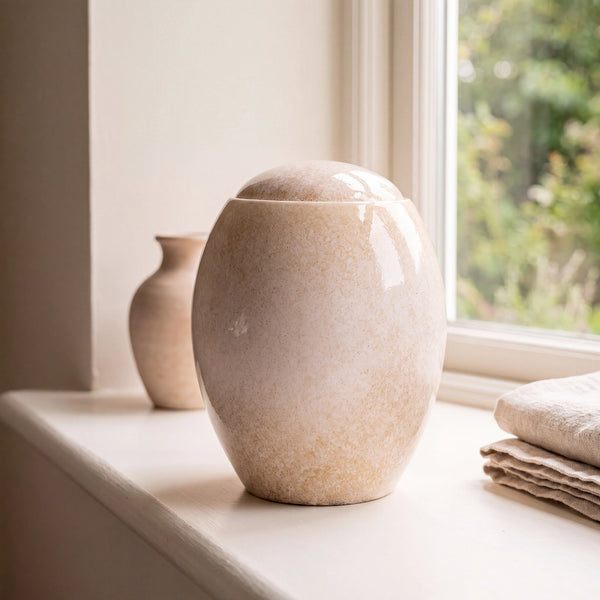 Sandy White Modern Adult Cremation Urn for Ashes
Written by Urns For Angels
Looking for an urn?
Browse the full range, or ask us and we will help you find the right one.
Keep reading
-
16 min read
Benefits of Cremation: What the Figures and Rules Show
-
19 min read
Cremation Myths and Facts: What the Rules Really Say
-
17 min read
UK Cremation Certificate and the Forms That Come Before It
See every guide on Cremation Explained: Process, Costs and Rules


Leave a comment
This site is protected by hCaptcha and the hCaptcha Privacy Policy and Terms of Service apply.