


Benefits of Cremation: What the Figures and Rules Show
Quick answer: The benefits of cremation most often given are a lower average cost than burial, freedom to hold a service at a different time and place, and a wide choice over what happens to the ashes. In the UK the average cremation cost £3,980 against £5,198 for a burial in 2024, in SunLife survey research reported by the Competition and Markets Authority on August 7, 2025. Cremation followed 80.25% of deaths in the British Islands and 61.83% of deaths in the United States in 2024, according to the Cremation Society's International Statistics 2024, read on October 6, 2026. It is not right for everyone, and it cannot be undone.
People who search for the benefits of cremation are usually weighing it against burial, for someone who has died or for themselves. This guide sets out what can be shown from regulators, government, legislation and the trade bodies themselves, for the United Kingdom and the United States, and it says where a commonly repeated benefit could not be confirmed from an official source. Every figure has its source and its date beside it, and the full list of sources is at the end.
It is general information, not legal advice. Where a rule is described, only the main rule is given, in the words of the official page. Rules have exceptions and conditions, and the linked page is the place to read them. This guide does not tell you which to choose. That belongs to the person who has died, if they left wishes, and to the family.
Key facts
- British Islands, 2024: cremation followed 522,733 of 651,380 deaths, which is 80.25%, according to the Cremation Society's International Statistics 2024, read on October 6, 2026.
- United States, 2024: cremation followed 61.83% of deaths, according to the Cremation Society's International Statistics 2024, read on October 6, 2026.
- United Kingdom, 2024: the average cost of a cremation including disbursements was £3,980 and the average cost of a burial including disbursements was £5,198, in SunLife research based on interviews with 100 funeral directors, as reported by the Competition and Markets Authority on August 7, 2025.
- United States, 2023 study: the median cost of a funeral with cremation was $6,280 and the median cost of a funeral with casket and burial was $8,300, in a survey of member funeral homes by the National Funeral Directors Association, released December 8, 2023.
- United States: "No state or local law requires the use of a casket for cremation," according to the Federal Trade Commission's consumer page on the Funeral Rule, dated July 2012 and read on October 6, 2026.
- England and Wales: after a cremation the cremation authority "must dispose of the ashes in accordance with the applicant's instructions for ashes", under regulation 30 of the Cremation (England and Wales) Regulations 2008, read in its current revised form on October 6, 2026. The regulation sets out exceptions at the same link.
- English waters and Northern Irish offshore waters: "You don't need a licence or permission to scatter ashes at sea after a cremation," according to the Marine Management Organisation's guidance on GOV.UK, last updated March 25, 2026. The same page sends readers to other bodies for Welsh, Scottish and inshore Northern Irish waters.
- England and Wales: there is "a growing shortage of burial space", according to the Law Commission's announcement of its final report on burial and cremation law, March 18, 2026.
How many people choose cremation
One sign that families see benefits in cremation is how many now choose it. The figures are set out by country below.
United Kingdom and the British Islands
There were 522,733 cremations out of 651,380 deaths in the British Islands in 2024, a cremation rate of 80.25%, according to the Cremation Society's International Statistics 2024, read on October 6, 2026. The same table lists 336 crematoria in the British Islands in 2024. "British Islands" is the Cremation Society's own grouping. The page states that its figures are reproduced as supplied by the Society's contacts in each country, and it does not mark the 2024 British Islands figures as provisional.
United States and Canada
There were 1,917,413 cremations out of 3,101,200 deaths in the United States in 2024, a rate of 61.83%, according to the Cremation Society's International Statistics 2024, read on October 6, 2026. The page does not mark the 2024 United States figures as provisional.
The trade bodies in North America publish their own figures, and they do not match exactly. The US cremation rate was 62.8% in 2025 and the Canadian rate was 77.4%, up from 57.2% and 74.0% in 2021, according to the Cremation Association of North America's industry statistics page, read on October 6, 2026. The National Funeral Directors Association's statistics page, last updated September 29, 2025 and read on October 6, 2026, gives a projected US cremation rate of 63.4% and a projected US burial rate of 31.6% for 2025. The first is a reported rate and the second a projection, which explains part of the difference.
Both bodies expect the rate to keep rising. These are projections, not counts. The US cremation rate is projected to reach 69.1% and the Canadian rate 81.1% by 2030, according to the Cremation Association of North America's industry statistics page, read on October 6, 2026. The US cremation rate is expected to reach 82.3% by 2045, according to the National Funeral Directors Association's statistics page, last updated September 29, 2025.
On why, the Cremation Association of North America's industry statistics page, read on October 6, 2026, points to how settled people are. Writing about the United States, it observes that more of the population has chosen to roam across the country and around the world, and that many have loosened their connections to their geographic origins, while significant portions of the population remain rooted to their hometowns and connected to the traditions they grew up with.
Benefit 1: cremation costs less on the published averages
Cost is the benefit most often given, and it is the one with the most evidence behind it. An average is not a price. Only a written price list or quote says what a funeral will cost where you live.
United Kingdom
In the UK the average cost of a cremation including disbursements was £3,980 in 2024, against £5,198 for a burial including disbursements, according to SunLife's 2025 Cost of Dying report as set out in the Competition and Markets Authority's annual review of the funerals sector, published August 7, 2025. These are survey figures: the review states that the pricing data comes from interviews with 100 funeral directors across the UK, carried out from May to July 2024. Disbursements are costs such as the crematorium or burial site, the doctor and the minister or celebrant. The review describes SunLife as a financial services company, and states that for this review the Competition and Markets Authority drew on SunLife's published findings and did not analyze the underlying data.
A cremation with no service is cheaper again. In the UK the cost of a direct cremation was £1,597 in 2024, according to the same SunLife research as reported in the Competition and Markets Authority's review of August 7, 2025. The gap with burial is not the same for every kind of funeral, though: the same review puts the cost of a direct burial in the UK at £1,527 in 2024, slightly below the direct cremation figure.
United States
These are national figures. Prices differ from state to state.
In the US the median cost of a funeral with cremation was $6,280 and the median cost of a funeral with casket and burial was $8,300, according to the National Funeral Directors Association's 2023 General Price List Study, released December 8, 2023. This is a survey: the release states that it was sent to the owners of member funeral homes and that 809 completed it. It is the most recent release of this study that we found when we looked on October 6, 2026, so the figures are now almost three years old. Both figures are for a funeral with a viewing and a ceremony. Neither includes interment in a cemetery, a monument or grave marker, or cash-advance charges such as flowers, so the full cost of a burial is higher than $8,300. The cremation figure includes the cremation fee, an alternative cremation container and an urn.
Our guide to the average cost of cremation and burial goes through these figures in more detail.
Benefit 2: in the United States, fewer things have to be bought
This benefit is set out for the United States only, because that is where we found an official page that states it. We did not find an equivalent official statement for the UK, so this guide makes no claim about the UK here.
United States federal law: the Funeral Rule
"No state or local law requires the use of a casket for cremation," according to the Federal Trade Commission's consumer page on the Funeral Rule, dated July 2012 and read on October 6, 2026. The same page states that a funeral home that offers cremations must tell you that alternative containers are available, and that these might be made of unfinished wood, pressed wood, fiberboard or cardboard.
On embalming, the same Federal Trade Commission page, read on October 6, 2026, states: "No state law requires routine embalming for every death." It adds that some states require embalming or refrigeration if the body is not buried or cremated within a certain time, so the rule depends on the state. It also states that a funeral provider cannot refuse to handle a casket or urn bought elsewhere, or charge a fee to do it. The page sets out further conditions, and a state's own law is the place to check what applies there.
Benefit 3: the service can be held at another time and place
Cremation separates the cremation itself from whatever the family chooses to do afterwards. The cremation can take place with a full service, with a short one, or with no one present, which is what a direct cremation is. A memorial, a scattering or a burial of the ashes can then follow when the family is ready and when those who live far away are able to travel.
Our guide to what a direct cremation is explains how that arrangement works, and the cremation process describes what happens at the crematorium.
Benefit 4: a wide choice over what happens to the ashes
A burial fixes one place. Ashes can be kept, buried, placed in a niche, scattered, or shared between relatives, and one choice does not have to be the last. The rules that apply depend on the country and on the place, so they are set out by country below.
England and Wales: the applicant's instructions
In England and Wales, after a cremation the cremation authority "must dispose of the ashes in accordance with the applicant's instructions for ashes", under regulation 30 of the Cremation (England and Wales) Regulations 2008, read in its current revised form on October 6, 2026. The applicant is the person who applied for the cremation. That is the main rule. The same regulation has exceptions, including for exceptional circumstances and for cases where no instructions are given or the ashes are not collected, and they are set out at the link. Our guide to who has the rights to ashes after cremation covers this further.
English waters and Northern Irish offshore waters: scattering at sea
A marine license from the Marine Management Organisation is needed for a burial at sea in English waters or Northern Irish offshore waters, according to its guidance "How to arrange a burial at sea in the UK marine area" on GOV.UK, last updated March 25, 2026. On ashes, the same page states: "You don't need a licence or permission to scatter ashes at sea after a cremation." For burials at sea in Welsh waters, Scottish waters and inshore Northern Irish waters the page sends readers to other bodies, which it names. This guide does not state a rule for those waters.
For scattering on land in the UK we did not find a single official page to cite, so this guide gives no rule. As a practical first step, it is sensible to ask whoever owns or looks after the place.
United States federal law: scattering at sea
In the United States, cremated remains shall be buried in or on ocean waters of any depth provided that the burial takes place at least three nautical miles from land, according to the Environmental Protection Agency's Burial at Sea page, last updated August 26, 2026. The page states that no application or prior notice is required, and that the Environmental Protection Agency must be notified within 30 days following the event. The general permit covers human remains only and carries other conditions, which are set out on the same page. It applies to ocean waters. For lakes, rivers and other inland waters, the page states that scattering is not subject to this federal regulation and that states may have their own requirements.
Our guide to what to do with ashes after cremation describes each of these choices in turn.
England and Wales: burial space is under pressure
A burial takes a grave space, and in England and Wales that space is becoming harder to find. The Law Commission published the final report of its review of burial and cremation law on March 18, 2026, and described its recommendations as addressing "a growing shortage of burial space", according to the Law Commission's announcement of March 18, 2026. The report recommends allowing more burial grounds across England and Wales to reuse old graves, with the safeguard, in the announcement's words, that "No grave can be reused until 100 years after the last burial."
These are recommendations, not law. The same announcement of March 18, 2026 states that the Government will now consider the recommendations and decide whether to change the law in England and Wales.
The environmental question
Cremation is often described as the greener choice. We looked for a regulator or government body in the UK or the US that publishes a like-for-like comparison of the environmental effect of cremation and burial, and did not find one, so this guide makes no claim either way.
When cremation is not the right choice
The benefits above are real, but they do not settle the matter for every family.
- Cremation cannot be reversed. A family that is divided or unsure may need more time before deciding.
- Faith traditions differ on cremation. Where that matters to the person who has died or to the family, a leader of that faith is the person to ask.
- Some people want a grave to visit, and for them a full burial may be what feels right.
- Choice can be a burden. Deciding what to do with ashes is one more decision at a hard time, and relatives do not always agree. It does not have to be made quickly.
- The cost gap is an average. In the UK a direct burial cost £1,527 and a direct cremation £1,597 in 2024, in SunLife research reported by the Competition and Markets Authority on August 7, 2025.
A funeral director can explain what is available locally and give written prices for both.
Choosing an urn after a cremation
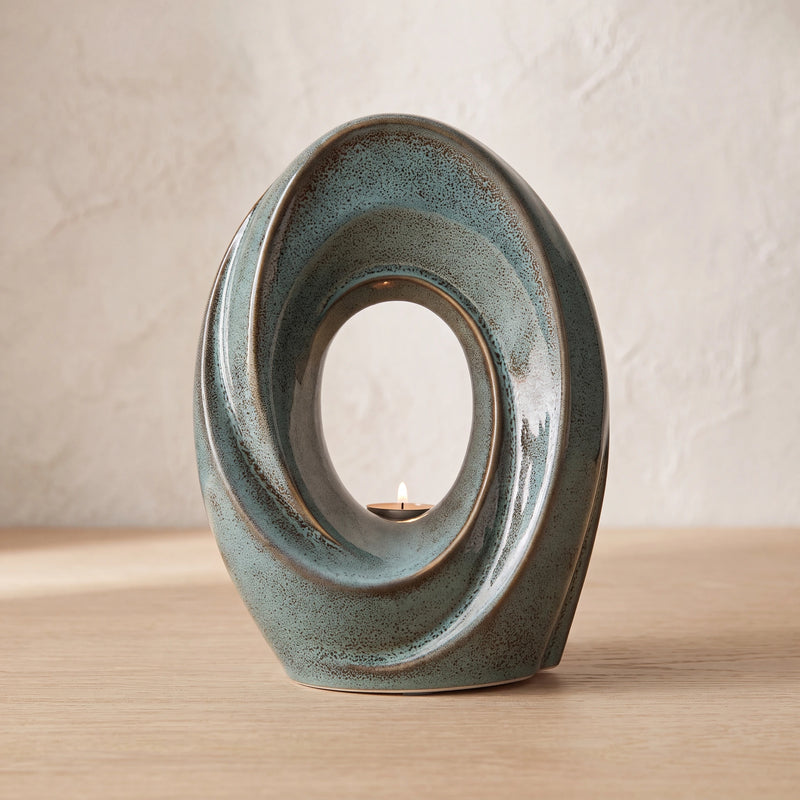
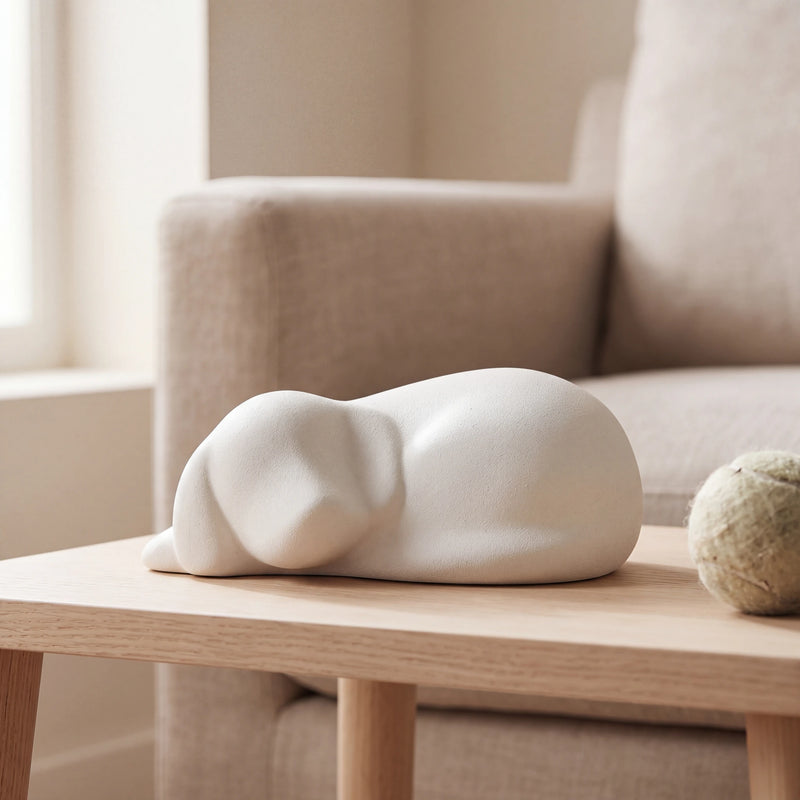
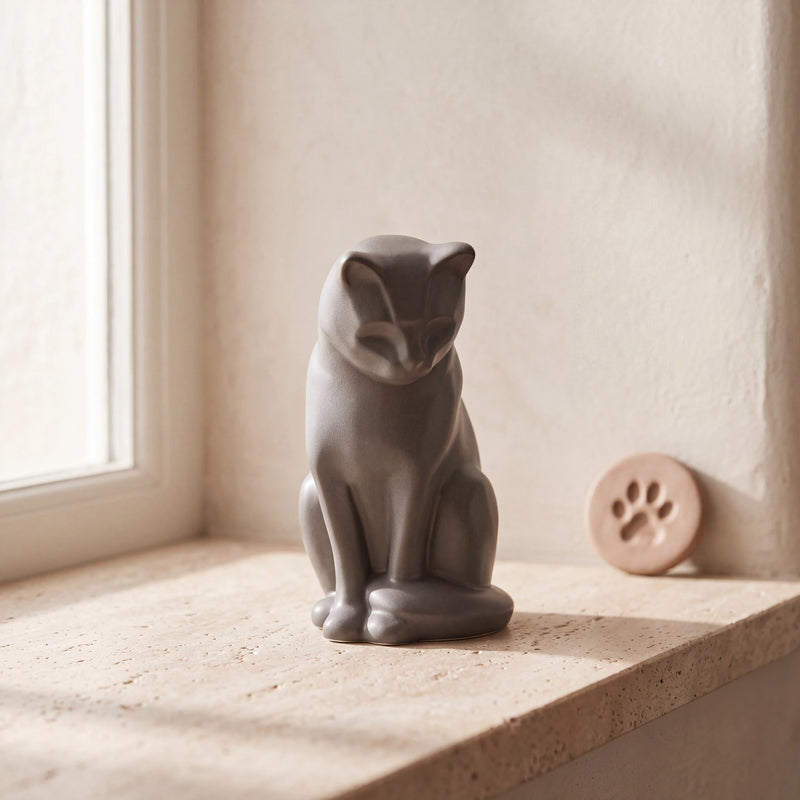
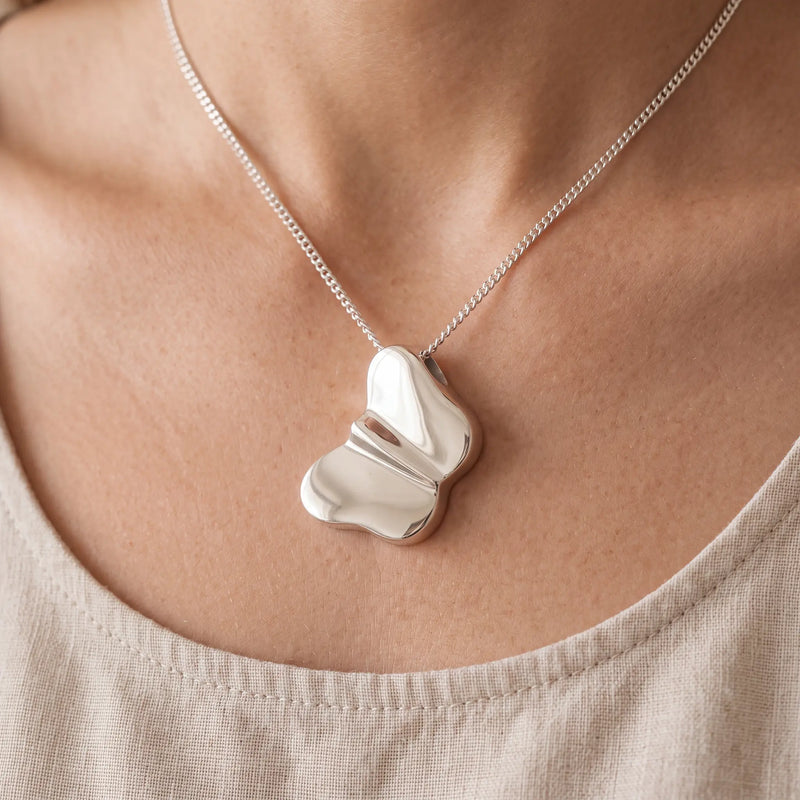
The choice over the ashes usually comes down to an urn: one for all of the ashes, a smaller one for a share, or both. There are more designs in our adult cremation urns for ashes. Where a share is being kept, our keepsake urns and ashes jewellery are made to hold a small portion.
For ashes kept together at home, the Lotus Adult Cremation Urn for Ashes in Matte Black Stainless Steel is shaped like an open lotus flower, in layered sections like petals, with a matte black finish. It holds 3.5 liters (about 214 cubic inches), stands 30 cm (11.81 in) high and 33 cm (12.99 in) wide, and weighs 4.5 kg (9.9 lb) empty. It closes with a lid, and its page lists it as suitable for display indoors or outdoors. It is not a biodegradable urn, so it is not the one to choose for a natural burial or a burial at sea; our biodegradable burial urns are made for that.

Pictured: Lotus Adult Cremation Urn for Ashes in Matte Black Stainless Steel
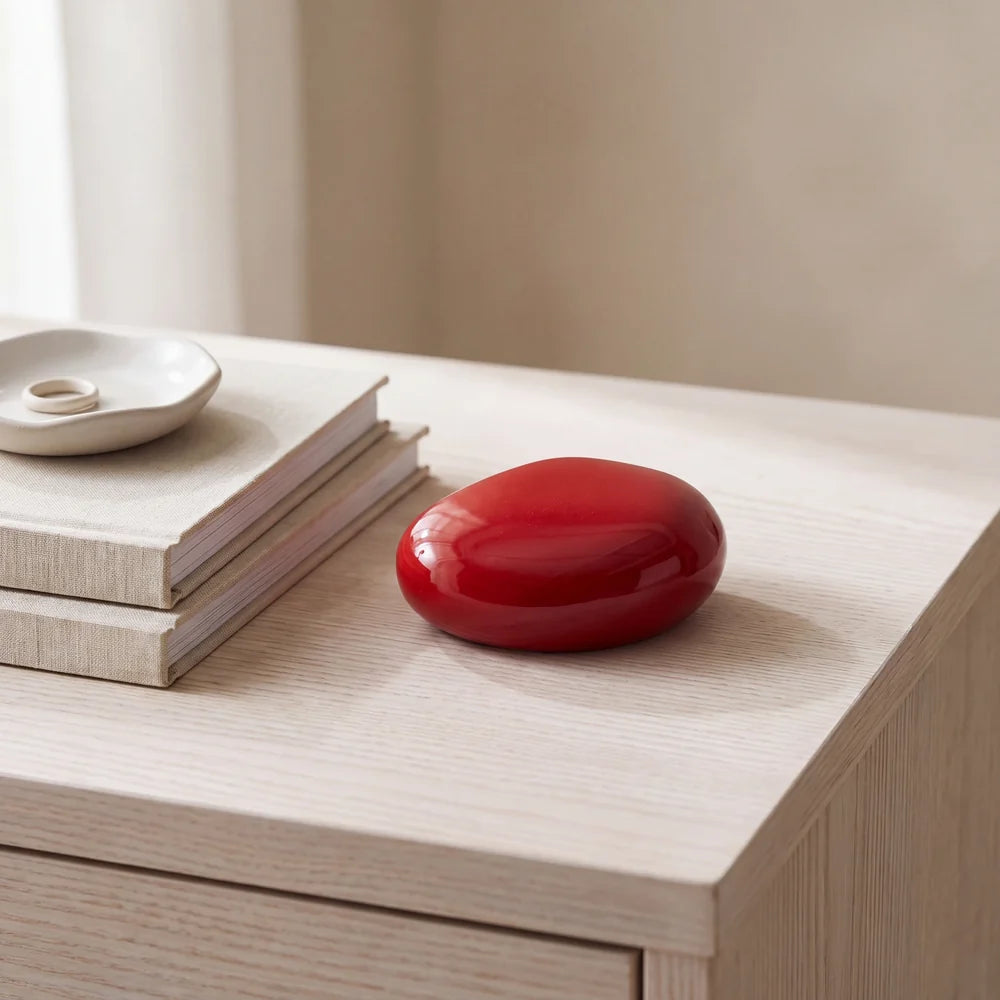
Where the ashes are being shared, the Palm Stone Small Urn for Ashes in Red is a small ceramic keepsake shaped like a smooth stone that rests in the palm of the hand. It holds 0.07 liters (about 4.27 cubic inches), which is a small portion and not the full amount, and measures 4 cm (1.6 in) high, 6.5 cm (2.6 in) wide and 8 cm (3.1 in) deep. It is filled through the base and closed with a ceramic stopper. Our guide to dividing ashes after cremation explains how sharing is usually done, and the urn size guide shows how to check the capacity you need.
Sources
- The Cremation Society, "International Statistics 2024": statistics page. Read October 6, 2026.
- Competition and Markets Authority, "Funerals sector: Annual review of market outcomes", published August 7, 2025: report. Read October 6, 2026.
- National Funeral Directors Association, "2023 NFDA General Price List Study Shows Inflation Increasing Faster than the Cost of a Funeral", released December 8, 2023: news release. Read October 6, 2026.
- National Funeral Directors Association, "Statistics", last updated September 29, 2025: statistics page. Read October 6, 2026.
- Cremation Association of North America, "Industry Statistical Information": statistics page. Read October 6, 2026.
- Federal Trade Commission, "The FTC Funeral Rule", dated July 2012: consumer page. Read October 6, 2026.
- The Cremation (England and Wales) Regulations 2008, regulation 30, "Disposal of ashes": legislation.gov.uk. Read October 6, 2026.
- Marine Management Organisation, "How to arrange a burial at sea in the UK marine area", last updated March 25, 2026: GOV.UK guidance. Read October 6, 2026.
- United States Environmental Protection Agency, "Burial at Sea", last updated August 26, 2026: guidance page. Read October 6, 2026.
- Law Commission, "Law Commission recommends new safeguards to enable wider reuse of old graves", March 18, 2026: announcement. Read October 6, 2026.
Sizes and product details in this guide were checked against our product pages on October 6, 2026.
Frequently asked questions
What are the benefits of cremation?
The benefits most often given are a lower average cost than burial, freedom to hold a service at a different time and place, and a wide choice over what happens to the ashes. On cost, in the UK the average cremation was £3,980 against £5,198 for a burial in 2024, in SunLife survey research reported by the Competition and Markets Authority on August 7, 2025.
What are the advantages of cremation over burial?
On the published UK averages cremation costs less: £3,980 against £5,198 for a burial in 2024, both including disbursements, in SunLife survey research reported by the Competition and Markets Authority on August 7, 2025. The ashes can also be kept, buried, scattered or shared, under rules that depend on the country and the place.
Why do people get cremated?
Reasons differ from person to person, and no official source gives one answer. What can be shown is how many choose it: cremation followed 80.25% of deaths in the British Islands and 61.83% of deaths in the United States in 2024, according to the Cremation Society's International Statistics 2024, read on October 6, 2026.
Is cremation cheaper than burial?
On the published averages, yes, but not for every kind of funeral. In the US the median funeral with cremation was $6,280 and with casket and burial $8,300, before cemetery costs, in the National Funeral Directors Association's survey released December 8, 2023. In the UK a direct burial cost £1,527 and a direct cremation £1,597 in 2024, in SunLife research reported by the Competition and Markets Authority on August 7, 2025.
Is cremation better for the environment than burial?
We did not find a regulator or government body in the UK or the US that publishes a like-for-like comparison, so this guide makes no claim either way.
What are the disadvantages of cremation?
Cremation cannot be reversed, faith traditions differ on it, and it leaves the family with a further decision about the ashes. Some people also want a grave to visit, and for them a full burial may feel right.
Can I keep some ashes and scatter the rest?
Ashes can be divided, and keepsake urns and ashes jewellery are made to hold a small portion while the rest is scattered or buried. The rules on scattering depend on the country and the place, so this guide gives no general rule; the section on choice over the ashes links to the official pages we found.
Can I bury cremated ashes after keeping them at home?
Keeping ashes at home first does not change them, so a burial later remains a practical possibility. We did not find a single official page that sets out a general rule, so the cemetery, churchyard or burial ground you have in mind is the one to ask what it requires.
Adult Urns for Ashes
See all The Passage Adult Cremation Urn for Ashes in Oily Green
 Ocean Blue Modern Adult Cremation Urn for Ashes
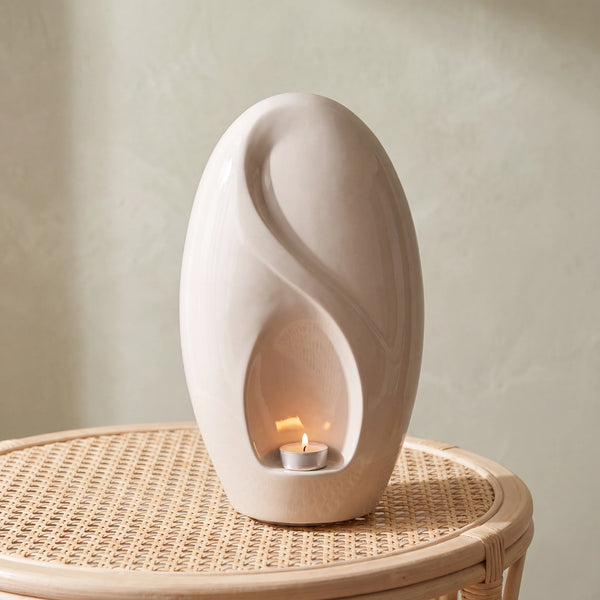 Infinity Adult Cremation Urn for Ashes in Cream
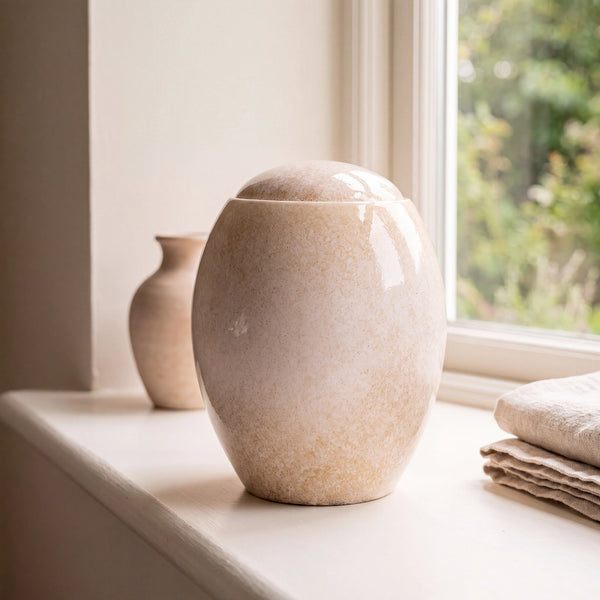 Sandy White Modern Adult Cremation Urn for Ashes
Written by Urns For Angels
Looking for an urn?
Browse the full range, or ask us and we will help you find the right one.
Keep reading
-
19 min read
Cremation Myths and Facts: What the Rules Really Say
-
17 min read
UK Cremation Certificate and the Forms That Come Before It
-
15 min read
Average Cost of Cremation and Burial: UK and US Figures
See every guide on Cremation Explained: Process, Costs and Rules


Leave a comment
This site is protected by hCaptcha and the hCaptcha Privacy Policy and Terms of Service apply.