
How to Choose a Burial Place for Ashes
Quick answer: A burial place for ashes can be a cemetery or churchyard grave, a crematorium garden of remembrance, a natural burial ground or a garden at home. Pick the place first, because whoever runs it decides what kind of urn may go into the ground. Then ask how long the plot is yours, what marker is allowed and whether the ashes could ever be moved.
Ashes can be buried in far more places than a coffin can. A plot for ashes is small, so there is room for one in an old family grave, under a tree in a woodland, or in a corner of a garden. That freedom is also what makes the decision hard. This guide goes through each kind of burial place for ashes, what the people who run it will ask of you, and which of our biodegradable burial urns suit burial in soil.
One word on timing. Nobody needs the ashes buried this month. If the family has not agreed on a place, the ashes can stay at home until it has.
A cemetery or churchyard grave
This is the choice for a family that wants a marked place to visit, looked after by someone else. Ashes can go into a new plot made for cremated remains, which is much smaller than a full grave, or into a grave that already holds a relative.
An existing family grave needs the agreement of whoever holds the rights to it. The cemetery office keeps that record and can tell you whose signature is needed. Ask them three more things while you are there: whether the urn has to be biodegradable or may be a lasting one, what size and style of stone or plaque is allowed, and how many years the plot is granted for.
Our guide to how cremation urns are buried describes what happens on the day.
A garden of remembrance or a columbarium
A garden of remembrance is a planted area at a crematorium or cemetery, set aside for cremated remains. Depending on the site, ashes are buried in a small plot, placed beneath a shrub or a rose, or scattered on a lawn. The marker is usually modest: a plaque, an entry in a book of remembrance, sometimes a bench.
A columbarium is a wall or building with rows of niches, each one closed with a named front. The urn sits above ground, so it does not need to break down. What matters instead is size. Niches are small and they vary, so get the inside height, width and depth from the site before you choose an urn, and compare them with the measurements on the product page.
A natural or woodland burial ground
A natural burial ground is managed as meadow or woodland instead of rows of headstones. Graves are marked lightly, with a tree, a wooden post or a flat stone, and some sites record only a map reference. Go and walk the ground before you commit to it. It will look wilder than a cemetery, and in winter it can be muddy and hard to reach for an older relative.
These sites are strict about what goes into the soil. Expect to be asked for an urn made of plant material, with no metal, plastic or varnish.

Pictured: Mycelium Biodegradable Urn for Ashes - Adult
The Mycelium Biodegradable Urn for Ashes was made with this kind of ground in mind. Mycelium is the root-like part of a mushroom, and here it binds reused sawdust into a firm cylinder with a pale surface that looks a little like stone. The urn holds 4 liters (about 244 cubic inches), stands 24 cm (9.4 in) tall and weighs 0.8 kg (1.8 lb) empty. Ashes go straight in and a flat lid rests on top. Its product page lists it as suitable for land burial.
A garden at home
A garden keeps the grave close, costs nothing and answers to nobody's opening hours. The difficulty comes later. Houses are sold, and the grave stays with the house. Think about who will own that ground in twenty years before you dig, and if the land is rented or shared, get the owner's agreement in writing.
Rules about burying ashes on private land differ from country to country, and in the United States from state to state, so check with your local authority first. We have a separate guide to burying ashes in your garden, and another on how to create a memorial garden around the spot.
If moving house is likely, there are two ways round it. Bury a small portion and keep the rest, or bury the urn in a large planter that can travel with you.

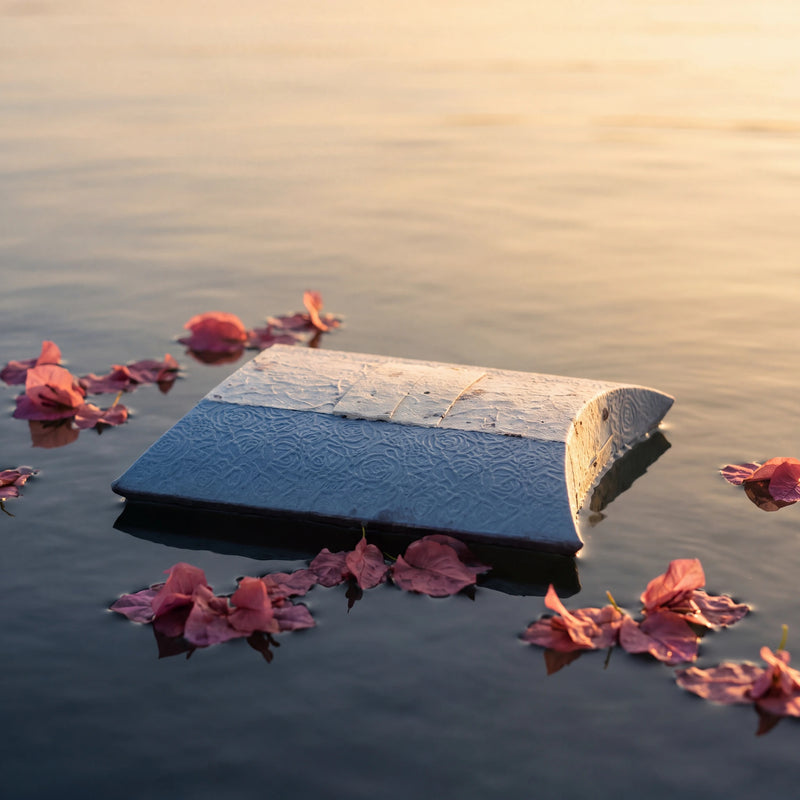
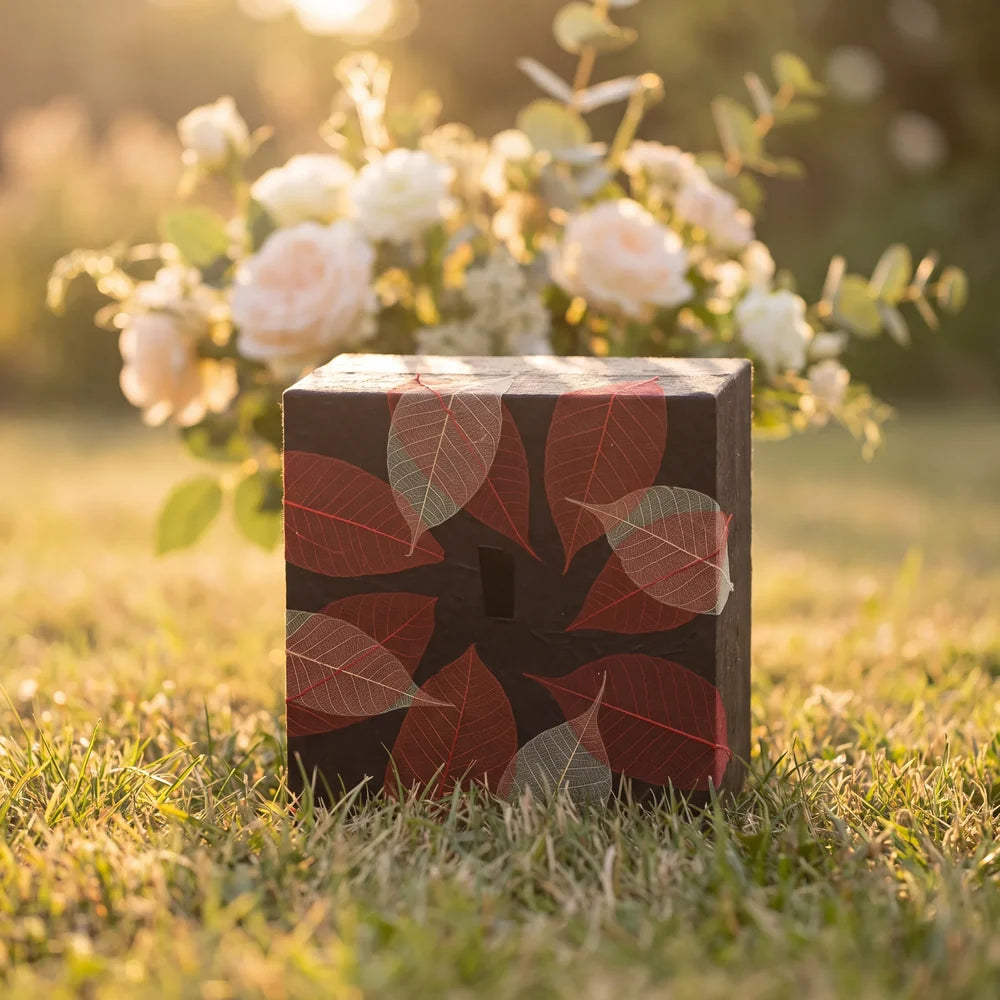
Pictured: Simplicity Earthurn Biodegradable Urn for Ashes in Floral - Adult
For a garden burial, the Simplicity Earthurn Biodegradable Urn for Ashes in Floral is made by hand from mulberry tree bark, with a pressed flower pattern on the surface. Its shape is flat and upright, 25.4 cm (10.0 in) high, 21.0 cm (8.3 in) wide and only 9.5 cm (3.7 in) deep, so the hole can be narrow. Capacity is 3.93 liters (about 240 cubic inches), which the product page gives as enough for an adult of up to approximately 108 kg (238 lb). The lid lifts off. A line of paper glue around the rim will seal it if you wish, though none is supplied.
England and Wales: churchyards, and moving ashes later
The Church of England's guidance for parishes says that residents of a parish, people on the church electoral roll and people who die in the parish have a right to be buried in its churchyard unless the churchyard has been closed, and that "the same rights apply to cremated remains as with normal burials" (Church of England, New burials and memorials, read October 12, 2026). The same page says it is common for one area of a churchyard to be put aside for cremated remains. Speak to the parish priest about what that churchyard allows.
Buried ashes cannot simply be dug up again. The Ministry of Justice publishes an "application form for a licence to remove buried human remains (including cremated remains)" in England and Wales (GOV.UK, Apply to exhume human remains, last updated March 24, 2020, read October 12, 2026). So a burial place should be chosen as if it were permanent. This is general information, not legal advice.
United States: what a natural burial ground allows
The Green Burial Council, which certifies green cemeteries, defines a natural burial ground as "a cemetery dedicated in full to sustainable practices/protocols that conserve energy, minimize waste, and do not allow the use of: toxic chemicals, any part of a vault (lid, slab, or partitioned liner), markers made of non-native stone, and burial containers not made from natural/plant derived materials" (Green Burial Council, Green Burial Defined, read October 12, 2026). It describes a hybrid cemetery as a conventional cemetery that offers natural burial in all or part of its grounds.
A conventional cemetery may work the other way and ask for a lasting urn, or for an outer vault around it. Ask which kind of cemetery you are dealing with before you buy anything. State law on burial outside a cemetery varies, and the county or city office is the place to ask.
Questions to ask the site before you decide
- Is the plot ours for a fixed number of years, and what happens when they end?
- Must the urn be biodegradable, or may it be a lasting one? Is an outer vault required?
- What marker is allowed, and who looks after it?
- Can a second set of ashes join the first later on?
- How easy is the walk from the gate for someone unsteady on their feet?
- What are the fees for the plot, for opening the ground and for the marker?
Urns for burial in the ground, side by side
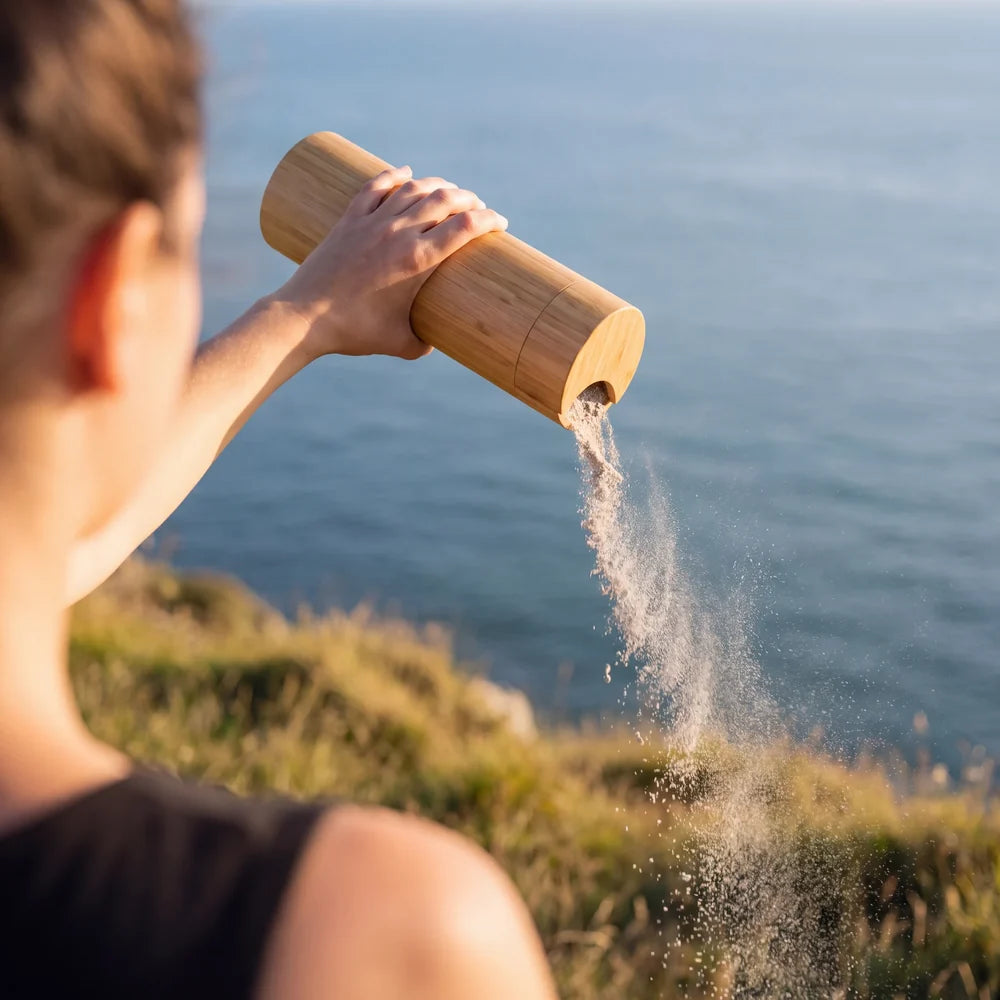
This guide shows three urns, each described on its product page as fit for burial in soil. Two are covered above. The third is the Eco Burial Bamboo Biodegradable Urn for Ashes, a plain cylinder made entirely from bamboo with the grain running top to bottom. Bamboo is sturdy enough for this urn to be kept at home first and buried later, which helps a family that has not settled on a place yet. Check the size before ordering, as it holds 3.1 liters (about 189 cubic inches). The urn is 21 cm (8.27 in) high and 15.5 cm (6.10 in) across, and the lid lifts out.

Pictured: Eco Burial Bamboo Biodegradable Urn for Ashes - Adult
- Mycelium Biodegradable Urn: 4 liters (about 244 cubic inches), flat lid that rests on top, listed for land burial.
- Simplicity Earthurn in Floral: 3.93 liters (about 240 cubic inches), lift-off lid with an optional paper glue seal, made for burial in a plot or memorial garden.
- Eco Burial Bamboo Urn: 3.1 liters (about 189 cubic inches), removable lid, for display at home and burial later.
As a rough rule, allow one cubic inch of capacity for each pound of body weight before cremation. Our urn size guide shows how to work it out.
When a biodegradable urn is the wrong choice
These urns are made to break down. That rules them out for a columbarium niche, for a cemetery that wants a lasting container, and for anyone who thinks the ashes may one day be moved. None of the three is sold for burial at sea or in a lake either. For water, look at our water urns for ashes, and for the wider question of materials see what type of urn is best for burial.
Sizes and product details in this guide were checked against our product pages on October 12, 2026.
Frequently asked questions
Where can ashes be buried?
Ashes can be buried in a cemetery or churchyard grave, in a crematorium garden of remembrance, in a natural or woodland burial ground, or in a private garden with the landowner's agreement. Each place sets its own rules about urns and markers, so ask before you choose an urn.
Can ashes be buried in an existing family grave?
Usually yes, with the agreement of whoever holds the rights to that grave. The cemetery office or parish keeps the record and can tell you whose permission is needed and whether there is room.
Do I need a biodegradable urn to bury ashes?
It depends on the place. Natural burial grounds ask for containers made of natural, plant-derived materials. A conventional cemetery may allow, or even ask for, a lasting urn or an outer vault. Ask the site first.
Can buried ashes be moved later?
Not freely. In England and Wales the Ministry of Justice issues a licence for removing buried human remains, and its application form covers cremated remains. Other countries have their own rules, so treat a burial place as permanent.
What is a garden of remembrance?
A garden of remembrance is a planted area at a crematorium or cemetery set aside for cremated remains. Ashes may be buried in a small plot, placed under a plant or scattered there, and the place is usually marked with a plaque or an entry in a book of remembrance.
Is a columbarium a burial place?
Not in the ground. A columbarium is a wall or building with niches that hold urns above ground. Because the urn stays dry and is meant to last, a biodegradable urn is not the right kind for a niche.
Biodegradable Burial Urns
See all Embrace Biodegradable Urn for Ashes in White Hemp - Adult
 Simplicity Earthurn Biodegradable Urn for Ashes in Floral - Adult
 Loop EarthRise™ Biodegradable Urn for Ashes - Adult
 Love Heart Biodegradable Urn for Ashes in Floral - Adult
Written by Urns For Angels
Looking for an urn?
Browse the full range, or ask us and we will help you find the right one.
Keep reading
-

2 min read
Water Burial Ceremonies Explained
-
11 min read
What Can I Do With My Dad's Ashes? A Gentle Guide
-
10 min read
What to Do With Your Mother's Ashes: 6 Gentle Options
See every guide on What to Do With Ashes: Scattering, Burial and Keeping


Leave a comment
This site is protected by hCaptcha and the hCaptcha Privacy Policy and Terms of Service apply.