



Direct Cremation vs Traditional Cremation: A Comparison
Quick answer: Direct cremation vs traditional cremation comes down to one thing: whether there is a funeral service with mourners present at the cremation. A traditional cremation has one, and a direct cremation does not, so any memorial is held separately. In the United Kingdom, a direct cremation cost £1,597 in 2024 and the average cremation, including third-party fees, cost £3,980, according to SunLife's survey of funeral directors as reported by the Competition and Markets Authority on August 7, 2025.
Families are often asked to choose between these two within a day or two of a death, and the words used for them are not the same everywhere. This guide sets the two side by side: what each one includes, what regulators call them, what each costs in the United Kingdom and in the United States, and who each one tends to suit. Every figure and rule has its source and date beside it, each country has its own heading, and the full list of sources is at the end. This is general information, not legal advice.
Key facts
- United Kingdom: the regulator's Order defines an attended funeral as "a funeral which includes a service and where mourners may attend", and an unattended funeral as "a funeral which does not include a service and where mourners may not attend" (Competition and Markets Authority, Funerals Market Investigation Order 2021, pages 5 and 7, dated June 16, 2021).
- United Kingdom: the cost of a direct cremation was £1,597 in 2024, the average cost of a cremation including disbursements was £3,980, and the cost of a simple attended funeral was £4,285, according to SunLife's survey of 100 funeral directors as reported by the regulator (Competition and Markets Authority, Funerals sector: annual review of market outcomes, pages 32 and 33, August 7, 2025).
- United Kingdom: among funeral directors with 10 or more branches, 87% of funerals arranged in the year to August 31, 2024 were attended, compared with 89% the year before (Competition and Markets Authority review, page 27, August 7, 2025).
- United Kingdom: crematorium operators received on average £957 for a standard fee attended service and £513 for an unattended service in the year to August 31, 2024 (Competition and Markets Authority review, Table 4, page 31, August 7, 2025).
- United States: the Federal Trade Commission describes direct cremation as one where "The body is cremated shortly after death, without embalming", and says it "usually costs less than the 'traditional' full-service funeral" (Federal Trade Commission, Types of Funerals, July 2012).
- United States: the national median cost of a funeral with a viewing and cremation was $6,280 (National Funeral Directors Association, General Price List Study, released December 8, 2023).
- United States: on the funeral provider websites that Federal Trade Commission staff reviewed, the lowest price for direct cremation started at $595 and the highest at $4,760, excluding the cost of an alternative container (FTC staff report, Shopping for Funeral Services Online, page 6, October 2022).
What the two terms mean
"Traditional cremation" is an everyday phrase, not a legal one. It means a cremation that follows a funeral service with family and friends present, usually at the crematorium or at a place of worship beforehand. A direct cremation is a cremation with no service and nobody attending. The cremation itself is the same in both, and our guide to the cremation process describes it.
Regulators use their own words. In the United Kingdom the terms are "attended" and "unattended". In the United States the Federal Trade Commission writes of the "traditional" full-service funeral, with the word traditional in quotation marks, and of direct cremation. When you read a price list, look for those terms. Our guide to what a direct cremation is covers that option on its own in more depth.
Direct cremation and traditional cremation side by side
This list follows the United Kingdom's standard descriptions of an attended and an unattended funeral, which are set out in Schedule 1 of the Funerals Market Investigation Order 2021 (pages 24 and 28, dated June 16, 2021). Individual providers may offer more than the standard, so ask.
- Service at the cremation. Traditional: yes, with mourners present. Direct: no service, and mourners do not attend.
- Legal and administrative arrangements. Included in both.
- Collection and care of the person who has died. Included in both.
- A suitable coffin. Included in both.
- Seeing the person beforehand. Traditional: viewing by appointment is one of the six standard items. Direct: viewing is not on the standard list.
- Date and time. Traditional: "at a date and time agreed between the Customer and Funeral Director". Direct: "at a date and time determined by the Funeral Director and clearly described to the Customer".
- Journey to the crematorium. Traditional: "a hearse or other appropriate vehicle". Direct: "transportation", with no vehicle specified.
- A ceremony. Traditional: held as part of the funeral. Direct: family and friends "may choose to have a ceremony, event or service for the deceased person, but they do not attend the burial or cremation itself".
United Kingdom: what each one costs
The survey figures
The most widely quoted prices come from SunLife, a financial services company, whose Cost of Dying research is based on interviews with 100 funeral directors across the UK carried out in May to July 2024. The Competition and Markets Authority (CMA) reports its findings: "the cost of a direct cremation increased by 5.7% from £1,511 in 2022 to £1,597 in 2024", the average cost of a cremation including disbursements rose from £3,673 in 2022 to £3,980 in 2024, and the cost of a simple attended funeral rose from £3,953 in 2022 to £4,285 in 2024 (CMA, Funerals sector: annual review of market outcomes, pages 32 and 33, August 7, 2025). The simple attended funeral figure is a weighted average of attended burials and cremations, and includes funeral director fees, a mid-range coffin, one limousine, and doctor and celebrant fees.
By our arithmetic from those figures, the direct cremation cost £2,383 less than the average cremation in 2024. The CMA says that for this review it drew on SunLife's published findings and did not analyze the underlying data.
What funeral directors and crematoria actually received
The CMA collects its own figures from larger firms, and they measure something different: revenue, not list prices. For funeral directors with 10 or more branches, in the year to August 31, 2024 and excluding disbursements such as the cremation fee, average revenue per funeral was £2,676 for the standard attended funeral, £3,129 for other attended funerals, £1,051 for the standard unattended funeral and £1,178 for other unattended funerals (CMA review, Table 3, page 27, August 7, 2025).
Crematoria received less for an unattended cremation too. Average revenue per cremation in the same year was £957 for a standard fee attended service, £628 for a reduced fee attended service and £513 for an unattended service, from the returns of 158 crematorium operators (CMA review, Table 4, page 31, August 7, 2025). The CMA notes that the unattended figure was pushed up by a large direct cremation provider entering its data for the first time, and that without that provider the figure was £395 (pages 29 and 30). The CMA also says the SunLife figures are "not directly comparable" with its own revenue data, so the two sets should be read separately.
Reading the two prices on a funeral director's list
Every funeral director in the United Kingdom must display a Standardised Price List, and the two headline prices on it are not like for like. The attended funeral is shown as "funeral director's charges only", with the cremation fee listed separately under "Fees you must pay". The unattended cremation is shown as one figure, "funeral director's charges plus the cremation fee" (Funerals Market Investigation Order 2021, Schedule 1, Part A, page 24, dated June 16, 2021). Add the cremation fee to the attended price before you compare.
The same list names "Embalming", "Funeral officiant" and "Collection and delivery of ashes" among the optional, additional products and services, for which it says funeral directors "are likely to charge". So with either kind of cremation, ask whether the return of the ashes is included. The Order extends to England and Wales, Scotland and Northern Ireland (Article 1, page 4). Our guide to the average cost of cremation and burial gives the wider figures, including burial.
United Kingdom: how many families choose each
Most cremations still have a service. Among funeral directors with 10 or more branches, 87% of funerals arranged in the year to August 31, 2024 were attended, compared with 89% the year before, and the CMA describes "a gradually rising trend in the purchase of unattended funerals" (CMA review, page 27, August 7, 2025). Among crematorium operators, 81% of cremations in the year to August 31, 2024 were attended services, compared with 84% the year before, and 71,230 of the 383,828 cremations they reported were unattended (CMA review, pages 30 and 31, August 7, 2025).
United States: what each one costs
These are national figures and federal rules. Prices and funeral law differ from state to state, and the Federal Trade Commission tells funeral providers "You must comply with your state regulations, even if they are more stringent than the Funeral Rule" (FTC, Complying with the Funeral Rule, read October 8, 2026).
How the Federal Trade Commission describes the two
The FTC says a "traditional" full-service funeral "usually includes a viewing or visitation and formal funeral service, use of a hearse to transport the body to the funeral site and cemetery, and burial, entombment, or cremation of the remains", and that "It is generally the most expensive type of funeral". Of direct cremation it says: "The body is cremated shortly after death, without embalming. The cremated remains are placed in an urn or other container. No viewing or visitation is involved." It adds that direct cremation "usually costs less than the 'traditional' full-service funeral" (FTC, Types of Funerals, July 2012).
The same page explains where the difference in cost comes from. For the full-service funeral, "costs often include embalming and dressing the body; rental of the funeral home for the viewing or service; and use of vehicles to transport the family if they don't use their own". For direct cremation, "Costs include the funeral home's basic services fee, as well as transportation and care of the body", a crematory fee, and "a charge for an urn or other container".
The figures
The national median cost of a funeral with cremation was $6,280, up from $5,810 two years earlier, according to the National Funeral Directors Association's General Price List Study, released December 8, 2023. That figure is for a funeral with a viewing and ceremony, and it includes embalming, the cremation fee, an alternative cremation container and an urn. The release does not give a figure for direct cremation.
We found no current national average for direct cremation from a regulator or trade body that we could read in full, so this guide does not give one. What the FTC has published is a range: its staff found that prices "varied considerably, with the lowest price for direct cremation starting at $595 and the highest at $4,760, excluding the cost of an alternative container" (FTC staff report, Shopping for Funeral Services Online, page 6, October 2022). Those prices are several years old and come from a sample of websites. They show how widely prices differ, not what you would pay today.
United States federal law: rules that bear on the choice
The Funeral Rule is enforced by the Federal Trade Commission. These are the points on its consumer pages that touch the choice between the two. The Rule has conditions and exceptions that are not listed here, so read the linked pages for the detail.
- "No state law requires routine embalming for every death", and "you may choose services like direct cremation and immediate burial, which don't require any form of preservation" (FTC, The FTC Funeral Rule, July 2012). The same page says some states require embalming or refrigeration if the body is not buried or cremated within a certain time.
- A funeral provider "must disclose in writing that some funeral arrangements, such as a funeral with viewing, may make embalming a practical necessity and, if so, a required purchase" (FTC, Funeral Costs and Pricing Checklist, July 2012).
- Funeral directors who offer direct cremations "may not tell you that state or local law requires a casket for direct cremations, because none do", and "must make an unfinished wood box or other alternative container available for direct cremations" (FTC, Funeral Costs and Pricing Checklist, July 2012).
- "Funeral directors must give you price information on the telephone if you ask for it" (FTC, The FTC Funeral Rule, July 2012), so the two options can be priced with a phone call to each provider.
Cremation of every kind is now the majority choice in the United States, where the cremation rate was 62.8% in 2025 (Cremation Association of North America, Industry Statistical Information, read October 8, 2026). That figure does not separate direct cremations from cremations with a service.
Who each one suits, and who it does not
Neither choice is the better one. They answer different needs.
A traditional cremation tends to suit a family that wants one shared day, with the person present, and a set time and place for everyone to come together. It suits people who want to see the person beforehand, and faiths and cultures whose rites need the body present. It is the harder choice when relatives are far away and cannot travel at short notice, or when the cost would leave the family in difficulty.
A direct cremation tends to suit a person who asked for no fuss, a family spread across the country or abroad, or one that would like to put its money toward a memorial of its own later. It is the wrong choice if being there at the committal matters to you, because nobody attends. It may also be wrong if you want to see the person once more, because viewing is not on the standard list in the United Kingdom, so ask the provider first. And where a family is divided, it is worth taking time to talk, because some people find grief harder without a shared moment.
There is also a middle course in the United Kingdom. The Order defines a Crematorium Reduced Fee Attended Service as "a cremation which includes a service with mourners present at the crematorium held in off-peak hours (typically considered to be on a weekday before 10am or after 4pm) and for which a reduced fee is charged", and a crematorium operator that offers one must supply its price to a customer on request (Funerals Market Investigation Order 2021, page 5 and Article 8, pages 13 and 14, dated June 16, 2021). Our guide on how to choose a funeral director explains the price lists in more detail.
Questions to ask before you decide
- What is the total for each option, with the cremation fee included in both?
- With a direct cremation, will we be told the date and time, and which crematorium?
- Can we see the person beforehand, and is there a charge?
- Is embalming included, optional or not offered?
- How and when are the ashes returned, in what container, and is there a charge?
- Does the crematorium offer a shorter or off-peak attended service?
After either kind of cremation: the ashes and an urn
Whichever you choose, the ashes are returned in the same way, usually in a plain container, and what happens next is the family's decision. After a direct cremation the urn often matters a little more, because many families hold a memorial with the ashes present. If you would like to choose from our urns for human ashes, check the capacity first with our urn size guide.
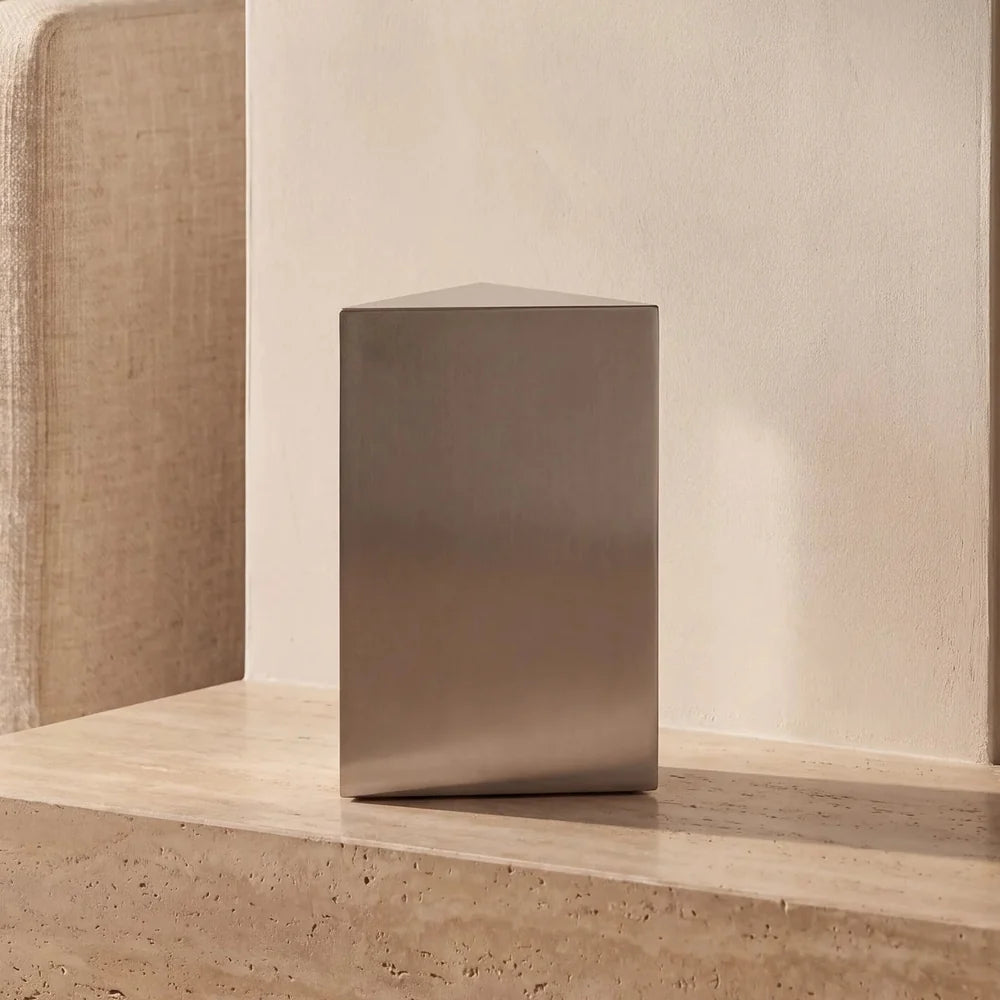
As one example, the Floral Lily Adult Cremation Urn for Ashes in Stainless Steel is a flat, upright urn in brushed stainless steel with a lily etched on the front. It holds 3.5 liters (about 214 cubic inches), stands 26.5 cm (10.43 in) high, 17.5 cm (6.89 in) wide and 8 cm (3.15 in) deep, and weighs 3.3 kg (7.3 lb) empty. Its page lists it as suitable for a person of up to approximately 97 kg (214 lb) and for display indoors or in a garden.

Pictured: Floral Lily Adult Cremation Urn for Ashes in Stainless Steel
It is not right for every plan. If more than 3.5 liters of capacity is needed, look for a larger urn. Its page does not describe it as a burial urn, so if the ashes are to be buried, look at our biodegradable burial urns and ask the cemetery what it accepts. Our guide to what to do with ashes after cremation goes through the other choices.
Sources
All of these pages were read on October 8, 2026.
- Competition and Markets Authority, "The Funerals Market Investigation Order 2021", dated June 16, 2021: full text (PDF, 30 pages).
- Competition and Markets Authority, "Funerals sector: Annual review of market outcomes", August 7, 2025: full text (PDF, 60 pages). Page numbers in this guide are the numbers printed on its pages.
- Federal Trade Commission, "Types of Funerals", page dated July 2012: consumer.ftc.gov.
- Federal Trade Commission, "The FTC Funeral Rule", page dated July 2012: consumer.ftc.gov.
- Federal Trade Commission, "Funeral Costs and Pricing Checklist", page dated July 2012: consumer.ftc.gov.
- Federal Trade Commission, "Complying with the Funeral Rule": ftc.gov.
- Federal Trade Commission, "Shopping for Funeral Services Online: An FTC Staff Review of Funeral Provider Websites", October 2022: full text (PDF, 14 pages).
- National Funeral Directors Association, "2023 NFDA General Price List Study Shows Inflation Increasing Faster than the Cost of a Funeral", released December 8, 2023: news release.
- Cremation Association of North America, "Industry Statistical Information", figure for 2025: cremationassociation.org.
Sizes and product details in this guide were checked against our product pages on October 8, 2026.
Frequently asked questions
What is the difference between direct cremation and traditional cremation?
A traditional cremation includes a funeral service with mourners present. A direct cremation has no service and nobody attends, so any memorial is held separately. The UK regulator's terms are an attended funeral, "a funeral which includes a service and where mourners may attend", and an unattended funeral, "a funeral which does not include a service and where mourners may not attend" (Funerals Market Investigation Order 2021, pages 5 and 7, dated June 16, 2021).
How much cheaper is a direct cremation than a traditional cremation in the UK?
The cost of a direct cremation was £1,597 in 2024 and the average cost of a cremation including disbursements was £3,980, according to SunLife's survey of funeral directors as reported by the Competition and Markets Authority (annual review of market outcomes, page 33, August 7, 2025). By our arithmetic that is a difference of £2,383. Prices vary by provider and by area, so compare written price lists.
How much does a direct cremation cost compared with a traditional cremation in the United States?
The national median cost of a funeral with a viewing and cremation was $6,280 (National Funeral Directors Association, released December 8, 2023). For direct cremation, Federal Trade Commission staff who reviewed funeral provider websites found "the lowest price for direct cremation starting at $595 and the highest at $4,760, excluding the cost of an alternative container" (FTC staff report, October 2022). Prices differ from state to state.
Is a direct cremation less dignified than a traditional cremation?
The cremation itself is the same. In the United Kingdom, the standard unattended funeral includes the same care of the person before the funeral "in appropriate facilities" and "a suitable coffin" as the standard attended funeral (Funerals Market Investigation Order 2021, Schedule 1, Parts C and D, page 28, dated June 16, 2021). What differs is the service, the viewing and who chooses the date and time.
Can you still have a service with a direct cremation?
Yes, but not at the cremation itself. The UK standard price list describes an unattended funeral as one where family and friends "may choose to have a ceremony, event or service for the deceased person, but they do not attend the burial or cremation itself" (Funerals Market Investigation Order 2021, Schedule 1, page 24, dated June 16, 2021). Many families hold a memorial later, often with the ashes present.
Is embalming needed for a traditional cremation?
In the United Kingdom, "Embalming" is listed on the Standardised Price List among the optional, additional products and services (Funerals Market Investigation Order 2021, Schedule 1, Part A, page 24, dated June 16, 2021). In the United States, the Federal Trade Commission says "No state law requires routine embalming for every death", though a funeral with a viewing "may make embalming a practical necessity and, if so, a required purchase" (The FTC Funeral Rule and Funeral Costs and Pricing Checklist, July 2012).
Adult Urns for Ashes
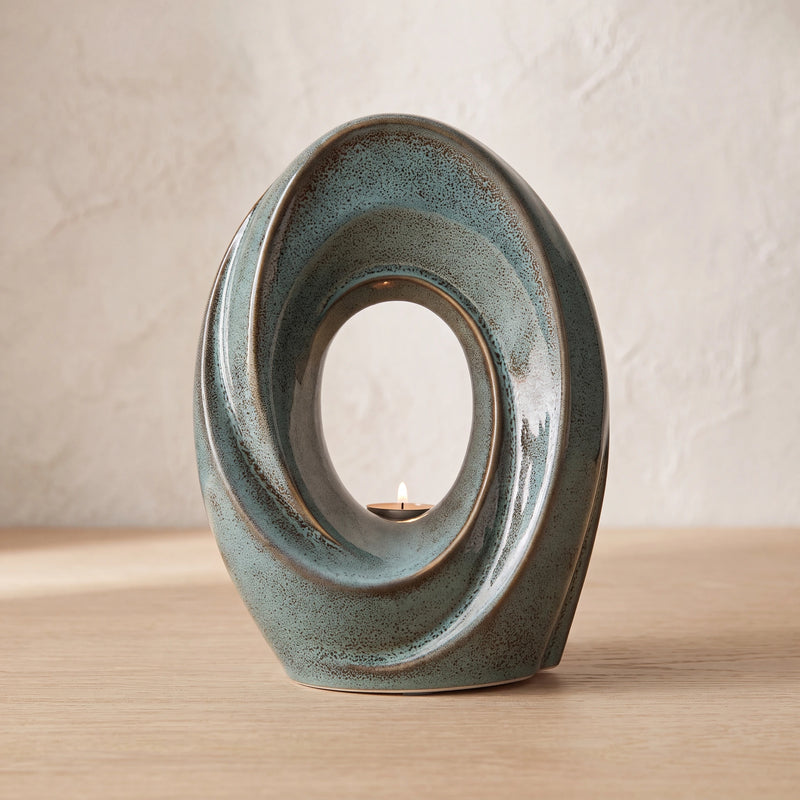
See all The Passage Adult Cremation Urn for Ashes in Oily Green
 Ocean Blue Modern Adult Cremation Urn for Ashes
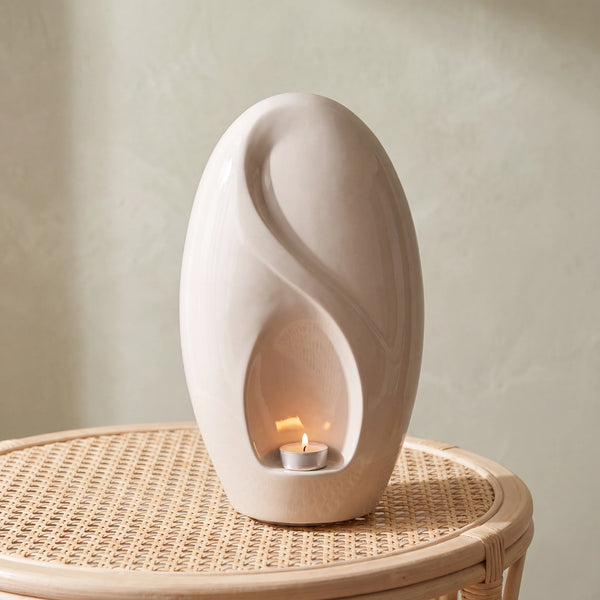 Infinity Adult Cremation Urn for Ashes in Cream
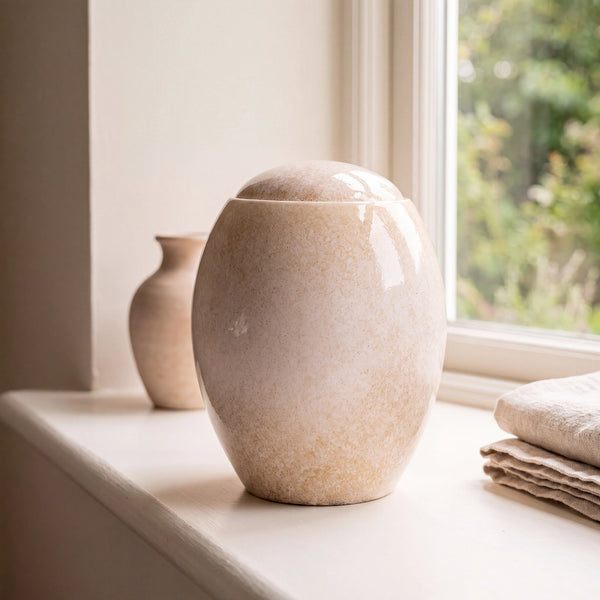 Sandy White Modern Adult Cremation Urn for Ashes
Written by Urns For Angels
Looking for an urn?
Browse the full range, or ask us and we will help you find the right one.
Keep reading
-

18 min read
What Is a Direct Cremation? Meaning, Costs and Rules
-

13 min read
Water Cremation (Green Cremation): How It Works and Where It Is Legal
-
9 min read
Are Ashes Loose in an Urn? 10 Cremation Questions Answered
See every guide on Cremation Explained: Process, Costs and Rules


Leave a comment
This site is protected by hCaptcha and the hCaptcha Privacy Policy and Terms of Service apply.