
How Are Cremation Urns Buried?
Burying a loved one's ashes gives them a permanent resting place that the family can visit. It is often simpler than a full burial, and you may have more choice over where it happens. This guide covers what kind of urn to use, where you can bury it, how a burial in a cemetery is arranged, how deep the urn goes and what it costs.
Quick answer: An urn is buried in a small grave or ashes plot in a cemetery, a churchyard, a natural burial ground or a garden you own. There is no single depth or rule, so ask the cemetery or church for its rules before you choose the urn. One English burial ground asks for the top of a casket of ashes to be at least 300 mm (about 12 inches) below ground (Goring on Thames Parish Council, White Hill burial ground regulations, approved 12 August 2019, read 15 October 2026), while one Californian cemetery digs cremation sites at least 30 inches deep (North County Cemetery District, Rules and Regulations, adopted 18 May 2020, read 15 October 2026). In your own garden, we suggest a hole about 2½ to 3 feet (about 75 to 90 cm) deep. In England and Wales, burying ashes in your own garden needs no permit, according to the National Association of Funeral Directors (National Association of Funeral Directors, What to do with ashes after cremation, last reviewed 9 May 2026, read 15 October 2026).

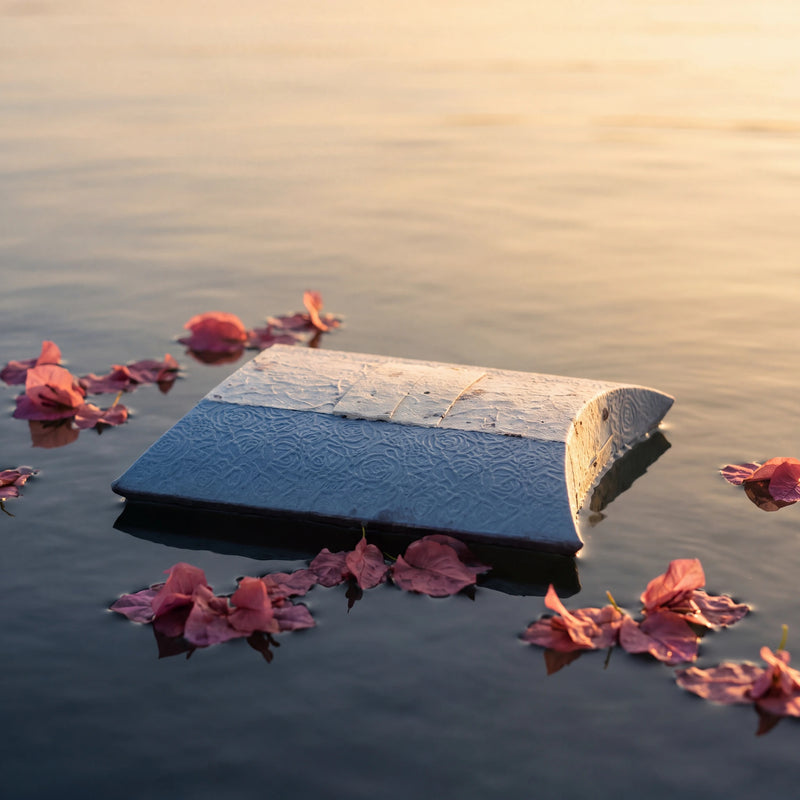
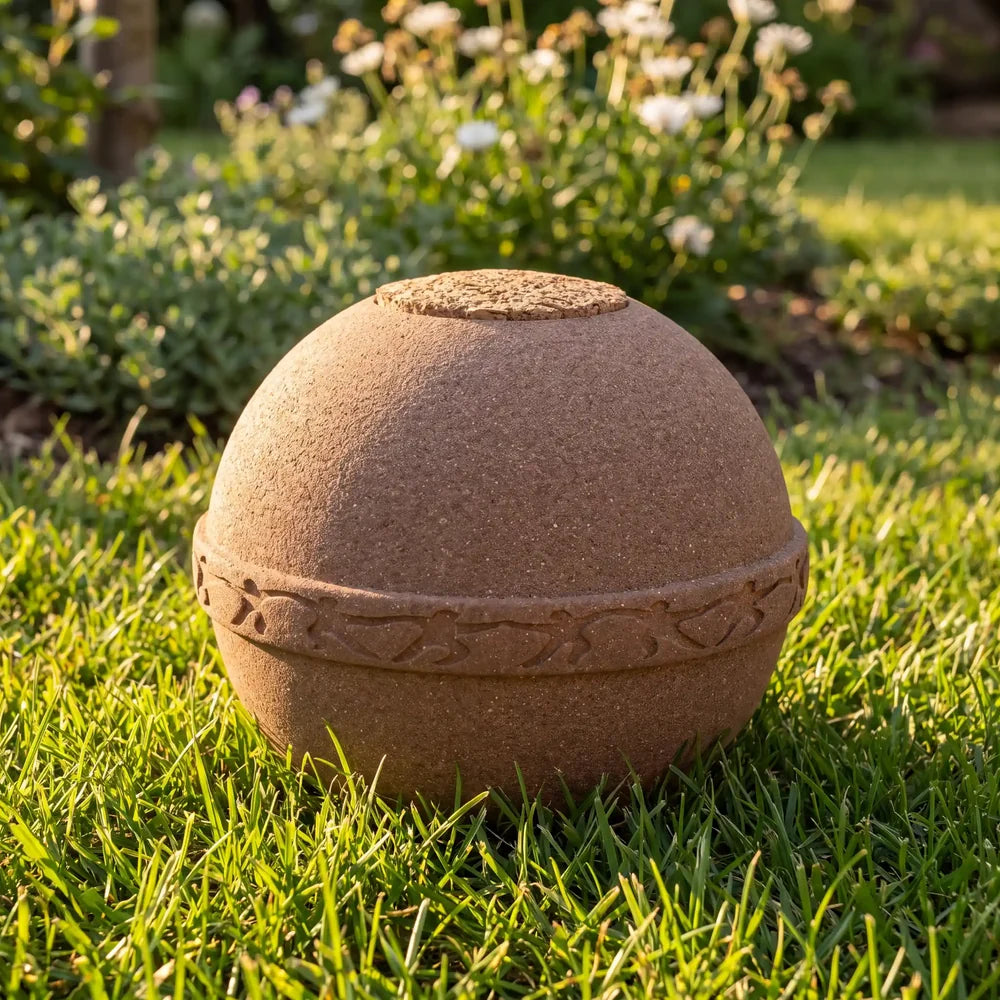
Pictured: Simplicity Earthurn Biodegradable Urn for Ashes in Floral - Adult
What type of urn can be buried?
Almost any urn can be buried if the place allows it, but the place decides. A biodegradable urn, made from natural materials such as tree bark, bamboo, cornstarch, paper, salt or sand, is made to break down in the soil. A ceramic, stone, metal or plastic urn will not break down, so it keeps the ashes together in one place.
Rules differ from one cemetery to the next. Barrow cum Denham Parish Council in Suffolk, England, says "Coffins and urns for burial must be made from suitable bio-degradable materials", such as wood, wicker, cane, bamboo, wool or cardboard (Barrow cum Denham Parish Council, Cemetery Policy, reviewed June 2026, read 15 October 2026). In California, North County Cemetery District requires "A durable container" for all cremated remains and says a vault is not required (North County rules), while Artesia Cemetery District says: "The use of cremated remains vaults is required" (Artesia Cemetery District, Rules and Regulations, adopted 15 July 2021, read 15 October 2026). A vault is an outer case that the urn sits inside. Ask the cemetery which urns it accepts before you buy one.
For a garden, a natural burial ground or a cemetery that asks for a biodegradable urn, our Simplicity Earthurn Biodegradable Urn for Ashes in Floral is made by hand from mulberry tree bark, holds 3.93 litres and is sized for an adult; its page says that once buried it "breaks down completely and returns to the earth around it". You will find more in our biodegradable burial urns and in all our biodegradable urns, and our guide to how long biodegradable urns last explains how quickly different materials break down.
If you may move house one day and want to be able to take the ashes with you, our HighDown Outdoor Urn for Ashes is made of moulded polypropylene and holds 3.2 litres. Its page says it can be "buried in the garden", and that an optional height-adjustable grave marker, sold separately, means the ashes "can always be located and safely relocated to a new resting place".
Where can you bury a cremation urn?
- A cemetery plot. The National Association of Funeral Directors (NAFD) says most cemeteries and churchyards in the UK permit the burial of cremated remains, often in a dedicated ashes plot or an existing family grave (NAFD). In England and Wales, council cemeteries work under the Local Authorities' Cemeteries Order 1977, which counts the interment of ashes as a burial (legislation.gov.uk, Local Authorities' Cemeteries Order 1977, article 2, read 15 October 2026) and says no burial may take place without the permission of the officer the burial authority appoints (legislation.gov.uk, Local Authorities' Cemeteries Order 1977, Schedule 2, read 15 October 2026). Outside England and Wales, ask the cemetery for its own rules.
- An existing family grave. Where the cemetery allows it, ashes can go into a grave that already holds a family member. Bruton Town Council in Somerset, England, allows up to six sets of cremated remains in a full burial grave space, and no grave may be opened without the permission of the owner and the council (Bruton Town Council, Cemetery Regulations, reviewed July 2024, read 15 October 2026).
- A churchyard. In England, the Church of England says the same rights apply to cremated remains as to burials: people living in the parish, people on the church electoral roll and people who die in the parish have a right to be buried in its churchyard unless the churchyard is closed. In a closed churchyard, ashes can only go in an area specifically allowed by faculty (a church permission), and families must follow the diocese's churchyard regulations (Church of England, ChurchCare: New burials and memorials, read 15 October 2026).
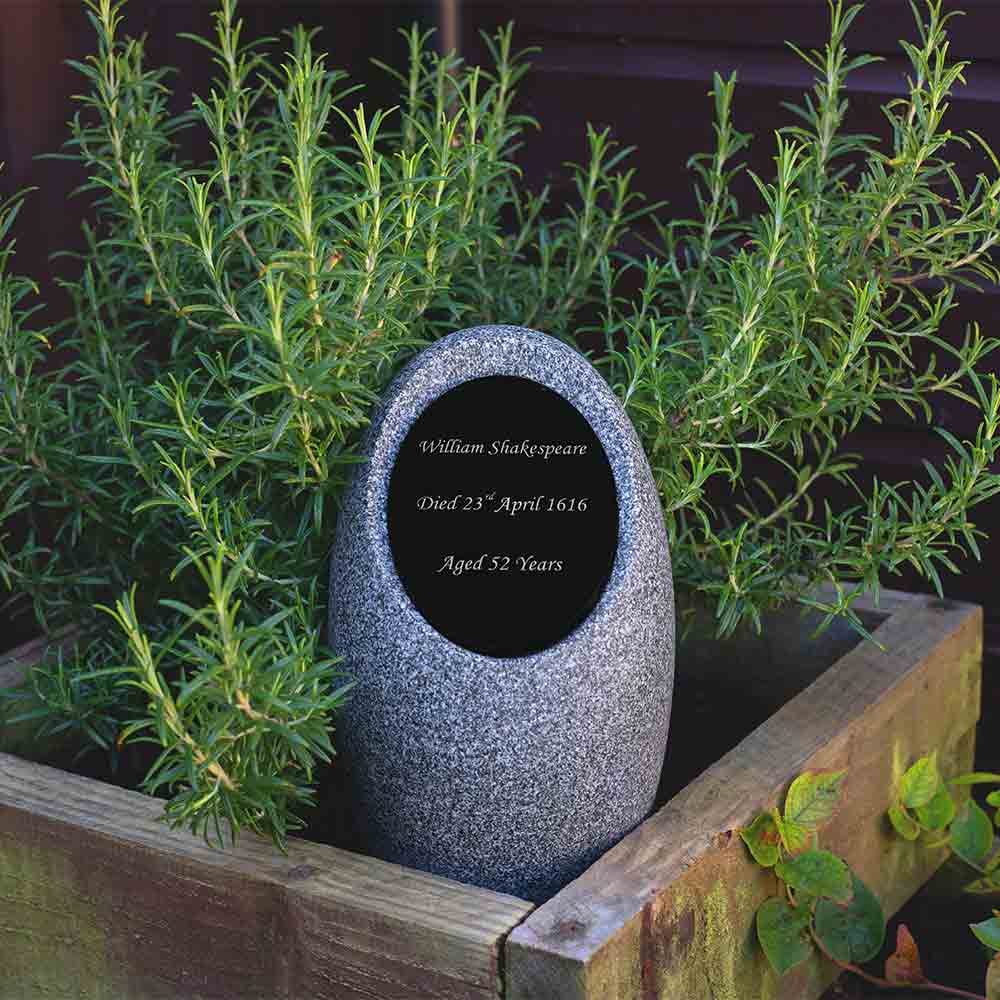
- Your own garden. In England and Wales, the NAFD says burying ashes in your own garden is legal without any permit, provided the property is your own, and that there is no legal requirement to register it, though it is sensible to keep a written record in case the property is ever sold (NAFD). In other countries, we suggest checking with your local council or authority first. Bear in mind you may not always live there. Our guide to garden urns for ashes covers urns made for outdoors.
- Someone else's land. The NAFD says ashes can be buried on private land with the landowner's permission (NAFD). We suggest getting that permission in writing.
- Woodland and natural burial grounds. The NAFD says natural or green burial grounds are growing in number across the UK, many now accept ashes as well as full burials, and the Association of Natural Burial Grounds can help you find one (NAFD). We suggest asking each site which urns it accepts before you buy one.
If you are thinking of a lake or the sea instead, our guide to water urns for ashes covers urns made for water.
How is an urn buried in a cemetery?
Each cemetery or church sets its own steps, so ask yours. We suggest taking them in this order. The examples come from the rules of named cemeteries.
- Ask for the rules and the fees. They tell you where ashes can go, which urns and vaults are accepted, how deep the urn goes and what memorial you can add.
- Buy the plot, or ask the grave owner. In England, for example, Debenham Parish Council in Suffolk sells an exclusive right of burial for 50 years (Debenham Parish Council, Cemetery fees 1 April 2026 to 31 March 2027, read 15 October 2026), and at Bruton the right of burial lasts 75 years (Bruton regulations). For an existing grave, Barrow cum Denham allows ashes in any adult grave for which you hold the exclusive right of burial, if there is room and the cemetery registrar agrees (Barrow cum Denham policy).
- Book the burial and send the paperwork. Goring on Thames Parish Council can normally arrange the burial of ashes at three working days' notice, and the original certificate of cremation (or the registrar's certificate) must be sent to the council's office within twenty-four hours of the burial (Goring regulations). Bruton asks for three days' notice, not counting weekends or public holidays (Bruton regulations). At Goring, arrangements are usually made by a funeral director (Goring regulations).
- The burial itself. The urn is placed in a small grave and the soil is put back. The NAFD says a funeral director can help you arrange a formal committal service for the burial of ashes (NAFD). We suggest asking whether the family may lower the urn themselves, if that matters to you.
- A memorial, if the rules allow one. At Goring, a grave for ashes may have only a tablet set level with the ground or a desk tablet 75 mm high, no larger than 450 mm by 450 mm (Goring regulations).
How deep do you bury a cremation urn?
There is no single depth. The examples below differ, so check the rules of the cemetery you are using before anything is dug. In England and Wales, the depth rule in the Local Authorities' Cemeteries Order 1977 is written for a body in a coffin: no part of the coffin may be less than three feet below the ground next to the grave, or two feet for a coffin of perishable materials where the soil allows (Cemeteries Order, Schedule 2). It gives no separate depth for ashes.
Three cemeteries' own rules show how much the depth varies:
- Goring on Thames, England: a casket of ashes is buried so that its top is at least 300 mm (about 12 inches) below ground (Goring regulations).
- North County Cemetery District, California: cremation sites are dug at least thirty inches (about 76 cm) deep, and at least 18 inches (about 46 cm) of soil goes on top of the container (North County rules).
- Artesia Cemetery District, California: the same thirty-inch dig and 18 inches of earth over the container (Artesia rules).
In your own garden, we suggest a hole about 2½ to 3 feet (about 75 to 90 cm) deep. That matches the thirty-inch minimum dig at North County and Artesia and leaves at least 18 inches (about 46 cm) of soil over an urn 25 cm (10 inches) tall. We also suggest marking the spot or keeping a note of where it is.
How much does it cost to bury an urn?
It depends on the place. On your own land there is no plot to buy. In the UK, the NAFD puts the cost of burying ashes in a cemetery or churchyard at typically £300 to £1,000, depending on the location and whether a new plot is required (NAFD).
As one example, Debenham Parish Council in Suffolk charges £138 for a 50-year exclusive right of burial and £164 for the burial of ashes in 2026 to 2027, or £107 to reuse an existing plot for ashes; a headstone in its urn garden costs £169, and fees are doubled for most people who do not live in the parish (Debenham fees). Wherever you are, ask the cemetery for its current fee list before you decide.
Other options if burial is not right
Burial is one of several choices. You can also scatter ashes, keep them at home in a display urn, or share them between family in keepsakes. Our guide to what to do with ashes after cremation walks through all of them, and we also have guides to growing a tree from ashes and to who has the rights to ashes after cremation, if the family needs to agree first.
Frequently asked questions
Can you bury an urn in your garden?
In England and Wales, yes. The National Association of Funeral Directors says burying ashes in your own garden is legal without any permit, provided the property is your own, and that there is no legal requirement to register it, though a written record is sensible in case the property is ever sold (NAFD). In other countries, check with your local authority first. Choose a biodegradable urn if you want the ashes to return to the soil, or an urn that can be lifted again if you may move house.
How deep should a cremation urn be buried?
There is no single depth; it depends on the cemetery's rules. Goring on Thames Parish Council in England asks for the top of the casket of ashes to be at least 300 mm (about 12 inches) below ground (Goring regulations), while North County Cemetery District in California digs cremation sites at least 30 inches deep with at least 18 inches of soil over the container (North County rules). In your own garden, we suggest a hole about 2½ to 3 feet (about 75 to 90 cm) deep.
What kind of urn is best for burial?
It depends on the place. Barrow cum Denham Parish Council in England says urns for burial must be made from suitable biodegradable materials (Barrow cum Denham policy), while Artesia Cemetery District in California requires a vault around the urn (Artesia rules). Ask the cemetery first. For a garden or a natural burial ground, a biodegradable urn made from a material such as tree bark, bamboo or cornstarch is made to break down in the soil.
How much does it cost to bury ashes?
There is no plot to buy on your own land. In the UK, the National Association of Funeral Directors puts the burial of ashes in a cemetery or churchyard at typically £300 to £1,000, depending on the location and whether a new plot is required (NAFD). Debenham Parish Council, for example, charges £138 for a 50-year right of burial and £164 for the burial of ashes in 2026 to 2027, doubled for most people from outside the parish (Debenham fees).
How do you bury an urn in a cemetery?
Ask the cemetery for its rules and fees, buy the plot or get the agreement of the owner of an existing grave, and book the burial with the paperwork the cemetery asks for. On the day, the urn is placed in a small grave and the soil is put back. Goring on Thames Parish Council in England, for example, can normally arrange the burial of ashes at three working days' notice and asks for the certificate of cremation (or the registrar's certificate) to be sent to its office within twenty-four hours of the burial (Goring regulations).
Do you need a vault to bury an urn?
Only if the cemetery asks for one. Artesia Cemetery District in California requires a cremated remains vault (Artesia rules), while North County Cemetery District, also in California, says one is not required but asks for a durable container (North County rules). Ask your cemetery before you buy.
Can you bury an urn in an existing grave?
Yes, where the cemetery allows it and the owner of the grave agrees. Bruton Town Council in England allows up to six sets of cremated remains in a full burial grave space, and no grave may be opened without the permission of the owner and the council (Bruton regulations).
Can you bury a metal or ceramic urn?
Yes, where the place allows it, but it will not break down, and some cemeteries only accept biodegradable urns: Barrow cum Denham Parish Council in England is one (Barrow cum Denham policy). Ask the cemetery first. If you bury a metal or ceramic urn in a garden, we suggest one with a lid that seals well, to help keep water away from the ashes.
This guide is general information, not legal advice. Rules differ by country, cemetery and church; the examples come from the pages linked, all read on 15 October 2026. Our size guide explains how to check that an urn is large enough.
Last updated: 15 October 2026.
Biodegradable Burial Urns
See all Embrace Biodegradable Urn for Ashes in White Hemp - Adult
 Simplicity Earthurn Biodegradable Urn for Ashes in Floral - Adult
 Loop EarthRise™ Biodegradable Urn for Ashes - Adult
 Love Heart Biodegradable Urn for Ashes in Floral - Adult
Written by Jamie Hughes
Looking for an urn?
Browse the full range, or ask us and we will help you find the right one.
Keep reading
-
12 min read
How to Create a Memorial Garden at Home
-
3 min read
How to Grow a Tree from Your Loved One's Ashes
-
9 min read
How to Scatter Ashes: A Complete Guide
See every guide on What to Do With Ashes: Scattering, Burial and Keeping


Leave a comment
This site is protected by hCaptcha and the hCaptcha Privacy Policy and Terms of Service apply.