

Is there energy in cremation ashes
Quick answer: In a scientific sense, cremation ashes hold no measurable biological energy. They are stable, inert mineral remains, mostly calcium phosphate, left after the body's organic matter has burned away. The energy was released as heat during cremation. That said, many people feel a powerful emotional and spiritual connection to a loved one's ashes, and that meaning is real and personal, whatever the science says.

What are cremation ashes actually made of?
Cremated remains are not ash in the way wood ash is. They are mostly bone fragments, processed into a fine, sand-like texture. Chemically they are largely calcium phosphate, along with smaller amounts of minerals such as sodium, potassium and carbonates. An adult typically leaves around 4 to 6 pounds of remains. There is no soft tissue, no fluid, and no living material left.
What science says about energy in ashes
Cremation takes place at roughly 1,400 to 1,800°F (760 to 980°C). At those temperatures the body's organic matter is fully broken down, and the chemical energy stored in it is released as heat. What remains is chemically stable and inert, meaning it does not react, decay or give off energy. There is no measurable life force or biological energy in cremated remains, and they carry no harmful radiation under normal circumstances.
Why so many people still feel a connection
Science describes what ashes are, not what they mean. Across many cultures and faiths, ashes are treated as a continuing link to the person, a way of keeping them close, remembering them, and marking the bond that does not end with death. Whether you think of that connection as spiritual, emotional or simply the weight of memory, it is genuine and deeply human. Many families describe a real sense of comfort and presence when they hold or sit with a loved one's remains.
Keeping that connection close
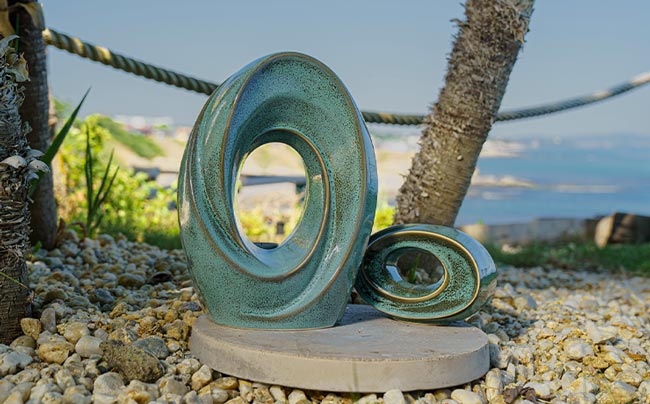
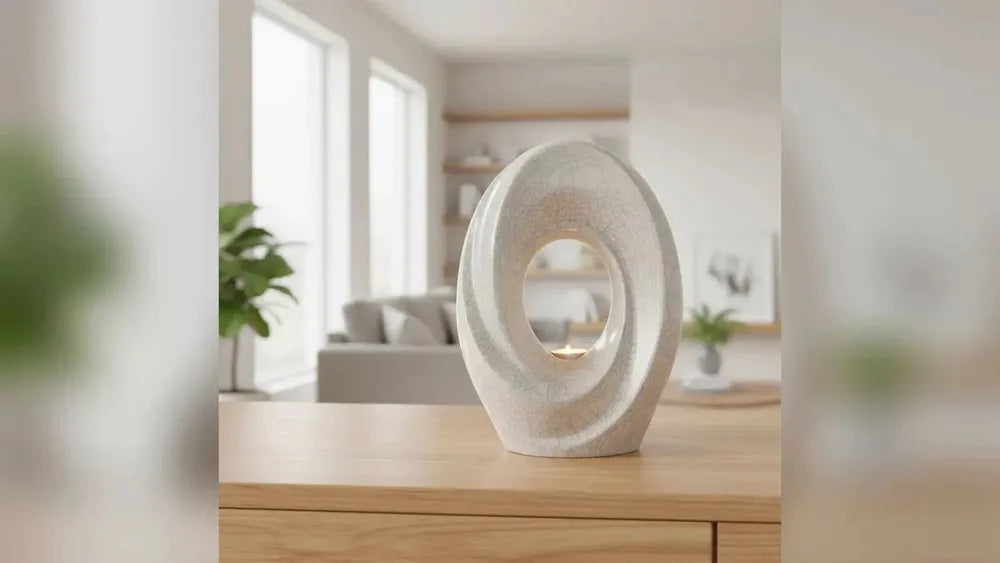
How you keep that bond is entirely personal. Some families keep the ashes at home in a cremation urn, others divide a small portion between relatives in keepsake urns, and some keep a pinch close every day in a piece of ashes jewellery. There is no right answer, only the one that feels right for you.
Frequently asked questions
Do cremation ashes contain DNA?
Usually not in any usable amount. The high heat of cremation destroys nearly all genetic material, so standard DNA cannot normally be recovered from ashes. In rare cases a specialist lab may find trace fragments, but for practical purposes cremated remains do not carry recoverable DNA.
What are cremation ashes made of?
Mostly calcium phosphate from bone, with small amounts of minerals such as sodium, potassium and carbonates. They contain no soft tissue or fluid, and are chemically stable and safe to handle.
Is there any radiation or harmful energy in ashes?
No. Under normal circumstances cremated remains carry no harmful radiation and are inert. They do not give off energy, decay or pose any health risk, which is why they can be kept safely at home.
Do cremation ashes have a spiritual energy?
That depends on your own beliefs. Science finds no measurable energy in ashes, but many people and traditions feel that a loved one's remains carry their essence or spirit. Both views can sit together: the comfort and meaning people find are real, whatever the physical explanation.
Can you feel a connection to someone through their ashes?
Many people do. Holding or keeping a loved one's ashes close often brings a strong sense of presence and comfort. That connection is emotional and personal rather than something science can measure, and it is no less meaningful for that.


Leave a comment
This site is protected by hCaptcha and the hCaptcha Privacy Policy and Terms of Service apply.