
Taking Ashes from the UK to Australia: A Complete Guide

Taking a loved one's ashes from the UK to Australia is permitted, and from a biosecurity standpoint Australia is unusually relaxed about cremated remains. The Australian Border Force imposes no specific permit or certificate requirement on incoming ashes. However, Australia's strict biosecurity rules mean the container itself does need attention, particularly if it's wooden. Combined with UK airline rules, the picture is more practical than complicated. This guide walks you through what you actually need.
Quick answer
Yes, you can take cremated ashes from the UK to Australia. The Australian Border Force does not require an import permit, death certificate or cremation certificate for cremated remains. However, the urn must be free of biosecurity risk material (soil, plant matter, insects), and wooden urns must be declared on the Incoming Passenger Card and inspected on arrival. Most UK airlines still require the death and cremation certificates and a non-metallic urn. The simplest urn for this route is ceramic or plastic, which satisfies both UK airline rules and Australian biosecurity without triggering inspection.
Documents you need to take ashes to Australia
Australia is unusual: the Australian Border Force does not require any documentation for cremated remains entering the country. From a biosecurity perspective, no import permit, death certificate or cremation certificate is needed.
However, your UK airline will almost certainly require documentation, and customs officers may still ask. Bring all of the following:
Required by airlines (not by Australian customs)
- UK death certificate (original or certified copy). Required by most UK airlines.
- UK cremation certificate (original). Required by most UK airlines.
- Statement from the crematorium or funeral director. A short letter confirming the urn contains only the cremated remains of the named person. Most UK crematoriums issue this on request.
Useful but not required
- An official register extract stating the cause of death (helpful if border officials ask)
- The deceased's passport (rarely requested but useful to have)
Australian biosecurity: the rule that catches families out
Australia's biosecurity is among the strictest in the world, and the rules apply to the urn rather than the ashes themselves.
The container rules
- The urn must be free of soil, plant material, and insects. Even trace amounts can trigger biosecurity inspection or refusal.
- Wooden urns must be declared on the Incoming Passenger Card (IPC) on arrival. They will be inspected by a biosecurity official. The urn is not refused, but the inspection adds time at the airport.
- The Australian Department of Agriculture specifically recommends non-wood containers to avoid triggering biosecurity declaration: ceramic, iron, zinc, copper, bronze, or plastic.
If the ashes are mixed with anything
If your loved one's ashes have been mixed with soil, sand, or any other biosecurity-risk material (some memorial blends do this), specific Australian biosecurity rules apply and you should contact the Department of Agriculture before travel.
Choosing a UK-to-Australia travel urn
Here's where Australia's biosecurity rules and your UK airline's rules intersect:
| Material | UK airline | Australian biosecurity | Best for UK to Australia? |
|---|---|---|---|
| Wood | Allowed | Triggers declaration and inspection | Allowed but adds time |
| Plastic | Allowed | No issue | Yes |
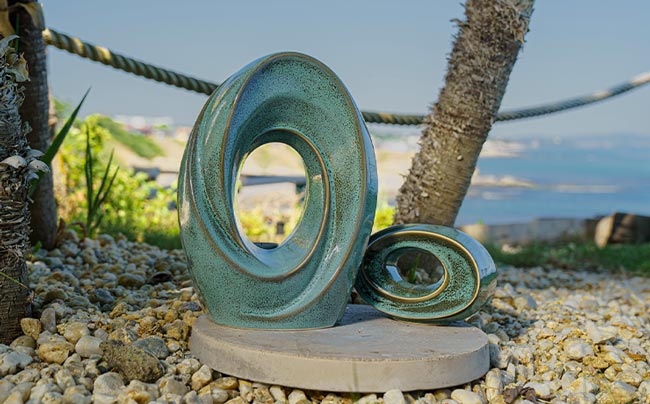
| Ceramic (non-lead) | Allowed | No issue | Yes (recommended) |
| Biodegradable card | Allowed | Generally fine, may be inspected | Yes |
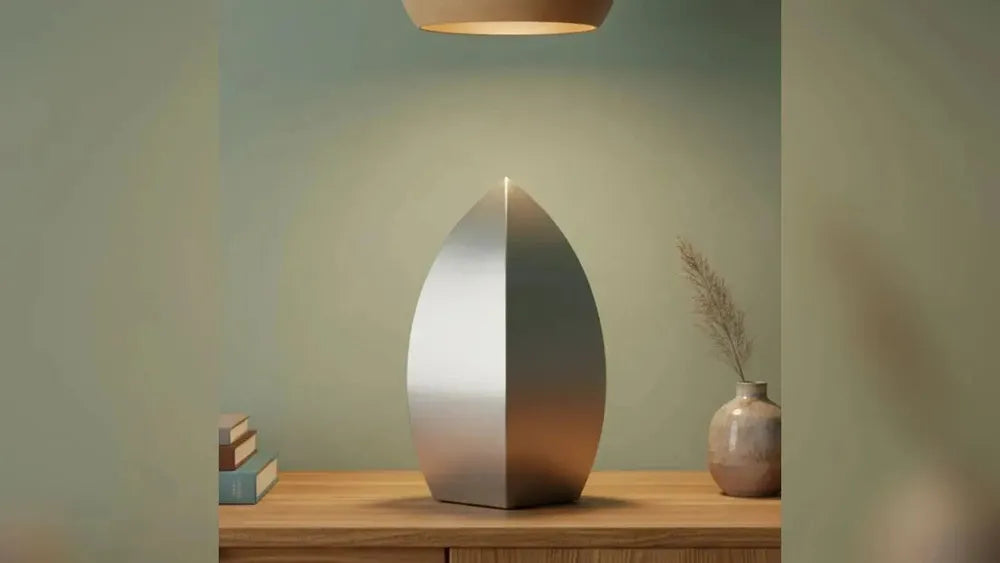
| Metal (iron, zinc, copper, bronze) | Generally not allowed (won't pass x-ray) | No issue | No (UK airline blocker) |
| Marble or stone | BA only (not on most UK airlines) | No issue | Limited (depends on airline) |
The simplest choice for a UK to Australia journey is a ceramic or plastic travel urn: lightweight, x-ray transparent for UK airline security, and clear of Australian biosecurity concerns.
Which UK airline are you flying with?
UK to Australia is almost always a long-haul flight, often with a stopover. The major UK carriers and their cremated remains policies:
- British Airways — cabin or checked, non-metallic urn, certificates required
- Qantas, Singapore Airlines, Emirates, Qatar Airways — guides being added throughout 2026
- Virgin Atlantic — guide being added throughout 2026
The Australian arrival process
The Incoming Passenger Card
Every passenger arriving in Australia completes the Incoming Passenger Card (IPC). For cremated remains in a non-wood urn (ceramic, plastic, metal), there's nothing specific to declare unless you've also brought items that fall under standard biosecurity questions.
If your urn is wood, tick the box for "wooden articles" on the IPC. This is straightforward and well understood by Australian biosecurity staff.
At Australian customs and biosecurity
If asked about the urn at biosecurity, simply explain you are travelling with cremated remains. Australian biosecurity officers see this regularly. Have the certificates ready. The inspection is usually quick.
State-by-state on arrival
Australia's federal biosecurity rules are uniform across the country. Once cleared, the ashes can be transported to any state or territory without further restriction. Domestic flights within Australia have standard cabin baggage rules and no specific cremated remains requirement.
What you can do with the ashes in Australia
Scattering ashes in Australia
Australia has no national law specifically prohibiting the scattering of ashes. Rules are largely set at state and council level, and most Australians scatter without formal permission for private ceremonies. The general principles:
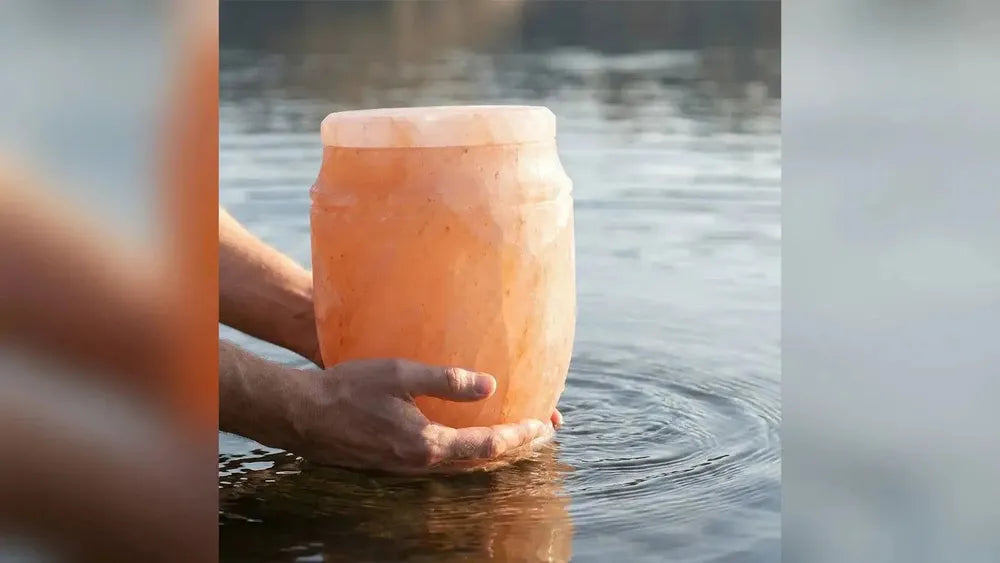
- Scattering at sea is generally permitted, especially from a private boat or charter. Some states recommend staying offshore from beaches and harbours.
- Scattering on private land is permitted with the owner's consent.
- National parks usually require advance permission from the park authority. Some parks (particularly UNESCO sites) prohibit scattering.
- Beaches and council land vary by local council; some allow it, some require notification, some prohibit it. Check with the relevant council.
- Sydney Harbour, Bondi Beach, the Great Barrier Reef all have specific local rules; in particular, the Great Barrier Reef Marine Park Authority typically requires a permit for any deposition.
For more general guidance, see our complete guide on how to scatter ashes.
Burial or interment in Australia
If you intend to formally inter the ashes in an Australian cemetery plot or columbarium, coordinate with the specific cemetery. They will guide you through any state-specific paperwork. The certificates you brought from the UK are usually sufficient.
Keeping the ashes in Australia
If you're keeping the ashes at an Australian home, no further documentation is needed. Keep the certificates safely in case of any future formality.
Common mistakes when taking ashes from the UK to Australia
- Bringing a wooden urn without realising it triggers biosecurity declaration. Allowed, but adds inspection time on arrival. If you can, choose ceramic or plastic for a smoother arrival.
- Bringing a metal urn from the UK. Australian biosecurity is fine with metal, but most UK airlines won't let it through security. Always check the UK airline's rule first.
- Forgetting the certificates. Australia doesn't require them, but the airline does, and customs officers may still ask.
- Soil residue on or in the urn. If the urn has been buried, scattered in, or otherwise contacted soil, clean it thoroughly before flying. Trace soil triggers Australian biosecurity action.
- Putting the urn in checked baggage on a budget UK airline. Most UK airlines flying to Australian connections require cabin baggage only. Always check the specific carrier.
- Assuming you can scatter freely at any Australian beach. Local council rules vary. Check before scattering on a public beach or in a national park.
Frequently asked questions
Can I take cremated ashes from the UK to Australia?
Yes. Cremated remains can be brought into Australia from the UK without any specific Australian permit or certificate. The urn must be free of biosecurity risk material (soil, plant matter, insects). Wooden urns must be declared on the Incoming Passenger Card. UK airlines generally still require the death and cremation certificates.
Does Australia require a permit for cremated ashes?
No. The Australian Border Force does not require an import permit for cremated remains. From a biosecurity perspective, no death certificate or cremation certificate is required either. The focus is on the container, not the ashes.
Do I need to declare ashes on the Incoming Passenger Card?
If the urn is made of wood, yes, declare it under wooden articles. If the urn is non-wood (ceramic, plastic, metal), no specific declaration is required for the urn itself, although you should still answer all standard biosecurity questions truthfully.
What kind of urn does Australia recommend?
The Australian Department of Agriculture specifically recommends ceramic, iron, zinc, copper, bronze, or plastic urns. These do not trigger biosecurity declaration on arrival. Wood urns are permitted but require declaration and inspection.
Can I bring a wooden urn into Australia?
Yes, but it must be declared on the Incoming Passenger Card under wooden articles, and a biosecurity officer will inspect it before clearance. This adds time but is not a refusal.
Can I scatter ashes in Australia?
Yes, generally. Australia has no national law against scattering. Rules are set at state and council level. Scattering at sea, on private land with consent, and in many public areas is permitted, but national parks and the Great Barrier Reef typically require advance permission.
Can I scatter ashes on Bondi Beach or in Sydney Harbour?
Local council and state rules apply. Sydney Harbour scattering is broadly allowed but the Marine Estate Management Authority recommends offshore scattering. Bondi Beach scattering depends on Waverley Council's current policy. Always check before scattering at a specific public location.
Do Australian customs charge a fee for cremated ashes?
No. Australia does not charge a customs or biosecurity fee for personal cremated remains brought in by family members.
How long can I keep cremated ashes in Australia?
Indefinitely. There is no time limit on keeping cremated remains in Australia.
Where to go from here
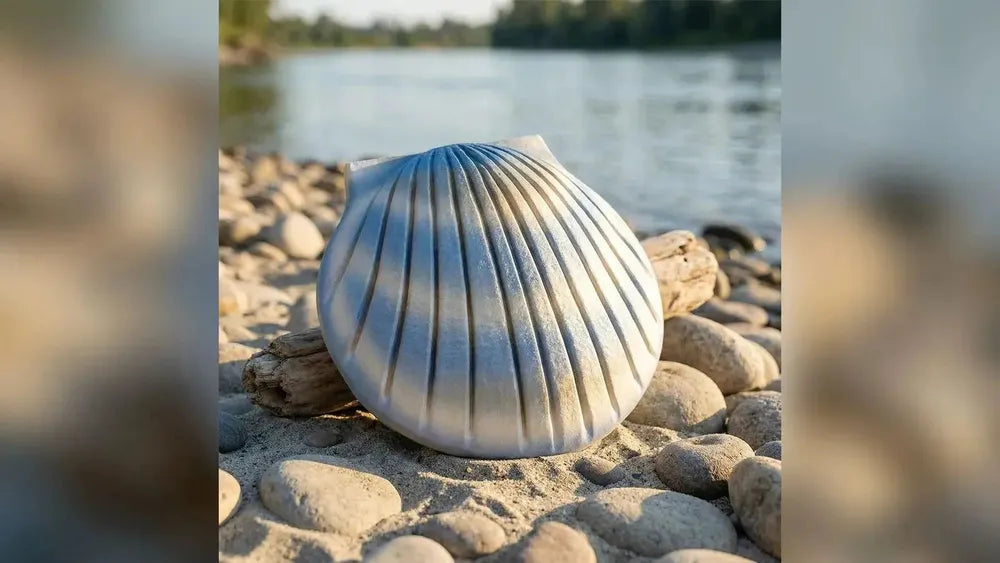
- Browse our travel-safe urns, designed for airline transport
- Read our complete guide on flying with ashes
- Read our complete guide on how to scatter ashes
- Compare with the UK to Spain process
- Compare with the UK to USA process
- Read our hub guide: What to do with ashes after cremation
Last updated: 9 May 2026.
This guide is general in nature and is based on current publicly available guidance from Australian government sources. For the latest and definitive rules, consult the Australian Border Force importing human remains and ashes page and Australian Department of Agriculture biosecurity guidance.
Urns For Angels is a family-run specialist supplier of cremation urns, ashes jewellery, scatter tubes and travel urns, with worldwide shipping.

Leave a comment
This site is protected by hCaptcha and the hCaptcha Privacy Policy and Terms of Service apply.